
Dating Across Different Cultures and Backgrounds
How to navigate cultural, religious, and background differences in modern dating with genuine curiosity, mutual respect, patient communication, and realistic compatibility—treating diversity as a rich opportunity for personal growth rather than a problem to overcome.
1. Individual First
Engage the unique person, not a stereotype. Remember that internal diversity exists across every background.
2. Respectful Curiosity
Ask open questions with sincere warmth. Avoid interrogating or treating a partner as a cultural spokesperson.
3. Patient Clarification
Allow extra time for language nuances and differing communication styles without assuming negative intent.
4. Uncompromised Boundaries
Culture never overrides personal autonomy, mutual consent, or basic dignity. Safety is paramount.
What Cultural Differences Can Mean in Dating
Connecting with someone who grew up in a different country, community, religion, or ethnic tradition is one of the most enriching experiences of modern dating. Cross-cultural dating offers a front-row seat to different worldviews, culinary wonders, artistic traditions, and social philosophies.
However, cultural diversity also shapes the unspoken assumptions we carry into dating. In a new connection, cultural background can influence:
Family Involvement
The degree to which extended family, parents, and community elders influence dating choices, partner introductions, and life decisions.
Communication Styles
Whether thoughts and feelings are delivered with upfront directness or through delicate, contextual subtlety and indirect cues.
Social & Romantic Pacing
Norms surrounding physical affection, exclusivity timelines, casual versus intentional dating, and public displays of warmth.
Celebrations & Customs
Spiritual observances, dietary customs, seasonal holidays, and the rituals that structure an individual's yearly calendar.
Recognising that these factors vary widely allows you to view differences not as personal hurdles or deficiencies, but as opportunities to explore compatibility with curiosity and grace.
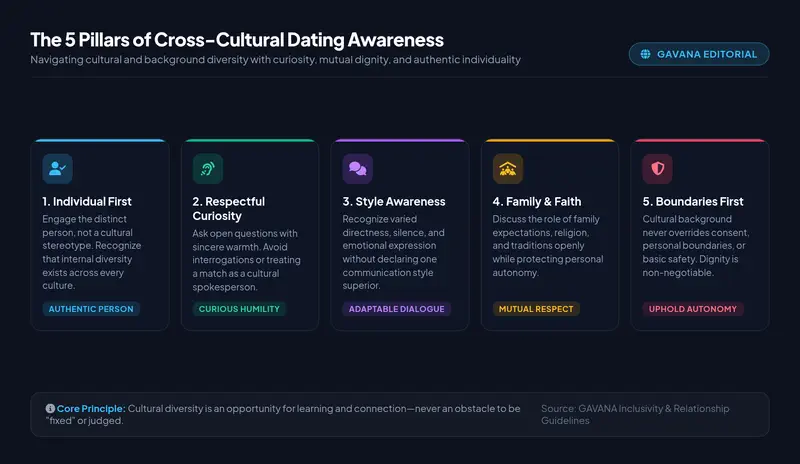
Get to Know the Individual, Not a Stereotype
The cardinal rule of dating across different backgrounds is simple: date the person in front of you, not an abstract cultural profile.
No culture, religion, or nationality is a monolith. Within any given culture, individuals vary dramatically based on their upbringing, education, personal philosophy, travel experience, generational outlook, and independent temperament. Assuming that someone adheres to every traditional custom of their heritage—or conversely, assuming they reject it completely—robs them of their personal complexity.
- Ask rather than deduce: Instead of assuming, "Her family is from Southern Italy, so she must expect a huge family gathering every Sunday," ask, "How close are you with your family, and what are your weekend routines like?"
- Recognise unique personal relationships with heritage: Some people hold their ancestral traditions very dear; others feel neutral toward them or forge their own modern blend. Let your partner define what their background means to them.
- Beware of romanticising or exoticising: Reducing someone to an exotic novelty or projecting cinematic fantasies onto their background is dehumanising. Focus on who they are as a human being: their humor, values, passions, and everyday habits.

How to Communicate Curiosity Respectfully
Curiosity is the lifeblood of connection, but how you frame your curiosity makes all the difference. When learning about someone's heritage or traditions, aim for warm, open exploration rather than clinical interrogation.
Keep these mindful guidelines in mind:
Not a Spokesperson
Never treat your match as an official ambassador who must explain or defend the political decisions, economic conditions, or historical conflicts of their country of origin.
Share Reciprocally
Share your own background and family quirks as you ask questions. Mutual sharing creates an equal, balanced conversation rather than an unbalanced interview.
Open-Ended Prompts
Use prompts that invite personal reflection, such as: "What is a tradition from your childhood that you still cherish today?"
Respect Reluctance
If someone indicates that a topic—such as past political unrest, immigration difficulties, or family estrangement—is painful, gracefully transition to lighter topics.
For proven conversational strategies on asking thoughtful questions and sustaining balanced momentum, explore our guide on how to have better conversations while dating.
Navigating Different Communication Styles
How people communicate interest, affection, hesitation, and disagreement varies across cultures, families, and individuals. Misinterpreting these stylistic differences is one of the most common sources of unintentional friction:
- Direct vs. Contextual (Indirect) Communication: In some environments, being direct, stating feelings immediately, and asking pointed questions is considered honest and respectful. In other environments, directness can feel abrasive; communication is nuanced, relying heavily on non-verbal cues, timing, and gentle suggestions to preserve harmony.
- The Role of Silence: In certain cultures, comfortable pauses in conversation are viewed as signs of thoughtful listening, contentment, and respect. In others, silence triggers social anxiety and is rushed to be filled with chatter.
- Humour and Irony: Self-deprecating humor, deadpan sarcasm, or playful teasing can be standard conversational currency in one culture, yet sound confusing or insulting to someone unfamiliar with that specific humorous cadence.
The solution is never to force one person to abandon their style, but to develop conversational empathy. If a partner sounds unusually blunt or surprisingly reserved, do not immediately assign negative motives. Pause, check in, and ask clarifying questions with an open heart.
Family Involvement and Expectations
Family dynamics vary tremendously across cultures. In individualistic societies, dating is predominantly viewed as a private matter between two consenting adults, with family introductions occurring only after months of committed dating. In collectivist cultures, a relationship is often viewed as a union of two families, with parents and siblings playing an active, supportive, and sometimes protective role from the outset.
Navigating family expectations requires open, early dialogue without judgement:
Introduction Timelines
Discuss when and how family introductions are typically made. In some cultures, introducing someone to parents signals an intention toward marriage; in others, it is casual and low-pressure.
Parental Opinions
Understand the weight your partner places on their family's blessing. Do they seek guidance while making autonomous choices, or does family consensus hold veto power?
Balancing Autonomy
Respect their loyalty to family while maintaining that a healthy adult partnership requires appropriate emotional boundaries between the couple and their extended relatives.
Protecting the Couple
If family members hold conservative prejudices, observe whether your partner stands up for your dignity or expects you to quietly absorb disrespectful remarks.
Religion, Traditions, and Core Values
Faith, spiritual practices, and moral values often sit at the core of human identity. When dating someone with a different faith or philosophical framework, mutual respect and explicit clarity are non-negotiable.
Healthy cross-cultural connections approach spirituality by exploring:
- Daily and weekly observances: Are there dietary rules (e.g., halal, kosher, vegetarian), prayer schedules, or days of rest that structure their weekly routine? Knowing these allows you to show thoughtful consideration when planning dates.
- Religious expectations for a partner: Does their spiritual tradition require a long-term partner or spouse to convert, or is interfaith marriage warmly embraced? Clarifying this early prevents deep emotional heartbreak later.
- Raising future children: If you both envision long-term commitment and family, how would different spiritual traditions or moral educations be harmonized?
- Freedom of conscience: True respect means neither partner tries to pressure, lecture, or covertly convert the other. Both individuals have an absolute right to their personal conscience and beliefs.
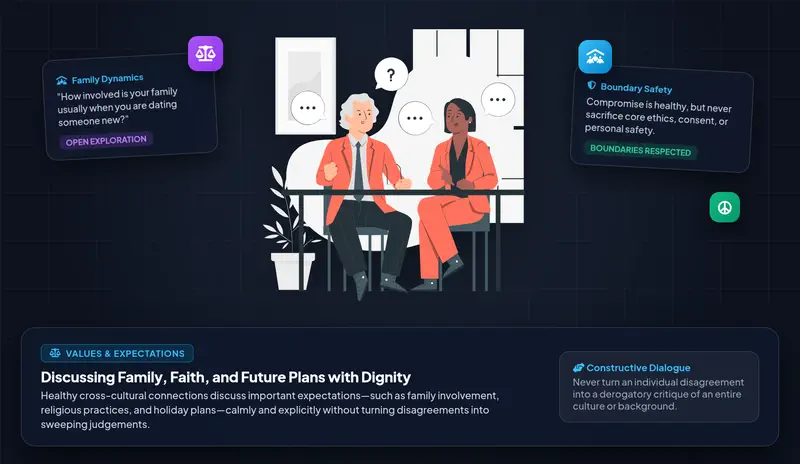
Language Differences and Generous Interpretation
If you and your partner speak different native languages, communicating can occasionally feel like a gentle puzzle. Expressing emotional nuance, romantic vulnerability, or subtle humor in a second or third language requires immense cognitive effort.
Foster a generous, supportive linguistic environment through these practical habits:
Generous Pacing
Never rush your partner or finish their sentences unless they explicitly ask for help. Give them the unhurried space to translate their thoughts into words.
Active Clarification
If a phrase sounds blunt, unusual, or sharp, gently clarify: "Just to make sure I understand what you meant—did you mean you felt overwhelmed?"
Look Past Grammar
Focus on the emotional sentiment and character behind the words rather than correcting grammatical mistakes, pronunciation, or vocabulary.
Learn Key Phrases
Taking the initiative to learn a few greetings, affectionate terms, or customs in their native tongue demonstrates genuine interest and warmth.

Dating Expectations and Relationship Goals
What does "dating" actually mean? In modern Western contexts, dating often encompasses a gradual, multi-month progression from casual non-exclusive dating to an explicit exclusivity conversation. In many Mediterranean, Latin American, Middle Eastern, or Asian cultures, dating is viewed with high intentionality from day one, with exclusivity assumed as soon as two people begin seeing each other regularly.
Never assume you are on the same page based on unspoken customs. Discuss these topics openly:
- Exclusivity and intentions: Are you both dating exclusively, or are you still casually meeting other people? Discussing this directly prevents profound misunderstandings and hurt feelings.
- Public Displays of Affection (PDA): Holding hands, kissing in public, or introducing each other to colleagues may be completely standard in some regions and culturally frowned upon in others. Agree on a comfort level that respects both individuals.
- Financial etiquette on dates: Who pays for dates, and how is hospitality viewed? While splitting the bill 50/50 is common in Northern Europe, in many cultures, insisting on splitting can be perceived as an offensive rejection of generosity. Discuss your preferences with good humor.
For foundational guidance on establishing mutual courtesies and expectations, review our guide on online dating etiquette. If your relationship involves geographical distance, time zones, or international travel logistics, our companion guide on long-distance relationships offers practical communication and planning frameworks.
Food, Celebrations, and Everyday Customs
Food and celebratory rituals are among the most delightful avenues for cross-cultural connection. Introducing someone to your favorite childhood meal or experiencing a festival you had only ever read about creates lasting romantic memories.
Approach cultural sharing with open-hearted enthusiasm and practical courtesy:
Check Dietary Boundaries
Always ask about allergies, religious dietary restrictions, and personal comfort levels before planning dinner or cooking a meal.
Culinary Open-Mindedness
Try unfamiliar flavors and textures with good cheer. If you genuinely dislike a dish, be polite and appreciative of the hospitality without making dramatic faces.
Ask Before Participating
When attending a cultural or religious celebration with your partner, ask in advance about dress codes, rituals, and whether active participation is welcomed or observed quietly.
Invite Them to Yours
Cultural sharing is a two-way street. Introduce your partner to your own cherished family customs, regional foods, and holidays with equal pride.

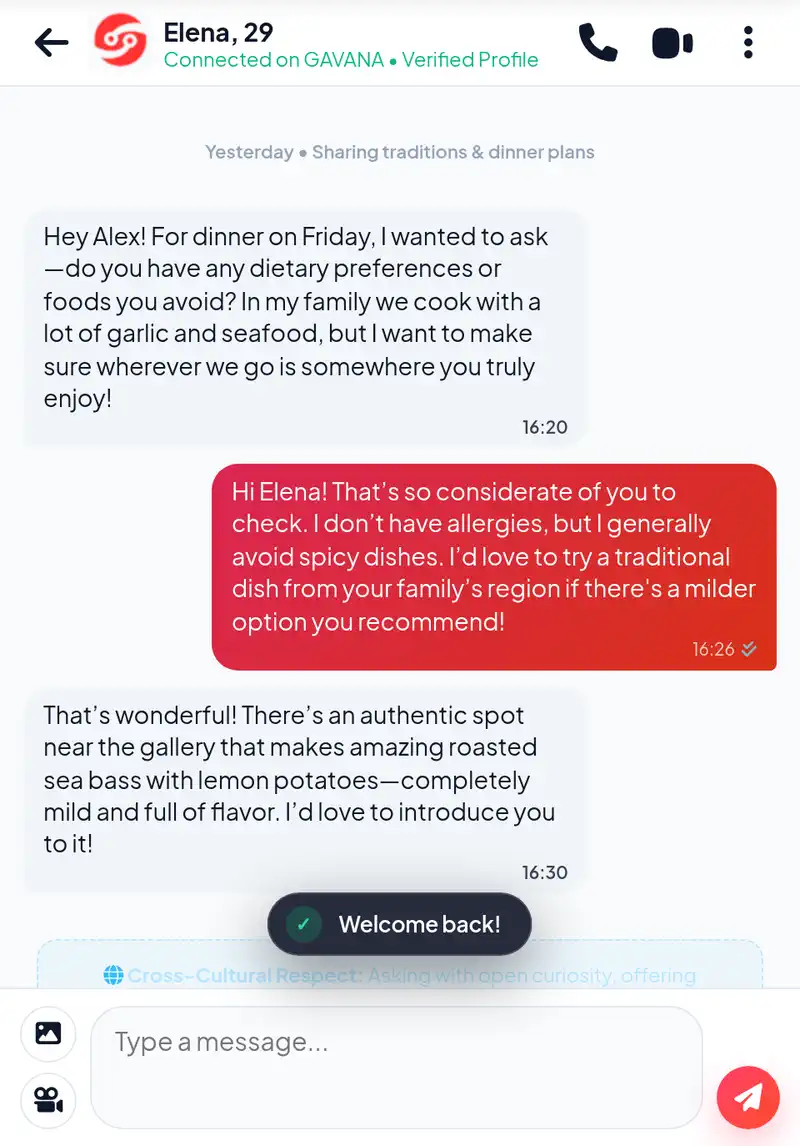
Managing Disagreements Respectfully
When disagreements occur in cross-cultural couples, there is a dangerous temptation to weaponize cultural background as an explanation for every interpersonal conflict. Saying, "You're only acting this way because people from your country are stubborn," is a destructive conversational habit that causes lasting resentment.
Handle conflicts with emotional maturity and precision:
- Focus on the specific issue, not the culture: If you are upset about late arrival, discuss the specific habit of punctuality. Do not turn it into a sweeping critique of their nation's concept of time.
- Clarify underlying meanings: Ask: "When you said that earlier, what was your main intention?" Often, what sounded hurtful was simply framed using a different cultural communication template.
- Avoid moral superiority: Do not assume that your culture's approach to conflict, emotional expression, or decision-making is objectively superior or "the only rational way."
To understand how healthy couples navigate differences without contempt, review our article on green flags: signs of a healthy connection.
Boundaries and Consent Remain Non-Negotiable
Cultural sensitivity is vital, but it has one clear, immovable limit: culture never overrides consent, personal boundaries, or basic safety.
Occasionally, individuals in dating will attempt to justify controlling behavior, emotional pressure, or boundary violations by claiming: "In my culture, this is just how men/women are," or "In our traditions, partners don't say no to this."
This is an abuse of cultural rhetoric. In any healthy adult relationship:
- You always have the right to say "no" to any physical, emotional, or social request.
- You have the right to personal privacy, financial autonomy, and independent friendships.
- You are never obligated to tolerate controlling surveillance, jealousy, or isolation in the name of "cultural tradition."
A partner who genuinely honors their heritage will also honor your fundamental human dignity. If someone attempts to use their background as an excuse for boundary violations, enforce your limits without hesitation.
Handling Insensitive Comments and Prejudice
In a cross-cultural dynamic, occasional clumsy comments or unintentional blunders may happen due to simple lack of exposure. How you address these moments—and how your partner responds—determines whether the relationship can grow safely:
Address Clumsiness Calmly
If someone uses an outdated phrase out of ignorance, explain gently: "That phrase is actually considered insensitive because... I'd appreciate it if you used this term instead."
Observe the Response
A high-character partner will apologize sincerely, listen with curiosity, and adapt their language. An unhealthy partner will get defensive and accuse you of being "too sensitive."
Zero Tolerance for Bigotry
You never have to tolerate intentional prejudice, degrading racial stereotypes, or malicious religious insults. Repeated disrespect is a clear signal to end the connection.
Defending Each Other
A devoted partner actively defends you against insensitive comments from their own friends or family rather than expecting you to endure them alone.
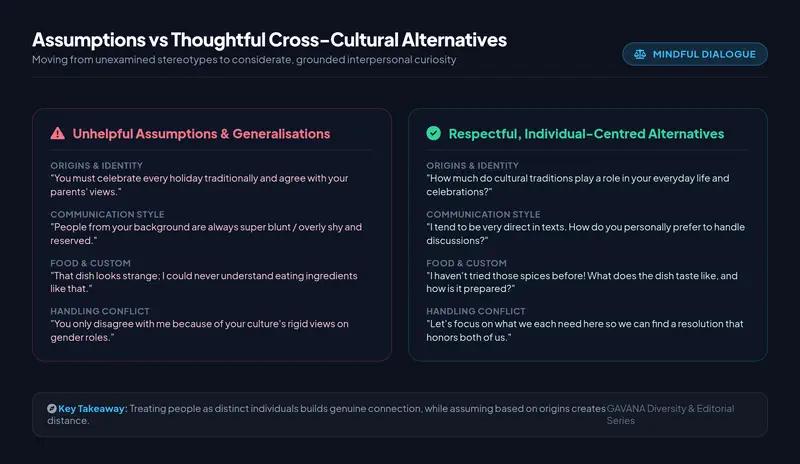
When Differences Are Difficult to Reconcile
There is a common romantic cliché that "love conquers all." In reality, two people can have profound affection for each other and still face fundamental incompatibilities rooted in irreconcilable life goals, family demands, or spiritual expectations.
For example:
- One partner's family insists that any future spouse convert to their religion, while the other partner cannot in good conscience make that conversion.
- One partner has a deep cultural obligation to live with or care for elderly parents in another country, while the other cannot relocate due to career or custody ties.
- Different visions for gender roles or family life that neither person can compromise on without feeling unfulfilled.
Recognising these incompatibilities does not mean anyone was the "bad guy." Cultural differences can simply illuminate that two wonderful adults are not suited to walk the same life path. Parting with mutual kindness, respect, and dignity honors the connection you shared.
If you realize that alignment is missing, explore our compassionate strategies on how to deal with rejection while dating.
Practical Questions Couples Can Discuss
To foster meaningful dialogue, here is a curated selection of open-ended, non-judgmental questions you can explore together over coffee or dinner:
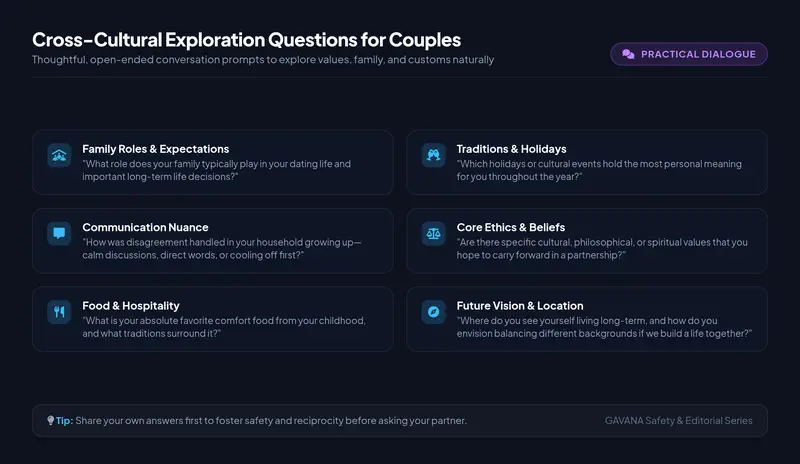
Family Dynamics
"What role does your family typically play in your dating life and important long-term life decisions?"
Traditions & Holidays
"Which holidays or cultural events hold the most personal meaning for you throughout the year?"
Communication Nuance
"How was disagreement handled in your household growing up—calm discussions, direct words, or cooling off first?"
Core Ethics & Beliefs
"Are there specific cultural, philosophical, or spiritual values that you hope to carry forward in a partnership?"
Food & Hospitality
"What is your absolute favorite comfort food from your childhood, and what traditions surround it?"
Future Vision & Location
"Where do you see yourself living long-term, and how do you envision balancing different backgrounds if we build a life together?"
Core Principles for Cross-Cultural Dating
As you navigate dating across different backgrounds, anchor your approach in these five enduring principles:
See the Individual
Listen to your partner's personal voice, preferences, and quirks rather than viewing them as a symbol or representative of an entire ethnic or national group.
Lead With Humility
Approach unfamiliar customs with warmth, curiosity, and an eagerness to learn rather than instinctive skepticism or superiority.
Communicate Explicitly
Replace unspoken assumptions with honest, clear conversations about expectations, pacing, family, and relationship goals.
Practice Linguistic Grace
Offer patience, humor, and generous interpretation when navigating language differences or distinct communication templates.
Protect Personal Boundaries
Remember that cultural sensitivity never requires compromising on personal autonomy, consent, safety, or basic human dignity.
Frequently Asked Questions
How can I show interest in someone's culture without sounding ignorant or clumsy?
The best approach is to ask open-ended, personal questions that focus on their individual experience rather than broad generalizations. For example, instead of asking "What do people from your country think about dating?", ask "What were dating and relationships like in the community where you grew up?" Share your own experiences reciprocally so the conversation feels like a mutual exchange rather than an interrogation.
What should I do if my partner's family is unwelcoming because of my background?
Observe how your partner manages the situation. It is normal for conservative families to need time to adjust to an unfamiliar background, but your partner should advocate for you, set clear boundaries regarding respect, and never expect you to endure degrading treatment. If your partner remains passive, dismisses your feelings, or pressures you to accept unfair treatment, it indicates an incompatibility in emotional maturity and boundaries.
Is it a red flag if someone seems reluctant to discuss their cultural background?
Not necessarily. Some individuals may have experienced stereotyping, immigration trauma, or complicated family dynamics, or they may simply prefer to be evaluated on their individual merits early on. Respect their boundary and give them time; as emotional safety and trust develop, they will naturally share more about their heritage when they feel comfortable.
How do we handle differences in how directly we communicate?
Talk about your communication preferences explicitly before conflicts arise. A direct communicator can learn to soften their delivery and check for subtle cues, while an indirect communicator can practice expressing key needs clearly without assuming their partner will read between the lines. Agreeing on a collaborative approach ensures neither style is treated as superior.
Can cross-cultural couples succeed if they have completely different religious beliefs?
Yes, many interfaith couples thrive. Success requires deep mutual respect, freedom of conscience, agreement on how holidays and traditions will be celebrated, and alignment on how children would be raised if family is part of the future. If either partner expects the other to convert or secretly hopes they will change their mind, that tension will cause significant long-term strain.
What should I do if someone uses their culture to justify controlling behavior?
Set and enforce your boundaries immediately. Cultural tradition never excuses emotional coercion, jealousy, surveillance, or physical pressure. Any attempt to override your personal consent or autonomy under the guise of "cultural differences" is a serious red flag. Respectful partners uphold your safety, dignity, and autonomy regardless of background.