
Treating People as Individuals, Not Profiles
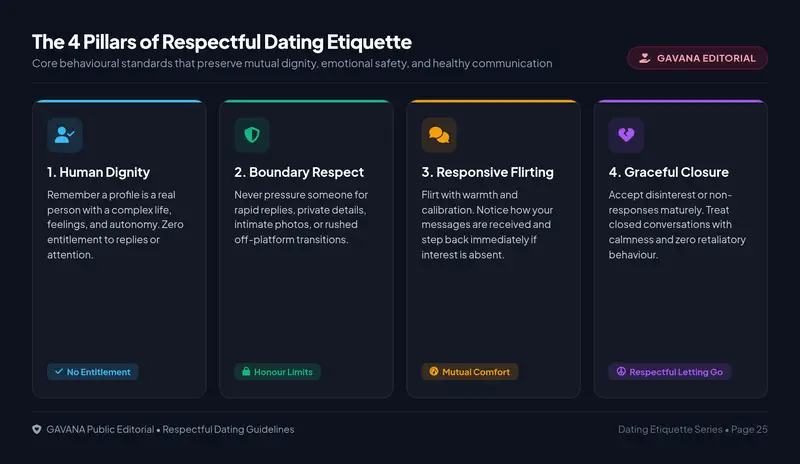
When swiping through dozens of photos in a digital interface, it is remarkably easy to forget that each screen represents a real person with a complex emotional life, personal responsibilities, insecurities, and boundaries. Online dating etiquette begins with a fundamental premise: a match is an invitation to explore mutual curiosity, not an entitlement to anyone's time, affection, or energy.
Nobody owes a stranger an immediate response, a prolonged conversation, their phone number, or a romantic date. When daters approach interactions without demands or assumptions, dating shifts from an anxious transaction into a respectful, low-pressure exploration between equals.

Honest Representation and Stated Intentions
Considerate etiquette begins before you ever send a message—it begins with how honestly you represent yourself on your profile. Misrepresenting your age, relationship status, lifestyle, or dating intentions undermines trust before a conversation even starts.
Being honest does not mean oversharing private matters or presenting a flawless persona. It means providing an authentic snapshot of who you are and what kind of connection you are seeking—whether that is casual dating, a long-term partnership, or activity companionship. For detailed guidance on crafting a genuine presence, explore our guide on How to Create an Honest Dating Profile and our advice on selecting authentic profile photos.
Clarity Prevents Misunderstandings
Stating your general dating intentions clearly on your profile allows both you and potential matches to align expectations early, preventing the frustration of discovering mismatched relationship goals weeks into chatting.
Messages and Response Expectations
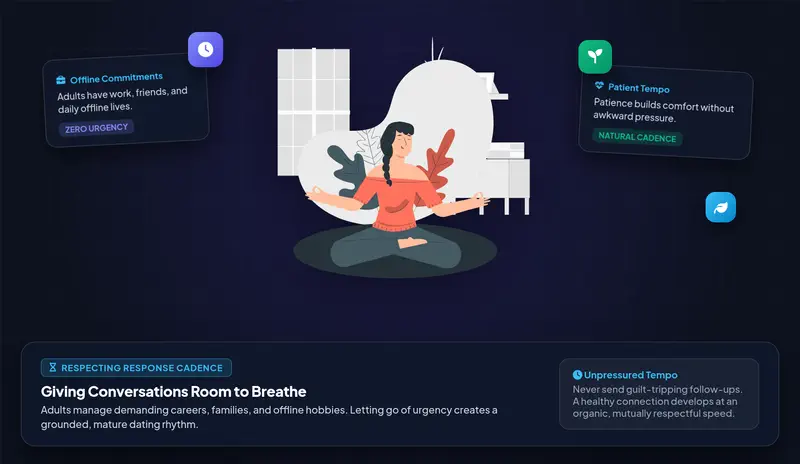
One of the most frequent friction points in modern online dating is mismatched expectations around response speed. In an era of instant push notifications, some daters mistakenly assume that an unread message or a half-day delay signals disrespect or gamesmanship.
In reality, adults lead busy, complex lives. People have demanding jobs, meetings, family commitments, workouts, and times when they simply need to unplug from screens. Constructive etiquette means recognising that:
- There is no universal response schedule: Some people check dating apps only in the evening; others check during a lunch break. Neither approach is wrong.
- Double-texting with demands is counterproductive: Sending "???" or "Guess you're too busy" after a few hours of silence creates tension and inevitably drives people away.
- Patience communicates confidence: Giving matches space to reply at their own pace shows emotional maturity and respect for their offline life.
Respectful Conversation and Attention
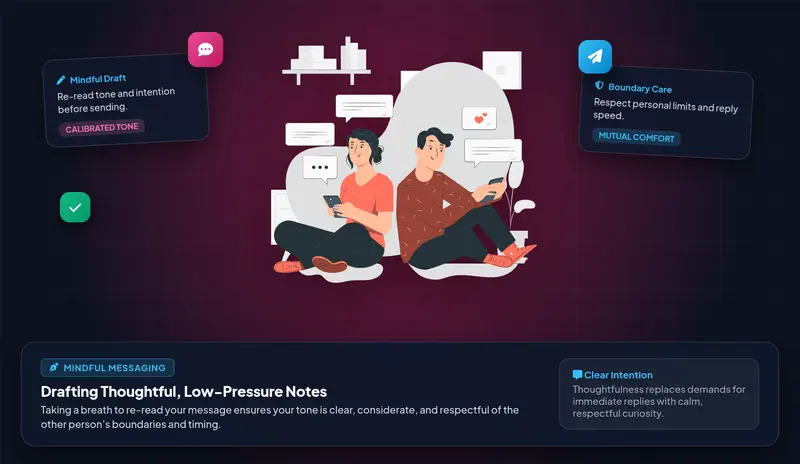
Good conversation is an exercise in mutual attention. Effective dating etiquette avoids treats like copy-pasting generic one-word greetings to dozens of people or conducting an interrogation-style questionnaire.
As detailed in our dedicated guides on How to Start a Conversation on a Dating App and How to Have Better Conversations While Dating, respectful messaging involves:
- Noticing shared interests: Acknowledging specific hobbies, passions, or books mentioned on their profile.
- Balancing curiosity with sharing: Asking expansive questions while offering your own experiences so the exchange remains an even, two-way dialogue.
- Warm, considerate humour: Avoiding cutting sarcasm, offensive jokes, or cynical remarks before you understand each other's comedic style.
Boundaries, Privacy, and Personal Comfort
Every person has distinct boundaries regarding what information they feel comfortable sharing and how quickly they want to proceed. Etiquette requires that you respect someone's stated limits without arguing, negotiating, or making them feel defensive.
Key boundary courtesies include:
- Never pressuring someone for personal details: Do not demand to know their home address, specific workplace, or exact daily commute. Respect the protective boundaries outlined in Protecting Your Personal Information While Dating Online.
- Never demanding off-platform moves prematurely: Some daters prefer keeping conversations within the app's secure messaging environment until trust is established. Pushing someone to switch to WhatsApp or SMS before they are ready is poor etiquette (see When Is It Safe to Move a Conversation Off a Dating App?).
- Respecting photo boundaries: Never ask for intimate photographs, and never send unsolicited explicit images. Doing so breaches community standards and causes significant discomfort.
When both people respect personal boundaries and pace interactions thoughtfully, a foundation of mutual trust is established. To understand what positive, healthy connection indicators look like across early dating, explore our guide on green flags and signs of a healthy connection.
Consent and Respectful Flirting
Flirting adds spark, warmth, and fun to dating, but it must always remain responsive to the other person's comfort. Polite silence, short replies, or changing the subject are clear signals that the other person is not receptive to flirtatious overtures.
Etiquette principles for considerate flirting:
Calibrated vs. Presumptuous Flirting
Presumptuous approach: Jumping directly into suggestive, sexually explicit, or overly familiar remarks in message one or two without establishing mutual rapport.
Calibrated approach: Offering light, sincere compliments on their style, smile, or shared taste, and paying close attention to whether they reciprocate with playful warmth or pivot to neutral topics.
Key takeaway: If someone responds politely to a light compliment but does not flirt back, gracefully return to general conversation. Never escalate when receptivity is absent.
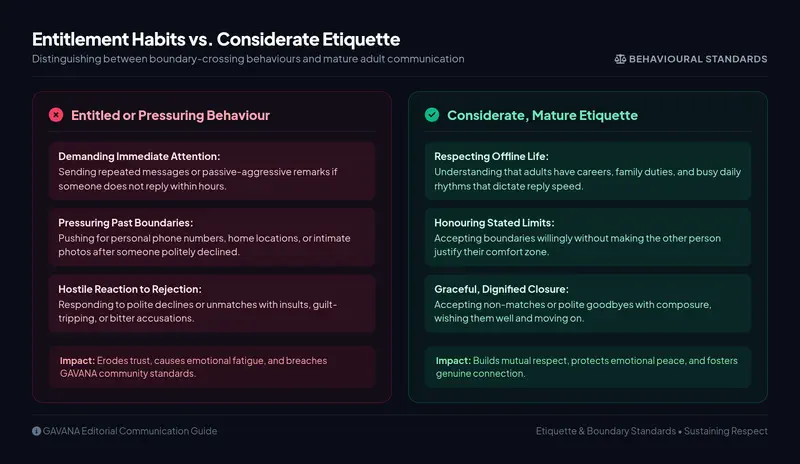
Entitlement Habits vs. Considerate Etiquette
Online dating culture can sometimes foster habits of impatience and pressure. Comparing these behaviours side by side clarifies how considerate etiquette builds healthier connections:
Rejection, Ghosting, and Ending Conversations Gracefully
Rejection is an inevitable part of looking for a meaningful match. Two adults can be kind, attractive, and interesting, yet simply lack romantic chemistry or alignment in lifestyle.
Handling rejection with grace is one of the truest hallmarks of mature dating etiquette:
When You Decide to Decline
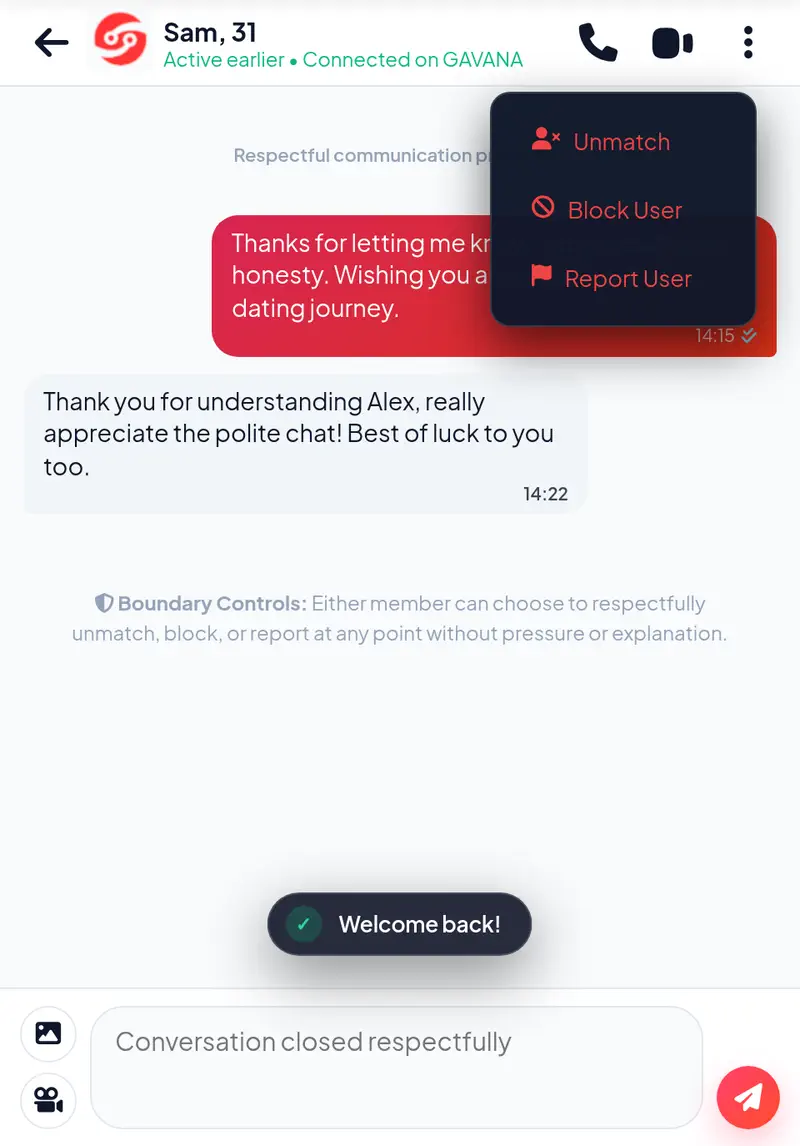
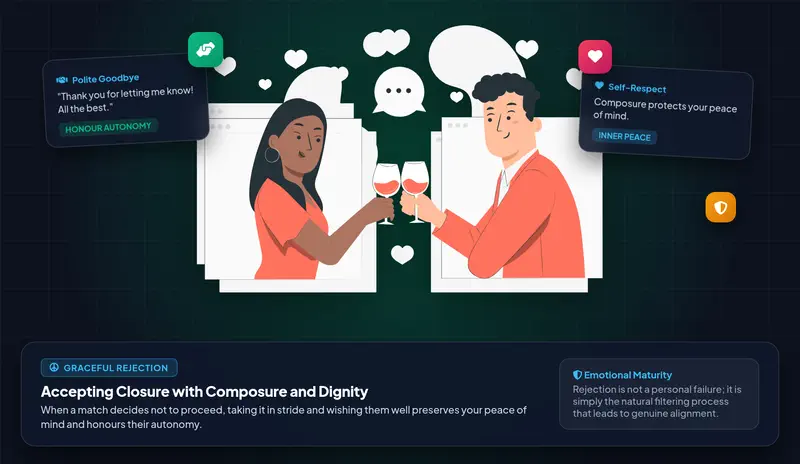
If you have been chatting actively, a short, polite note is courteous: "It was really lovely chatting with you, but I don't feel the romantic spark. Wishing you the best on here!" It provides clear closure without cruelty.
When You Receive a Decline
Accept it with composure: "Thanks for letting me know! All the best to you too." Never argue, demand explanations, or resort to insults. Dignified acceptance protects your own self-respect.
Navigating Faded Chats & Ghosting
If a conversation fades into silence early on, avoid sending bitter follow-ups. People get busy or pause dating apps. Recognize that a faded chat simply means they are unavailable, unmatch calmly, and move on.
For in-depth psychological strategies on managing emotional disappointment, breaking rumination loops, and rebuilding confidence, explore our companion guide on how to deal with rejection while dating.
Moving From Online Interaction to Meeting in Person
Transitioning from digital messages to a first face-to-face meeting should always be a collaborative decision. Courteous etiquette requires planning an encounter where both participants feel safe, equal, and comfortable.
Core courtesies for first dates:
- Choose neutral, public venues: Suggest an accessible coffee shop, café, or art gallery during daytime or early evening hours. Never suggest secluded locations or private homes for a first meeting.
- Ensure independent transport: Both people should be able to arrive and depart under their own power. Never insist on picking someone up from their home on a first date.
- Keep it low-stakes and defined: A 45-to-60 minute drink or walk allows both people to check chemistry without committing to an exhaustive multi-course dinner. For comprehensive safety protocols, read How to Have a Safe First Date.

Frequently Asked Questions About Dating Etiquette
Is it rude to unmatch someone without saying goodbye?
In early-stage messaging where only a few brief exchanges have occurred, unmatching without explanation is standard practice and completely acceptable. However, if you have been conversing actively over several days or have met in person, a brief, polite closing note before parting is courteous.
What is the proper etiquette if someone stops replying mid-conversation?
Give them time and space. Avoid sending repeated messages or demanding to know why they went quiet. If a few days pass, you may send one light, low-pressure observation. If they remain silent, accept the conversation as closed, unmatch politely, and focus on active connections.
Is it considered poor etiquette to talk to multiple matches at the same time?
No. In modern online dating, exploring conversations with multiple matches simultaneously during the introductory phase is normal and expected. However, once you begin seeing someone regularly or agree to exclusivity, honesty and transparency become essential.
How should I respond if someone declines a date invitation?
Respond with warmth and grace: "No problem at all, thank you for being upfront! Wishing you all the best." Taking a decline with dignity demonstrates confidence and leaves a positive impression, whereas pushiness or irritation guarantees negative closure.
What should I do if someone makes me feel uncomfortable or crosses a boundary?
You do not owe anyone polite indulgence when boundaries are crossed. You have the full right to state your limit clearly, unmatch immediately, or use Amoura's reporting and blocking tools if behaviour is harassing, abusive, or inappropriate. Your comfort and safety always come first.
Who should pay for the bill on a first dating app meet-up?
For low-stakes first meets (like coffee or drinks), offering to split the bill or pay for your own order is the most considerate standard. If one person offers to cover it, graciously thank them and offer to get the next round or tip. Treating expenses with fairness avoids awkward expectations.