
Once an Image Leaves Your Device, You May Lose Control of It
In the early and exciting stages of dating, sharing private moments can feel like an expression of intimacy or emotional connection. However, digital photography operates under very different rules than in-person closeness. The moment an intimate photograph leaves your device, your ability to control where that image travels, who views it, or how long it exists effectively ends.
It is common for messaging apps to advertise privacy-enhancing features such as "disappearing messages," "view-once timers," or restricted forwarding. While these tools offer basic convenience, no technical setting can guarantee that an image cannot be copied. A recipient can easily photograph their phone screen with a second camera, capture a screenshot through alternative software, mirror their screen to a computer, or extract cached files from device storage.
Deciding not to send intimate photographs is not about shame or being old-fashioned; it is a clear-eyed recognition of digital architecture. An intimate photograph stored on another person's device is permanently vulnerable to their security habits, their device backups, their personal integrity, and whatever happens in their life in the future.
Strict Legal Baseline: 18+ Adult Standard
Amoura is an 18+ adult platform. As outlined in our Community Guidelines and 18+ Adult Dating Policy, intimate images should never involve anyone under the age of 18. Creating, possessing, or distributing intimate imagery of minors is a severe criminal offence that results in immediate account termination, device bans, and mandatory referral to law enforcement agencies.
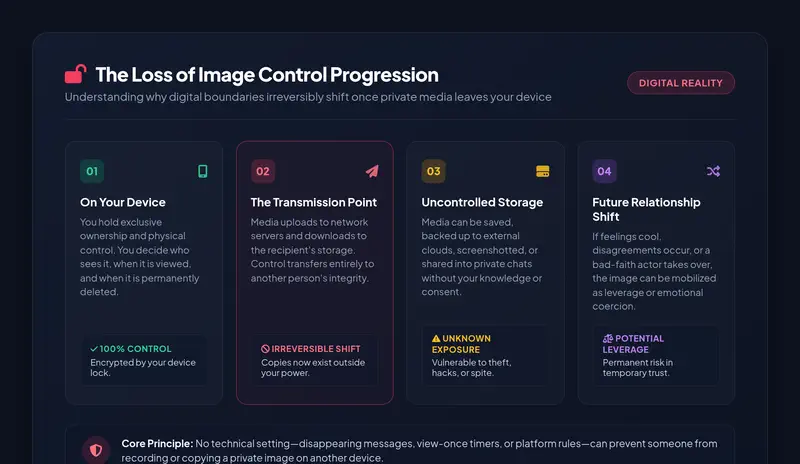
Figure 1: The digital boundary reality. The transmission point represents an irreversible transfer of control over your private imagery.
Trust Can Change Over Time
When someone sends an intimate photograph, they are usually not sending it to an enemy or an extortionist—they are sending it to someone they currently like, trust, and feel attracted to.
The fundamental challenge is that human relationships are dynamic. People who appear kind, attentive, and respectful during the honeymoon phase of early dating may handle rejection, breakups, or disagreements very poorly later on. Even without malicious intent, relationships end. When they do, intimate media remains stored on ex-partners' phones, laptops, and cloud archives.
Furthermore, even if the person you sent the image to remains completely honorable, their device might not. Phones get stolen, traded in, repaired by third parties, hacked, or borrowed by nosy friends and family members. Once you share an intimate photo, you are not just trusting that person today—you are trusting every person who might ever access their unlocked digital devices for years to come.
What an Intimate Image Can Unintentionally Reveal
Many people believe they can protect their privacy by cropping out their face. While keeping your face out of an image reduces immediate recognisability, intimate photographs often convey a substantial amount of identifying contextual data:
- Distinctive Body Features: Unique tattoos, birthmarks, scars, piercings, or distinct jewelry can be instantly matched to public beach, gym, or social media photos where your face is visible.
- Domestic Surroundings: Bedroom layouts, distinctive wall art, unique headboards, bedding patterns, or architectural elements visible in mirrors can be recognized by friends, roommates, or family.
- Peripheral Identifiers: Items on nightstands—such as workplace prescription bottles, university degree frames, employer notebooks, or mail—can confirm personal identity.
- Embedded Image Metadata (EXIF): Direct photo files shared across certain uncompressed channels can contain embedded metadata, including the camera model, exact timestamp, and GPS coordinates of your home.
As explored in our guide on Protecting Your Personal Information While Dating Online, the "mosaic effect" means that an anonymous photo paired with two distinctive clues can easily be attributed to your real identity.
Pressure and Coercion Are Urgent Warning Signs
In any healthy romantic interaction, personal boundaries are respected immediately and without fuss. If you decline to share intimate imagery, a mature and considerate match will simply accept your boundary: "Totally understand, no worries at all!"
When someone reacts to your boundary with pressure, irritation, or emotional manipulation, they are revealing an inability or unwillingness to respect your autonomy. Common coercive patterns include:
The Emotional Guilt-Trip
"If you really liked me, you wouldn't hesitate," or "I sent you one, so it's only fair that you send one back." Reciprocity in intimacy cannot be demanded or transactionalized.
The Pacing Accelerator
"Don't be so uptight, everyone does it," or "Prove to me that you trust me." True trust is demonstrated through consistent, respectful behavior over time—not by handing over sensitive leverage.
Nobody is ever entitled to an intimate photograph of you. Refusing to send intimate images is a healthy, sensible boundary. If someone badgering you creates discomfort, review our guides on Online Dating Red Flags You Shouldn't Ignore and disengage without guilt.
Understanding Sextortion and Coercive Blackmail
One of the most damaging risks associated with sending intimate photographs online is sextortion—a form of cyber-blackmail where an individual threatens to distribute your private images to your family, employer, friends, or social media followers unless you comply with demands.
Sextortion operations frequently follow a calculated progression:
- Rapid Escalation: The acquaintance flatters you, introduces flirtatious conversation quickly, and sends intimate images (which are almost always stolen or synthetic) to encourage you to reciprocate.
- Moving Off-Platform: They encourage you to switch to external apps (like Instagram, Snapchat, or WhatsApp) where your follower list, mutual connections, or phone number are accessible.
- The Sudden Threat: As soon as an intimate image or video is transmitted, their demeanor flips instantly. They send screenshots of your social media contacts alongside your private photos, demanding money via wire transfers, gift cards, or cryptocurrency.
Facing this situation is deeply distressing, but it is critical to know: paying blackmail demands does not make the problem disappear. In almost all documented cases, paying simply signals to the extortionist that their leverage works, prompting immediate demands for larger sums of money.
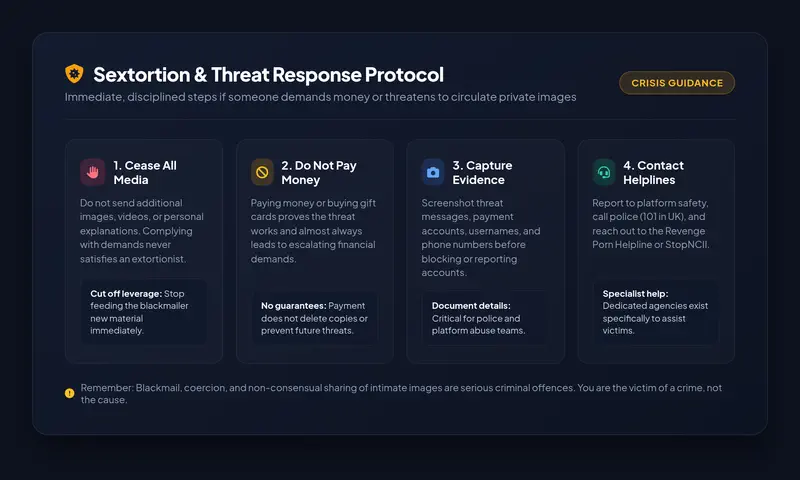
Figure 2: Immediate crisis protocol for threats or blackmail. Prioritise halting engagement, preserving records, and engaging specialized support services.
If You Have Not Sent One Yet: Staying Grounded
If you are currently talking to someone who is hinting, asking, or pushing for intimate photographs, the simplest, safest, and most effective decision is clear: do not send them.
Consider these grounding reminders:
- A Simple "No" Is Sufficient: You do not need an elaborate medical or moral explanation. A brief, calm statement—"I don't share intimate photos online"—is completely valid.
- Observe Their Response: How someone responds when you set a firm boundary tells you vastly more about their character than weeks of affectionate banter.
- Protect Your Peace of Mind: Not sending an image eliminates an entire category of future anxiety. You never have to wonder where a file is stored, who has seen it, or whether an ex might weaponize it.
If You Already Sent an Intimate Photograph
If you have already sent an intimate photo to an online acquaintance and are now feeling anxious or regretful, do not blame or shame yourself. Sharing intimacy is a human instinct, and being taken advantage of by a manipulative person is never your fault.
Take these calm, protective measures now:
Do Not Send Any Additional Images
If the person demands more photos, angles, or videos, refuse immediately. Never attempt to "soothe" an escalating situation by providing more sensitive material.
Preserve Messages and Context
Take clear screenshots of conversation histories, profile handles, phone numbers, and payment details if any demands are made. Do not delete message logs in panic.
Tighten Social Media Accounts
Set all your external social media profiles (Instagram, Facebook, LinkedIn, TikTok) to maximum privacy. Hide your follower lists and remove public contact details so outsiders cannot easily map your social circle.
Use Amoura Reporting and Blocking Tools
If the contact took place on Amoura, use our native reporting system under Inappropriate Content or Harassment and block the user immediately. Review How to Report a User on Amoura.
What to Do If Someone Threatens to Share Your Image
If someone is actively threatening or blackmailing you with an intimate image, treat this as a serious legal matter. Non-consensual sharing of intimate images (often termed "revenge porn") and blackmail are criminal offences in the UK under the Criminal Justice and Courts Act and Online Safety Act.
Follow this disciplined response protocol:
- Do Not Pay or Negotiate: Paying does not delete their copies and will only invite subsequent demands. Cutting off financial hope is often what causes commercial extortionists to abandon the interaction and move on.
- Stop Communicating: Cease responding to their threats. Do not plead, argue, or express panic. Disengage completely.
- Create a Digital Fingerprint Hash via StopNCII: Visit StopNCII.org (Stop Non-Consensual Intimate Image Abuse). This free, secure platform creates an encrypted digital hash of your image directly on your device, allowing participating tech platforms (Meta, TikTok, Reddit, etc.) to detect and block the image from ever being uploaded without anyone seeing the original file.
- Report to UK Police: Call 101 to report blackmail and cyber-extortion. If you are in immediate physical danger, call 999.
Respect Other People's Privacy
Privacy is an absolute ethical obligation. If someone has shared private, vulnerable, or intimate media with you in confidence, you have an unwavering responsibility to safeguard that trust:
- Never Forward or Re-distribute: Sharing someone's private photo into group chats, social forums, or third-party apps without their explicit consent is abusive, illegal, and causes immense psychological harm.
- Never Use Private Media as Retaliation: Weaponizing private images following a breakup or disagreement is a serious criminal offence with substantial legal penalties, including police records and imprisonment.
- Adhere to Platform Standards: Amoura maintains zero tolerance for harassment, doxxing, or image-based abuse. Violators face immediate permanent termination under our Community Guidelines.
Frequently Asked Questions
What should I do if a match repeatedly pesters me for intimate photos?
State your boundary once clearly: "I don't share private photos online, and I need you to respect that." If they persist, make passive-aggressive comments, or send unprompted explicit images, unmatch and report them immediately. Persistent boundary violation is a major red flag for coercive behavior (see Online Dating Red Flags You Shouldn't Ignore and How to Block and Report Someone on a Dating App).
Can't I just use disappearing message apps that notify me of screenshots?
No. Disappearing timers and screenshot alerts offer a false sense of security. Anyone can take a picture of their screen using a second smartphone, run screen recording tools, or mirror their device to a secondary monitor without triggering any notification. Once transmitted, privacy cannot be guaranteed by software alone.
Should I pay someone who is threatening to share my private photo?
No. Never pay a blackmailer. In virtually all cases, paying proves that the threat is effective and leads to immediate demands for additional funds (read our guidance on What to Do If Someone Asks You for Money). Stop communication, preserve evidence, lock down your social media accounts, and report the extortion to police and specialist support helplines.
What evidence should I capture if I am being blackmailed?
Take clear screenshots of the exact threatening messages, the username and profile URL of the perpetrator, phone numbers, payment links or crypto addresses provided, and the specific images they claim to hold. Preserve this evidence securely before blocking or reporting the account.
Where can I find confidential UK support for image-based abuse?
In the UK, contact the Revenge Porn Helpline (operated by SWGfL) at 0345 6000 459 for free, confidential, non-judgmental guidance and assistance with content removal. You can also utilize StopNCII.org to proactively prevent non-consensual sharing across major tech platforms.