
How to Choose Good Dating Photos
A practical, grounded guide to choosing dating profile photos that accurately represent who you are, communicate your genuine personality, and build visual trust—without rigid beauty standards, deceptive filters, or awkward poses.
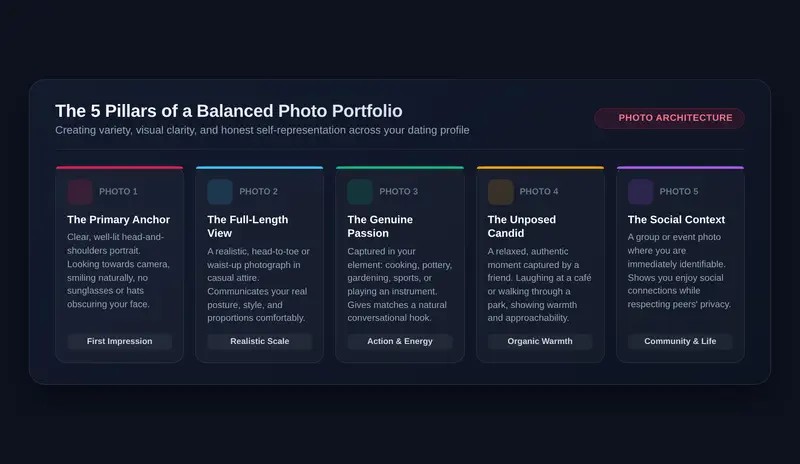
Stage 1: Primary Anchor
A solo, well-lit head-and-shoulders portrait with direct eye contact and a natural smile.
Stage 2: Full-Length View
A relaxed, waist-up or full-height photo giving an honest sense of your personal style and presence.
Stage 3: Activity & Hobby
Captured doing something you genuinely love—hiking, cooking, crafting, or exploring.
Stage 4: Unposed Candid
An organic, laughing moment taken by a friend that conveys approachability and warmth.
Your Photos Give People a First Impression, Not Your Life's Worth
In online dating, photographs serve a clear and practical purpose: they offer prospective matches an initial visual introduction to who you are. Before someone reads about your taste in music, your career, or your relationship goals, your images communicate warmth, mood, and personal energy.
However, it is vital to remember what photographs are not. Profile photos do not measure your worth as a person, and there is no single "correct" aesthetic formula that guarantees mutual chemistry. A compelling dating photo is not about imitating an airbrushed fashion catalog or pretending to live an extravagant lifestyle. Rather, it is about giving someone an accurate, reassuring glimpse of who will actually greet them across the table on a first date.
When your photos reflect your authentic appearance and everyday rhythm, you create an immediate foundation of trust. Dating anxiety drops significantly because you never have to worry about meeting someone and feeling that they were expecting someone else. In our companion guide on How to Create an Honest Dating Profile, we explored how written authenticity filters for genuine compatibility; your photographs play the exact same role visually.
Choose Photos That Actually Look Like You
The single most effective quality a dating photo can possess is representativeness. If a friend who has known you for years looked at your dating profile, would they say, "Yes, that's exactly what you look like on a typical Saturday afternoon"?
Daters often feel tempted to choose photos where they look exceptionally glamorous, even if the image is five years old, heavily filtered, or taken after professional styling that they never wear in real life. While this might generate an initial swipe, it invariably leads to awkwardness when meeting in person. When your date arrives and realizes you look substantially different from your pictures, it introduces a subtle breach of trust before the conversation even begins.
Three Ground Rules for Visual Accuracy
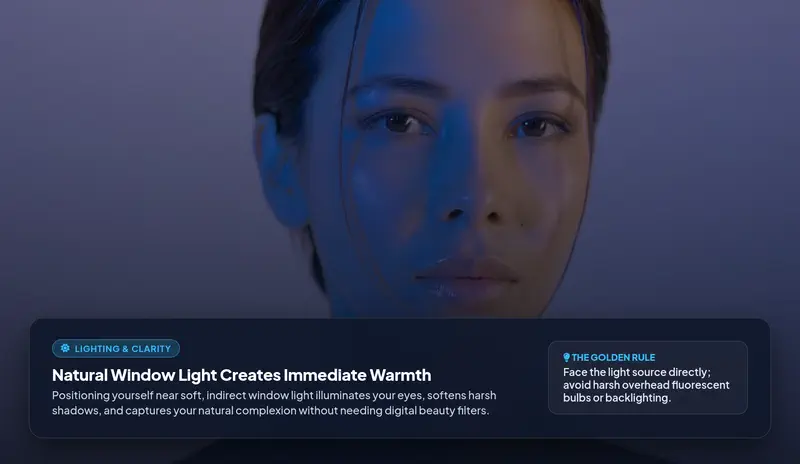
- Recency Matters: As a rule of thumb, your profile photos should have been taken within the last 12 months. If you have recently changed your hair color, grown or shaved a beard, gotten glasses, or experienced a noticeable lifestyle shift, update your photos to match.
- Natural Expressions Over Pouts: A relaxed, warm smile or an unforced conversational expression signals confidence and approachability. Stiff, intense scowls or theatrical modeling poses often come across as guarded or intimidating.
- Ditch Smoothing & Morphing Filters: Apps that distort facial proportions, enlarge eyes, or scrub away every trace of natural skin texture are immediately obvious to other daters. Real adults have laugh lines, pores, and distinct features—these are characteristics of humanity, not flaws to conceal.
Show More Than One Side of Yourself
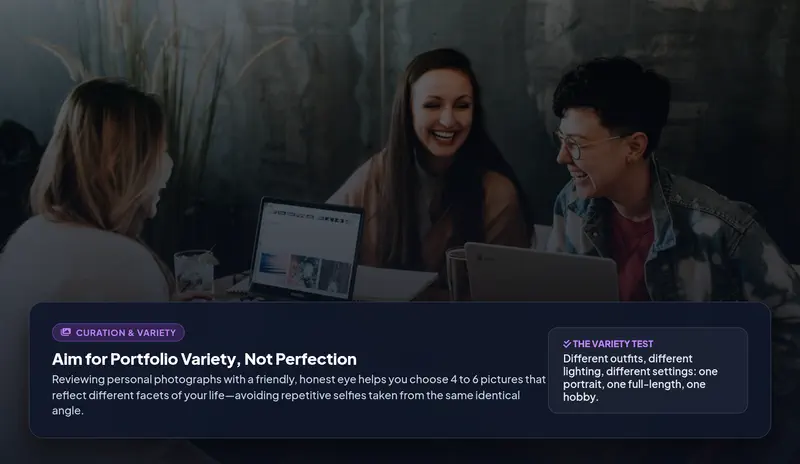
A common trap in dating profiles is the "monothematic lineup"—where every picture is practically identical. This frequently looks like six car selfies taken from the exact same high angle, six gym mirror selfies with the same flexed arm, or six nightlife photos where the person is holding a cocktail in dark bar lighting.
Human beings are multifaceted. An effective dating profile uses variety to show different facets of your life, moods, and environments. Think of your profile as a small editorial photo essay that answers multiple questions at once:
What Do You Look Like Up Close?
A well-lit, unobstructed headshot where your eyes, face, and smile are clearly visible. This allows people to connect with your expression and feel comfortable reaching out.
What Is Your General Style and Stature?
A full-length or three-quarter shot in casual, everyday clothing. It grounds your profile in reality and shows how you comfortably carry yourself in the world.
What Brings You Joy in Free Time?
An action shot illustrating a real pursuit: tending to your balcony garden, shaping bread dough, trail running, strumming a guitar, or perusing a weekend book fair.
How Do You Relate to Others?
An organic candid where you are laughing with peers, visiting an outdoor market, or enjoying an event. Demonstrates social warmth and ease.
Lighting, Clarity and Composition: Simple Mobile Tips
You do not need a professional photographer or expensive studio gear to produce appealing dating photos. Modern smartphones possess remarkable cameras; what makes the difference between an unflattering photo and an engaging one is almost entirely down to lighting and composition.
Actionable Photography Rules You Can Use Today
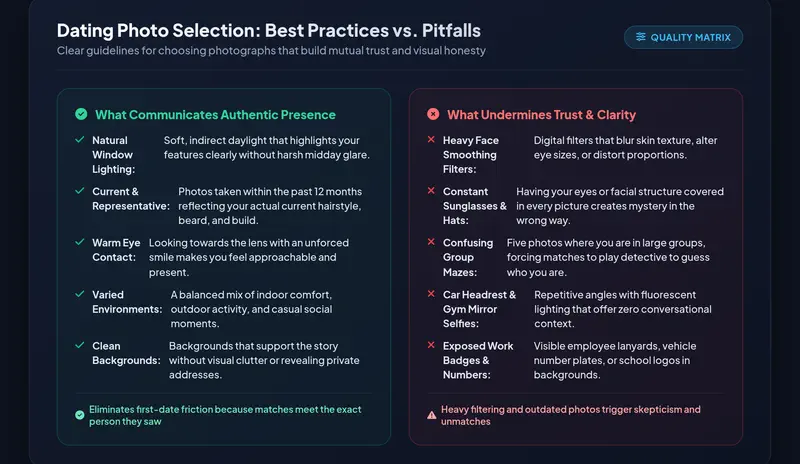
- Seek Directional Daylight: Stand or sit facing a window, or take photos outdoors during early morning or late afternoon ("golden hour"). Soft daylight naturally brightens the eyes and creates flattering shadows, whereas harsh midday sunlight causes squinting and deep shadows under the eyes.
- Keep the Lens at Eye Level: Photos taken from below the chin or extreme overhead bird's-eye angles look unnatural. Placing your phone camera at or slightly above eye level produces a natural, conversational perspective.
- Tidy the Background: An otherwise lovely candid can be ruined by an unmade bed, overflowing laundry baskets, or dirty bathroom mirrors in the background. Choose neutral, tidy, or outdoor backdrops that let you remain the focus.
- Wipe Your Smartphone Lens: Pocket lint, fingerprints, and natural skin oils create cloudy, hazy smudges over mobile phone cameras. Cleaning your camera glass with a soft cloth before taking a picture instantly improves image sharpness and contrast.
Selfies, Group Photos and Sunglasses: What Works and What Doesn't
Certain types of photos trigger immediate debates in online dating. Here is how to navigate selfies, group shots, and face coverings sensibly:
1. The Reality of Selfies
Selfies are not inherently bad, but their context matters tremendously. A casual, well-lit selfie taken while walking through a botanical garden or taking a coffee break can feel intimate and relaxed.
Where selfies fall short is when they dominate the entire profile. Avoid the classic "car seat selfie" (which reveals little about your life and often has awkward lighting), bathroom mirror selfies with a visible phone blocking half your face, and gym locker room photos. If you include a selfie, restrict it to one, and make sure it has good lighting and a relaxed expression.
2. Group Photos: The Two-Second Rule
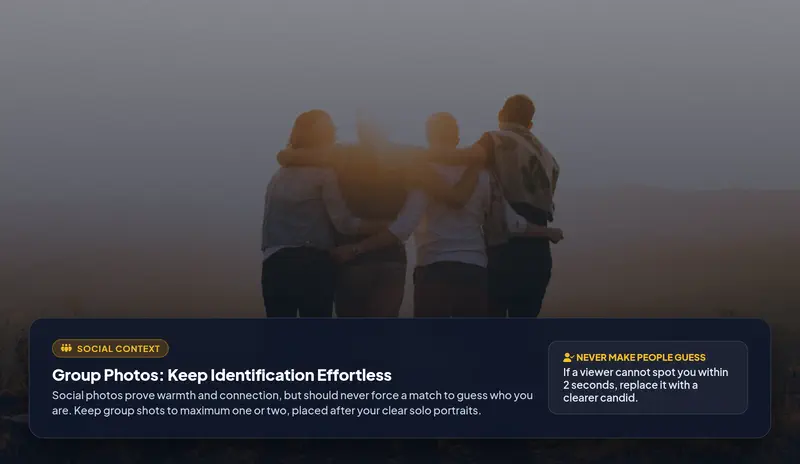
A social photo shows that you have friends and enjoy community, which is positive. However, your dating profile should not require a match to cross-reference multiple photos to deduce which person you are.
A lineup of five people who all look similar, wearing hats and sunglasses at a festival, placed as Photo 1.
Placed as Photo 4 or 5, where you are front-and-center or clearly distinguishable, having already established your appearance in solo portraits.
3. Sunglasses, Hats, and Face Coverings
Eye contact is a biological cornerstone of human connection and trust. When all of your photos feature dark sunglasses, wide-brimmed hats, or motorcycle helmets, viewers feel emotionally distanced. While one vacation photo in sunglasses is fine, ensure that your eyes are clearly visible in the vast majority of your portfolio—especially your primary image.
Show Your Interests Through Real Moments
One of the greatest advantages of a thoughtful photograph is its ability to communicate shared interests without writing a single word. A photo of you kneading pasta dough, running a local 10k, tending plants on a balcony, or tuning a bicycle speaks volumes about your lifestyle.
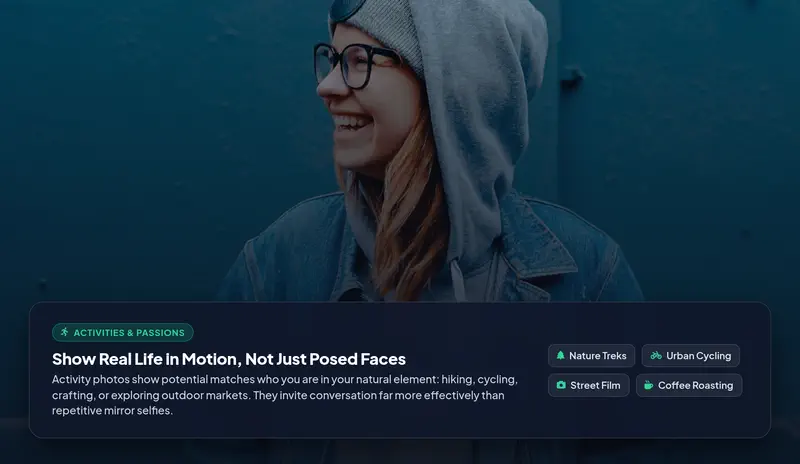
The key to a great interest photo is unforced authenticity. You do not need to stage dramatic, high-adrenaline adventures to look interesting. In fact, photos of people posing with rented luxury sports cars, standing next to exotic animals at tourist enclosures, or pretending to read books in stiff studio setups often come across as performative.
Instead, feature activities you genuinely pursue on an ordinary weekend. If you love quiet pottery classes, Sunday baking, board games, or visiting local art galleries, let that shine through. It immediately attracts people who appreciate your actual pace of living.
Common Dating Photo Mistakes to Avoid
Many well-meaning daters unintentionally undermine their profile by making avoidable photo selection errors. Recognizing these patterns allows you to audit your portfolio objectively:
The "Time Capsule" Disconnect
Using photos from college, past decades, or before significant life changes. While nostalgia is natural, dating photos must reflect the person who will arrive on the date next Tuesday.
Aggressively Filtered Portraits
Heavy airbrushing, animal ears, or AI face-swapping filters signal insecurity and undermine authenticity. Profiles with natural, unedited skin create far more trust. For context on synthetic images, review our guide on How to Spot a Fake Dating Profile.
The All-Sunglasses Profile
Wearing sunglasses or ski goggles in four out of five photos prevents viewers from forming an emotional connection with your eyes and facial expressions.
Cropping Out Ex-Partners Awkwardly
Photos where a disembodied arm is draped around your shoulder or someone's hair is sliced in half look unresolved and messy. Take a fresh, solo photo instead.
Low-Resolution & Blurry Uploads
Uploading tiny screenshots of older photos or heavily compressed images makes profiles look neglected or suspicious. Modern platforms support crisp, high-resolution imagery.
Respect Other People's Privacy and Check Your Backgrounds
Dating profiles are publicly accessible spaces within dating communities. When selecting pictures, you must balance authentic self-expression with basic privacy and consent considerations for both yourself and those around you.
1. Consent for People in Your Photos
Never include friends, family members, or colleagues without their explicit consent. Not everyone wants their likeness displayed on a dating app. In particular, never post photographs of children or minors on a dating profile, even if they are your own children, nieces, or nephews. To protect minor safety and uphold our 18+ policy, keep dating platforms exclusively focused on adult connection (see Why Amoura Is an 18+ Dating Platform and our Community Guidelines).
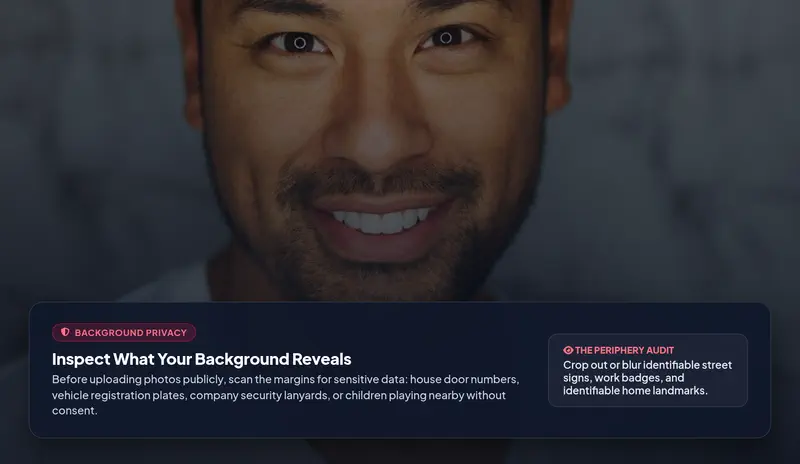
2. Scanning the Periphery for Data Leaks
As detailed in our guide on Protecting Your Personal Information While Dating Online, careless background details can compromise your physical safety. Before uploading an image, inspect the corners:
- House Numbers & Street Names: Avoid photos standing directly in front of your front door with visible house numbers or street signs.
- Work Badges & Uniforms: Ensure employee access lanyards, company logos, or corporate reception desks are not visible.
- Vehicle Registration Plates: Blur or crop out vehicle license plates if taking photos near your car or motorcycle.
- Commute Routines: Be mindful of identifiable landmarks that reveal your exact daily train station or regular gym branch.
Amoura Photo Requirements and Pre-Upload Checklist
Within the Amoura application, profile photography is built around a safety-first architecture designed to ensure authentic matchmaking across our community (for full onboarding steps, review Getting Started with Amoura):
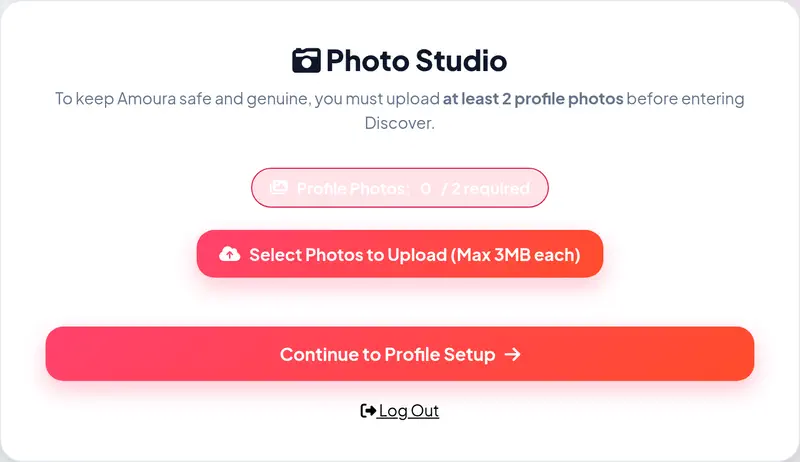
Amoura Photo Studio — a mandatory minimum of 2 profile photos is required before entering Discover, ensuring all members present genuine visual profiles.
- Mandatory 2-Photo Minimum: To prevent empty or bot profiles, all members must upload at least two photos during onboarding before browsing the discovery feed.
- High-Quality File Support: Amoura accepts high-resolution JPEG, PNG, and WebP files up to 3MB per photograph.
- Built-In Photo Crop Studio: When uploading photos, Amoura provides an interactive framing modal with drag, pan, and zoom controls to align your photo perfectly within standard dating card proportions.
- Primary Photo Selection: You can choose your main anchor photo and delete or replace secondary photos at any time in your Profile Editor.
The 8-Point Pre-Upload Photo Checklist
Before finalizing your dating profile photo lineup, run through this quick review:
Frequently Asked Questions
Common questions regarding photo counts, selfies, filters, and photo anxiety when setting up a dating profile:
How many photos should I have on my dating profile?
While Amoura requires a minimum of 2 photos to activate your profile, the ideal portfolio size is between 4 and 6 distinct images. This allows you to show a primary portrait, a full-length shot, an active hobby, and a relaxed social candid without overwhelming the viewer with repetitive pictures.
Is it okay to include selfies on a dating profile?
Yes, provided they are used sparingly and with good technique. A well-lit, outdoor selfie with a natural smile can look relaxed and approachable. However, avoid profiles consisting exclusively of selfies, and steer clear of bathroom mirror shots, gym locker room photos, or car headrest angles. Keep selfies to at most one or two in your portfolio.
What if I don't have many recent photos of myself?
This is very common, especially for people who rarely take photos in daily life. You do not need to hire a photographer: ask a trusted friend or family member to spend 20 minutes taking candid portraits while you grab coffee or walk in a park. Alternatively, prop your smartphone on a shelf at eye level, use the self-timer function near a window, and take a few relaxed, casual portraits.
Can I use subtle photo editing or color adjustments?
Basic adjustments like tweaking brightness, contrast, or cropping out distracting background objects are completely fine. What you should avoid are "beauty filters" that alter facial geometry, enlarge eyes, whiten teeth to an artificial glow, or smooth away natural skin texture. Authenticity builds far more connection than artificial digital smoothing.
Should I include group photos with friends?
One group photo can be great for demonstrating social warmth, but only if you are clearly and instantly identifiable. Never make a group photo your primary image, ensure you have your friends' consent before posting, and avoid photos where everyone is wearing sunglasses or hats, which forces matches to guess who you are.
What if I feel self-conscious or uncomfortable in front of cameras?
Camera anxiety is completely normal. The best antidote is focusing on action rather than posing: have a friend take candid photos while you are genuinely engaged in an activity you enjoy (such as cooking, walking a dog, or laughing over coffee). When your attention is on the activity rather than the lens, your posture and expression relax naturally.