
Green Flags: Signs of a Healthy Connection
How to recognise the everyday behaviours that indicate respect, emotional safety, mutual effort, and authentic compatibility across your dating journey—evaluated through steady patterns over ordinary time rather than performative grand gestures.
1. Steady Consistency
Words match deeds over weeks. Reliable follow-through without volatility or sudden disappearing acts.
2. Boundary Respect
Accepts "no" easily without guilt, resentment, or pressure. Honors personal pacing across all levels.
3. Emotional Safety
Speak candidly, clarify misunderstandings, and navigate disagreements without fear of ridicule or contempt.
4. Mutual Reciprocity
Balanced initiative in messaging, asking questions, and planning time. Dating feels collaborative, not one-sided.
What Green Flags Actually Mean (And What They Don't)
In modern dating conversations, much of the focus is naturally directed toward self-protection: learning how to spot warning signs, evasive profiles, and boundary violations. While knowing what to avoid is essential for personal safety, learning what healthy behaviour looks like is equally vital for cultivating genuine intimacy and emotional peace.
A green flag is an observable pattern of behaviour that signals emotional maturity, respect, trustworthiness, and consideration. It indicates that someone possesses the personal capacity for a healthy, reciprocal relationship. However, understanding green flags requires an important nuance:
Patterns Over Moments
A single thoughtful gesture or charming compliment is an isolated data point. True green flags are confirmed only when positive behaviours repeat steadily over ordinary weeks and changing circumstances.
Character vs Compatibility
Someone can exhibit flawless green flags—being respectful, kind, communicative, and honest—and still not be the right romantic fit for you. Good character makes a healthy connection possible, but shared values and chemistry determine alignment.
Not an Absence of Flaws
Green flags do not describe a mythical "perfect partner." Human beings have clumsy days, occasional awkward phrasing, and stressful moments. Green flags indicate how someone repairs, communicates, and shows up when life is imperfect.
Mutual, Never One-Sided
Green flags are not a one-way test you administer to another person while remaining passive. A thriving connection requires both adults to bring emotional maturity, respect, and active consideration to the table.
By viewing green flags as an evolving landscape rather than a rigid pass/fail scorecard, you give yourself permission to observe someone naturally, notice genuine strengths, and make grounded decisions based on lived experience.
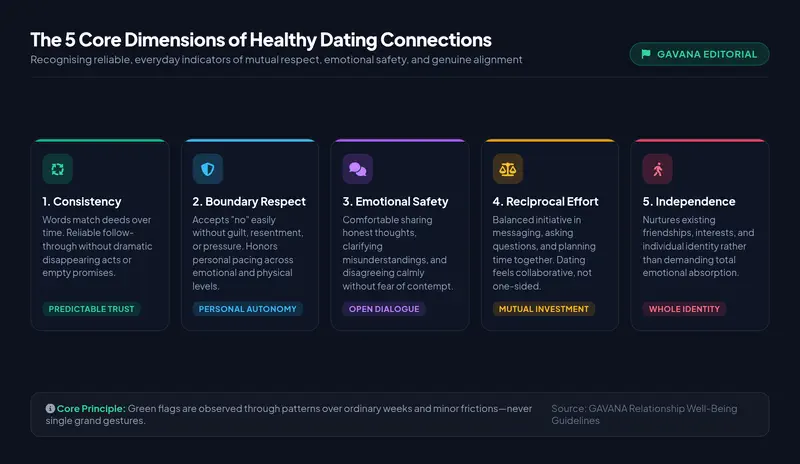
Consistency: When Words and Actions Align
Anyone can craft eloquent messages, make grand statements about their integrity, or speak about future adventures during the first forty-eight hours of a match. Words are easy to offer; steady follow-through is where authentic character reveals itself.
A major green flag is behavioural alignment—the quiet harmony between what someone says they will do and what they actually do. This includes:
- Honoring commitments: If they arrange a phone call for Thursday evening at 7:00 PM, they reach out at 7:00 PM. If unexpected work or life obligations interfere, they communicate proactively in advance rather than disappearing and offering excuses days later.
- Transparent intentions: What they express about their relationship goals on their profile matches the kind of pacing and interactions they pursue in reality. They do not say they want a committed relationship on their profile while acting evasively about their availability.
- Predictable emotional presence: They do not cycle between intense, overwhelming attention for three days followed by a week of icy silence. Their communication pace feels steady, reasonable, and grounded.
Consistency creates the psychological foundation for trust. When you know someone's word is reliable, you are freed from the exhausting mental chore of second-guessing their motives or wondering which version of them will appear next.
Respect for Boundaries and Personal Autonomy
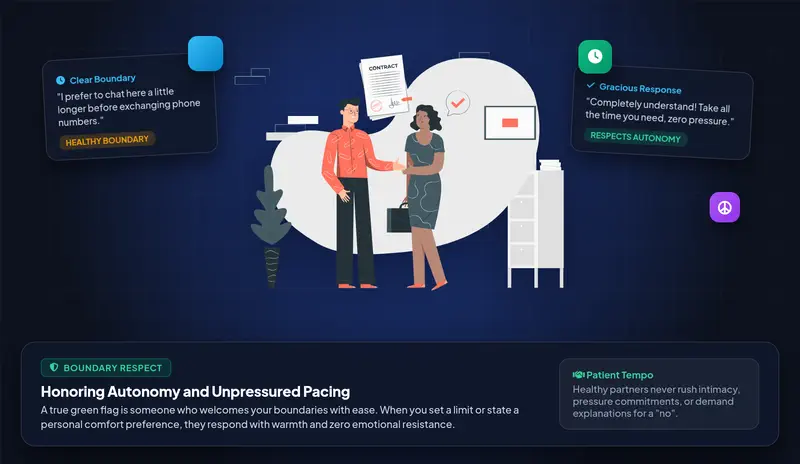
The true test of respect does not occur when you agree with someone; it occurs when you say "no." How a dating match responds when you decline an invitation, express a personal comfort limit, or ask to slow the pace reveals more about their emotional maturity than fifty charming compliments.
In a healthy connection, setting a boundary is met with ease, grace, and immediate compliance. Observable green flags around boundaries include:
Zero Guilt-Tripping
When you state that you cannot meet on short notice or need an early night, they respond with understanding rather than sulking, acting passive-aggressive, or questioning your dedication.
Accepting Pacing Limits
If you prefer to chat within the platform before sharing personal phone numbers or social media handles, they warmly agree without demanding justifications or asserting that "real connections don't wait."
Honoring Physical Comfort
During in-person dates, they respect personal physical space, ask for consent naturally, and never pressure you to drink alcohol, stay out late, or go to secluded locations.
Respecting Emotional Privacy
They do not pry into deeply personal past traumas, painful breakups, or sensitive finances early on, recognizing that emotional vulnerability is earned over time.
Comfortable Communication and Emotional Safety
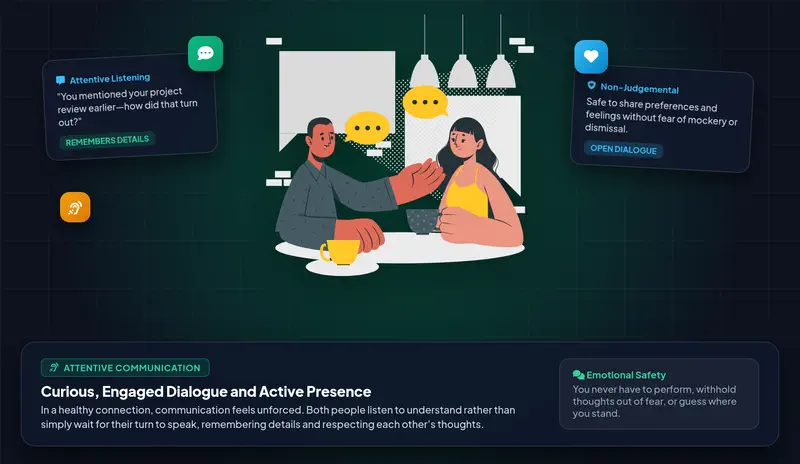
One of the clearest internal markers of a healthy connection is the sensation of emotional safety. You do not feel the need to walk on eggshells, draft twenty drafts of a simple message before hitting send, or constantly filter your opinions for fear of being ridiculed, judged, or reprimanded.
Healthy communication has several recognizable characteristics:
- Freedom to ask clarifying questions: If something sounded ambiguous or confusing in a message, you feel completely comfortable saying, "Just to make sure I understand what you meant, did you mean...?" and they answer with openness rather than defensiveness.
- Attentive, curious listening: When you share an anecdote, an interest, or a challenge you faced at work, they listen to understand rather than simply waiting for a gap to steer the focus back to themselves.
- Validating your perspective: Even when they have had different life experiences, they do not dismiss your feelings as "dramatic," "overthinking," or "too sensitive."
Mutual Effort and Reciprocal Investment
A healthy connection never feels like an exhausting solo performance or an uphill marathon. In unbalanced dating scenarios, one person is perpetually responsible for initiating dialogue, asking questions, following up after silences, and suggesting dates, while the other merely acts as a passive recipient.
In contrast, a foundational green flag is reciprocal effort. This balance does not require a rigid, bean-counting 50/50 split every hour of the day, but over a week or two, an unmistakable pattern of shared investment emerges:
Shared Initiative
Both people start conversations. You do not have to wonder if they will ever message first; they reach out because they are genuinely interested in hearing from you.
Thoughtful Suggestions
Date ideas and activity suggestions come from both sides. When you suggest coffee, they suggest a walk in the sculpture park or an exhibition next time.
Proactive Rescheduling
If they must cancel or reschedule due to unforeseen work or illness, they proactively offer concrete alternatives: "I'm so sorry I have to stay late at work tonight; could we reschedule for Sunday afternoon at 2?"
Engaged Replies
Their responses add substantive value to the dialogue, sharing opinions, humor, and open-ended questions that invite ongoing back-and-forth exchange.
For practical strategies on building balanced, engaging back-and-forth dialogue from early messages onward, explore our companion guides on how to start a conversation on a dating app and how to have better conversations while dating.
Emotional Maturity and Meaningful Accountability
Everyone makes mistakes. In the course of dating, someone might run fifteen minutes late due to traffic, forget a minor detail mentioned three days prior, or misinterpret the tone of a text message. The difference between an emotionally healthy connection and a turbulent one lies in how those moments are handled.
A high-level green flag is the presence of unprompted accountability. Emotionally mature individuals do not construct elaborate deflections, blame external scapegoats, or turn the situation around to accuse you of being unreasonable. Instead, they demonstrate:
- Direct, simple apologies: "I'm so sorry I arrived late. I should have accounted for Friday evening transit delays. Thank you for your patience."
- Absence of deflecting blame: They do not say, "Well, I wouldn't have been late if you hadn't picked this location." They own their part without drama.
- Behavioural adjustment: The apology is followed by concrete changes in future situations, showing that their words carry genuine substance.
- Capacity to hold space for your feelings: When you express that an action made you feel uncomfortable, they listen calmly rather than spiraling into theatrical guilt or forcing you to comfort them for feeling bad about their mistake.
Healthy Independence and Wholeness Outside Dating
In romance novels and films, intense connections are often depicted as two people who instantly abandon everything else in their lives to become each other's entire universe. In reality, that level of instantaneous enmeshment is often a warning sign of poor boundaries or emotional volatility.
A genuine green flag is healthy independence. An emotionally stable person has a full, grounded life that exists before meeting you, alongside you, and independent of you:
Active Friendships
They maintain meaningful bonds with longstanding friends, colleagues, or community groups, and they talk about these relationships with warmth and loyalty.
Personal Passions
They have creative hobbies, sports, professional goals, or personal interests that bring them joy and purpose outside of romantic pursuits.
Celebrating Your Autonomy
They are delighted when you spend an evening with your close friends or focus on an important deadline. They never make you feel guilty for having an independent life.
Comfort With Alone Time
They are secure spending quiet evenings on their own and do not require round-the-clock digital surveillance or constant texting to feel validated.

Kindness to Others in Low-Stakes Situations
During early dates, most people are on their best behaviour with their date. Because romantic attraction and the desire to impress are high, observing how someone treats you only tells half the story. The more revealing insight comes from watching how they treat people who can do nothing for them.
Observe their behaviour in ordinary public environments:
- Service staff and hospitality workers: How do they speak to the barista when the coffee order takes five extra minutes? Are they courteous to servers, bus drivers, and cinema staff?
- Strangers in shared spaces: Do they hold doors, navigate crowded sidewalks with consideration, and speak politely when interacting with people in daily life?
- Discussing former partners or acquaintances: While no one is obligated to remain best friends with an ex, do they speak about past relationships with nuanced perspective and dignity, or do they paint every previous partner as "completely crazy"?
Someone who is polite to you but dismissive, arrogant, or condescending to service staff is demonstrating that their courtesy is performative and conditional. True kindness is an ingrained habit of character, not a tool used selectively when an audience is present.
Respectful Disagreement: Constructive Conflict
Two different adults with distinct upbringings, careers, and life experiences will inevitably disagree on certain topics—whether it is a trivial debate about film genres or a substantive conversation about lifestyle preferences, work-life balance, or political perspectives.
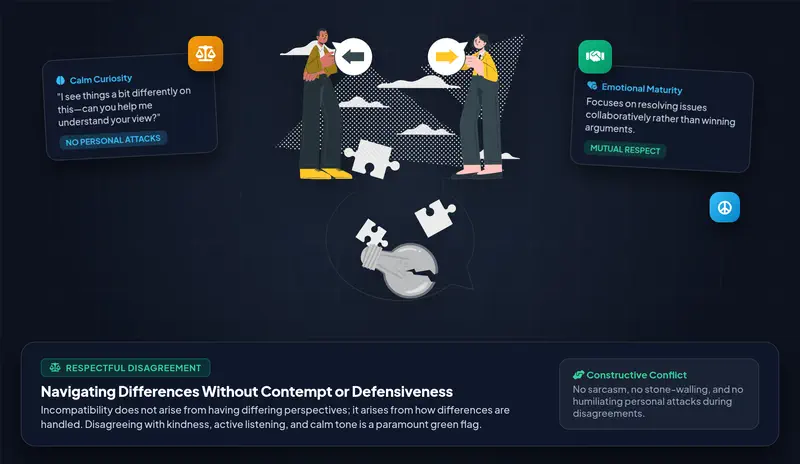
The green flag is not finding someone who agrees with 100% of your opinions; the green flag is discovering someone who knows how to disagree with dignity, curiosity, and calm respect:
Curiosity Over Competition
Instead of trying to "win" a debate or prove you wrong, they ask questions to understand: "That's an interesting perspective—what made you look at it that way?"
Zero Sarcasm or Insults
They never resort to eye-rolling, mocking laughter, belittling comments, or cruel nicknames to diminish your standpoint.
Regulated Emotional Tone
When tension rises, they do not shout, slam items, storm off, or weaponize silent treatment. They can take a deep breath or suggest revisiting the topic calmly later.
Agreeing to Disagree
On subjective topics where neither person is harmed, they are completely content allowing differing tastes and viewpoints to coexist harmoniously.
Genuine Curiosity: Getting to Know the Real Person
In performative dating, conversations often revolve around resumes, surface credentials, or generic flirtation designed to stroke ego. In contrast, a healthy connection is characterized by substantive personal curiosity.
A green flag partner wants to understand the human being beneath the profile photos:
- Remembering meaningful specifics: They remember that your sister was taking a medical board exam, that you prefer black tea over espresso, or that you love historical architecture. They bring these details up naturally without needing to be reminded.
- Asking beyond the surface: Rather than just asking "What do you do for work?", they ask "What aspect of your work do you find most fulfilling?" or "What are you looking forward to this season?"
- Respecting your individuality: They appreciate your unique quirks, humor, and opinions rather than trying to project a fantasy script onto you or mold you into an idealized template.
To understand how reciprocal courtesies reinforce thoughtful dialogue across modern messaging platforms, see our guide on online dating etiquette.
Emotional and Practical Compatibility
While green flags reflect admirable character traits, long-term romantic success also requires practical alignment. It is entirely possible for two wonderful, mature individuals with impeccable green flags to realize they want fundamentally different lives.
Evaluating compatibility involves considering several core pillars:
Relationship Goals
Do you both seek a committed, monogamous partnership, casual dating, or long-term cohabitation? Open clarity prevents years of unspoken assumptions.
Lifestyle and Cadence
How do your work hours, geographic locations, financial priorities, and social energies align? A homebody and a weekly globetrotter may face natural logistical friction.
Communication Rhythms
Does one person need three calls a day while the other prefers brief check-ins and evening summaries? Complementary rhythms reduce unnecessary relationship anxiety.
Core Personal Values
Shared principles around family, integrity, ethics, and lifestyle direction provide the anchoring roots that withstand life's unforeseen challenges.
When both people have the emotional honesty to discuss these factors early without pretending to be something they are not, mutual trust deepens substantially. If your connection spans different traditions or international upbringings, exploring our companion guide on dating across different cultures and backgrounds offers practical ways to harmonize distinct perspectives.
Patience and Allowing an Organic Pace
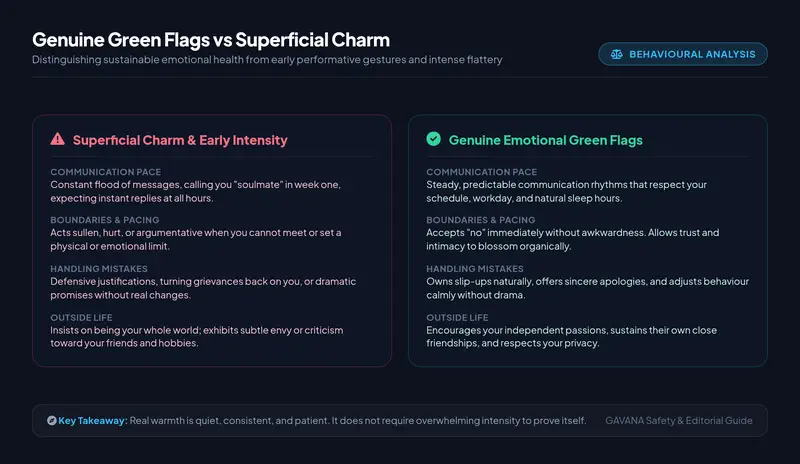
One of the most reassuring green flags in modern dating is unhurried patience. Unhealthy or predatory dynamics frequently involve rapid acceleration—proclaiming profound love within days, pressuring for instant exclusivity before you even understand each other's personalities, or demanding 24/7 access to your time.
Healthy intimacy, by contrast, is built step-by-step. A patient partner understands that real trust takes weeks and months to germinate. Signs of a healthy, patient tempo include:
- No artificial urgency: They never make you feel like you are on an arbitrary countdown timer to commit, exchange intimate details, or meet in person before you feel comfortable.
- Comfort with pauses: If work, travel, or family commitments necessitate a few days between dates or slower message replies, they remain calm and confident rather than panicking or demanding reassurance.
- Organic progression: Milestones—such as transitioning from messaging to phone calls, planning casual daytime coffee dates, or introducing friends—occur as natural mutual choices rather than forced ultimatums.
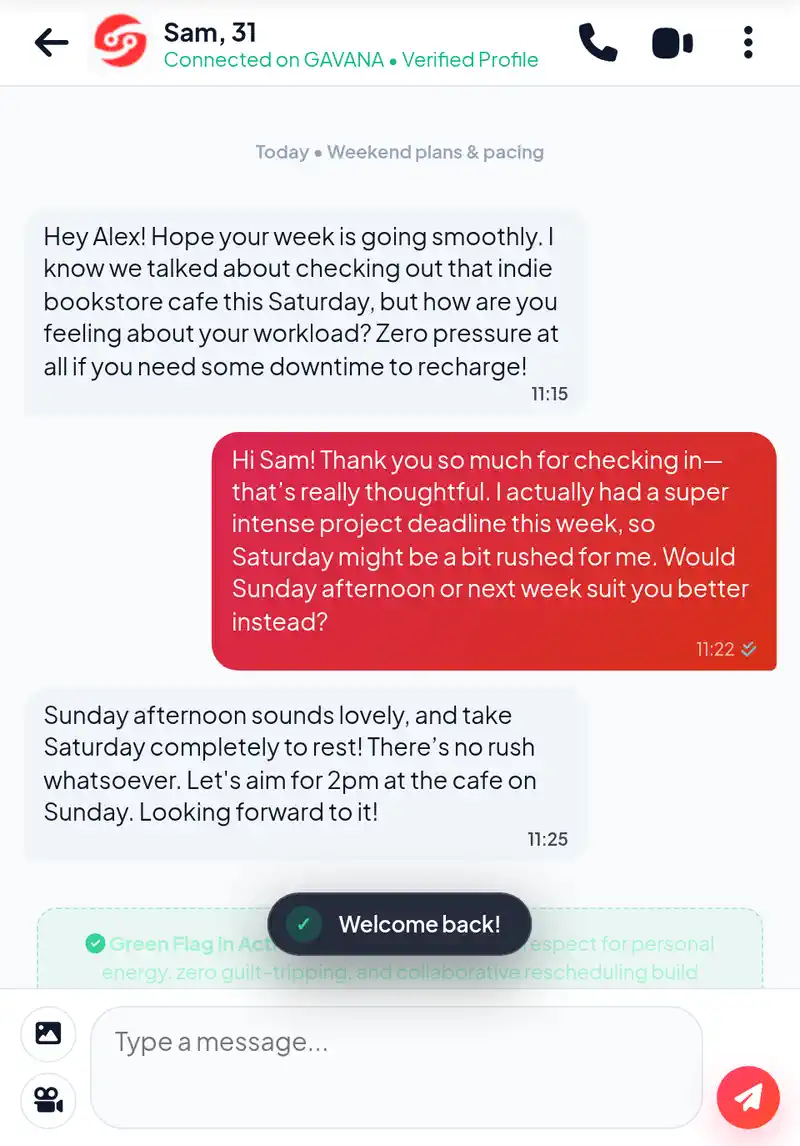
When planning your initial in-person meet-up at a natural, comfortable pace, follow our verified guidance on how to have a safe first date.
Feeling Able to Be Your Authentic Self
While observing external behaviours is vital, your own internal somatic experience often provides the most accurate gauge of a connection's health. Ask yourself: "How do I feel in my own skin when I am with this person?"
In an unhealthy or high-stress dynamic, you might notice persistent bodily tension: a knot in your stomach, rapid heartbeats when your phone chimes, or the constant feeling that you are performing an audition for a role.
In a healthy connection marked by genuine green flags, your nervous system responds with calmness and expansion:
- Dropping the social mask: You feel comfortable sharing your genuine sense of humor, admitting when you don't know something, or confessing that you had a clumsy day.
- No fear of minor mistakes: You know that tripping over a sentence or ordering the wrong appetizer will be met with shared laughter rather than silent disdain or embarrassment.
- Energy restoration: Spending time together or chatting feels replenishing and pleasant rather than leaving you emotionally drained and hyper-vigilant.
How to Observe Green Flags Over Time (Without Testing)
Recognising green flags requires patient observation, but it is crucial that this observation remains grounded, ethical, and organic. Some popular dating advice mistakenly suggests "testing" partners—deliberately delaying text replies, orchestrating fake jealousy scenarios, or fabricating emergencies to see how someone reacts.
Manufacturing synthetic tests is manipulative and corrodes trust before it even begins. You do not need to invent artificial obstacles; real life provides all the necessary opportunities to observe someone's genuine character:
Stressful Everyday Moments
Observe how they handle delayed trains, rainy weather ruining an outdoor plan, or a noisy restaurant. Do they adapt with humor and calm, or do they boil over in anger?
Fatigue and Vulnerability
Notice how they communicate at the end of a grueling workday when energy is low. Do they still treat you with basic kindness and consideration?
Minor Misunderstandings
When a text tone is misread, watch how quickly they seek clarity rather than assuming malicious intent or retaliating with defensive coldness.
Quiet, Ordinary Tuesdays
Watch how the connection feels when there is no alcohol, no high-intensity entertainment, and no fancy venue—just two humans having a quiet conversation on a bench.
What Green Flags Cannot Tell You
It is equally important to maintain realistic expectations about what green flags can and cannot promise. Observing positive behaviours in someone is a wonderful sign, but it is not a magical insurance policy against future heartache or incompatibility:
- Green flags do not guarantee romantic attraction: You can meet someone who is exceptionally kind, reliable, emotionally mature, and communicative, yet realize after three dates that the romantic spark or mutual chemistry simply isn't there. That is completely normal and acceptable; you can part ways amicably with mutual dignity.
- Green flags do not guarantee forever: People change, life priorities shift, career moves happen, and relationship dynamics evolve over years. Good early signs prove that someone is a safe, respectful person to explore connection with right now—not that your relationship is immune to future challenges.
- Green flags do not erase individual incompatibility: Two people can both be emotionally healthy, high-integrity adults and still discover that their financial philosophies, desire for children, or geographic dreams are incompatible.
If you or your date eventually realize that alignment is missing, parting with mutual respect allows both individuals to preserve their dignity. For compassionate strategies on handling romantic parting with grace, read our guide on how to deal with rejection while dating.
The Healthy Connection Reflection Checklist
To help you synthesize your observations without turning dating into a mechanical or clinical checklist, use these six grounding reflection questions after spending time with someone:
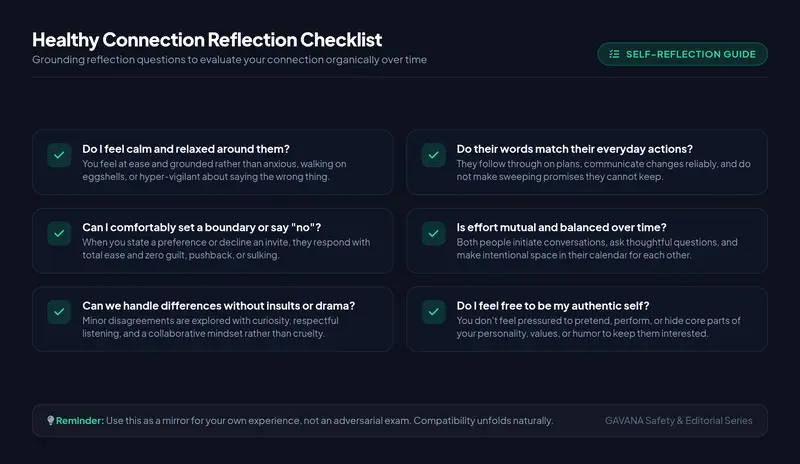
Internal Calm
Do I feel relaxed, grounded, and safe around this person, or am I constantly anxious, second-guessing myself, and hyper-vigilant?
Everyday Alignment
Do their deeds consistently match their words over several weeks, especially when plans must change or schedules get busy?
Boundary Receptivity
When I say "no" or set a boundary, do they accept it with total warmth and ease, or is there subtle guilt and pushback?
Balanced Reciprocity
Is effort in messaging, listening, and planning mutual, or am I driving the entire momentum of the connection alone?
Conflict Character
When differences or misunderstandings arise, do we communicate with calm curiosity, or do things spiral into defensiveness?
Authentic Expression
Can I be my true self with my genuine humor, thoughts, and imperfections without feeling the need to put on a performance?
By anchoring your dating journey in steady observation, mutual respect, and emotional safety, you empower yourself to recognize healthy connections early—giving real love the patience and space it needs to flourish.
Frequently Asked Questions
What is the single most reliable green flag in early dating?
Rather than any single gesture, the most dependable green flag is consistency over time. A person whose words, actions, and communication rhythms reliably match over weeks—without sudden disappearing acts, emotional volatility, or broken commitments—demonstrates genuine trustworthiness and emotional stability.
Can someone show green flags and still not be the right partner for me?
Yes, absolutely. Green flags reflect personal character, emotional maturity, and the capacity for healthy relationships; they do not guarantee romantic chemistry, mutual attraction, or shared life visions. You can respect someone deeply as a high-integrity person while recognizing that your life goals, communication styles, or romantic feelings do not align.
How can I distinguish genuine green flags from love bombing?
The primary distinction is pacing and boundary response. Genuine green flags are quiet, unhurried, and respect your independence. Love bombing involves intense, overwhelming early flattery, declarations of soulmate status within days, and demands for immediate exclusivity. Furthermore, love bombers often react with sullen resentment or anger if you set a boundary or ask to slow down, whereas healthy partners welcome boundaries with complete ease.
Is it a red flag if someone takes several hours to reply to text messages?
No. Having an active job, personal responsibilities, and hobbies means healthy adults cannot remain glued to messaging apps throughout the day. Taking several hours to reply during normal work hours is completely normal and often a green flag indicating healthy boundaries and focus. A red flag is erratic, unpredictable communication where someone ignores messages for days without context or disappears immediately after making plans.
What should I do if someone has great green flags but one minor habit bothers me?
Distinguish between core character traits and minor human quirks. If the habit is a matter of personal preference (such as conversational pacing or food choices), communicate openly and gently. How they respond to your calm feedback will itself be a revealing test of character: an emotionally mature partner will listen with curiosity and collaborate on a comfortable compromise.
How long does it typically take to accurately assess green flags?
While initial positive signals can be observed during the first few conversations and dates, a dependable assessment of character requires several weeks of varied, real-world interactions. Experiencing how someone responds to scheduling hiccups, fatigue, minor disagreements, and ordinary everyday routines provides the clearest and most durable picture of who they truly are.