
Why Personal Information Matters When Dating Online
Dating naturally requires vulnerability. Meeting someone new involves opening up about who you are, what you enjoy, and how you see the world. Without sharing personal thoughts and stories, genuine emotional connection cannot form.
However, there is a fundamental difference between being emotionally open and being unguarded with sensitive personal data. Protecting your personal information while dating online is not about being secretive, paranoid, or deceptive. Rather, it is about intentional pacing: maintaining sensible control over what you share and when you share it, so your security, physical safety, and digital identity remain intact while mutual trust develops organically.
In the early stages of online dating, you are communicating with someone whose real-world character and intentions have not yet been observed. Keeping basic boundaries around your private life gives you space to evaluate the connection safely, without the anxiety that comes with having exposed your address, routine, or financial details to an unverified acquaintance.
Distinct Editorial Scope
While our guide on How Amoura Protects Your Privacy explains platform data infrastructure, approximate location handling, and account deletion protocols, this article focuses on your personal information-sharing habits: the conscious decisions you make regarding photos, conversations, routines, and contact details.
Information Worth Keeping Private in the Early Stages
When matching with someone new, certain categories of information should remain private until you have established consistent mutual trust, verified their identity through live video calls, and spent time together in public settings:
Home Address & Door Entry Codes
Never provide your exact residential address, apartment number, or building access codes early on. Use a broad neighborhood or city name instead.
Exact Workplace Location & Schedule
Sharing your broad profession (e.g., "marketing" or "civil engineering") is natural; sharing the exact office building, floor, or precise shift hours creates unnecessary physical vulnerability.
Security Answers & Verification Codes
Common conversational topics (mother's maiden name, childhood street, first pet's name, primary school) often overlap with banking security questions. Never disclose one-time SMS verification passcodes (2FA).
Financial Status & Account Information
Discussions of personal salary figures, account balances, cryptocurrency holdings, or investment profits create targets for financial opportunists. Keep money matters completely separate from dating.
Holding these boundaries is entirely standard and healthy. Anyone who reacts with impatience or questions your integrity because you prefer not to disclose your residential address in the first week is demonstrating a red flag around boundary respect.
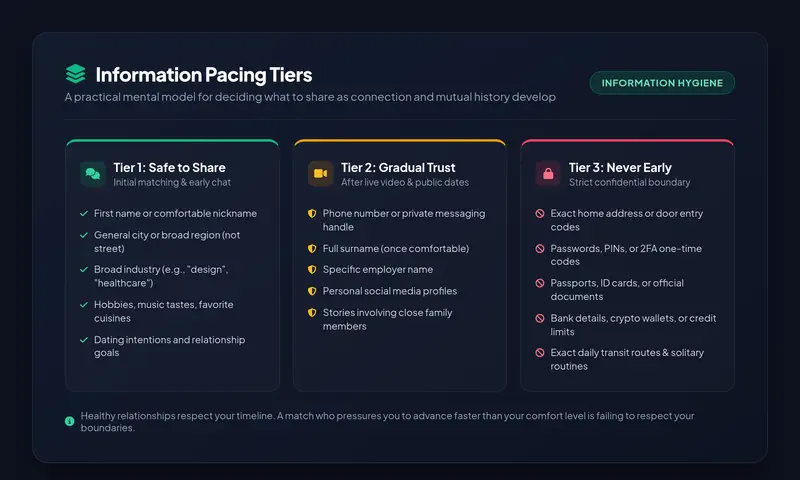
Figure 1: A tiered framework for pacing personal information. Match depth of disclosure to verified mutual history rather than conversational momentum.
The Personal Data Mosaic Effect
One of the most common oversights in online dating is assuming that because you did not state your full name or address directly, your identity remains private. In practice, modern search engines and social platforms make it surprisingly easy to assemble a complete profile from tiny, seemingly harmless conversational clues.
This is known in digital security as the mosaic effect: several individually insignificant data fragments, when combined, produce a clear picture of your personal life.
Consider how easily fragments converge:
- Your first name + your graduation university + graduation year
- Your first name + your specific job title + your city
- A photo showing your dog + a mention of your neighborhood park
- A casual remark about your company's upcoming office relocation + your job function
An acquaintance with curious or ill-intentioned motives can input two or three of these clues into professional networks or search engines to locate your full surname, LinkedIn profile, home borough, and mutual connections in under a minute.
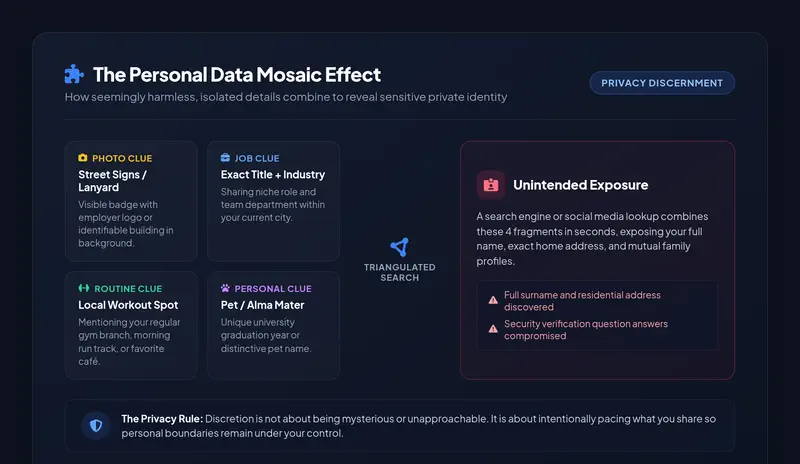
Figure 2: The mosaic effect in practice. Seemingly harmless conversational crumbs can be triangulated to reveal sensitive offline identity.
What Your Profile Photos Reveal: The Background Audit
When choosing profile pictures or sending casual photos throughout a chat, the focus is naturally on how you look. However, the background and peripheral details of an image often convey far more data than intended:
- Lanyards and Badges: Company access passes, conference name tags, or visitor badges hanging around your neck or sitting on a work desk often clearly display employer logos and your full name.
- Street Signs and Landmarks: Selfies taken right outside your apartment building, on your residential balcony, or in front of unique neighborhood businesses can make locating your front door straightforward.
- Vehicle Registration Plates: Car, motorbike, or bicycle photographs showing license plates or unique parking permit stickers.
- Mail and Paperwork: Photos taken at home (such as cooking or holding a pet) where letters, packages with delivery labels, bank notices, or calendar schedules are visible on tables in the background.
- Children's Identifying Details: If photos include younger relatives, ensure school uniforms, sports team logos, and school crests are not visible.
Conduct a quick 10-second background audit before uploading any picture to your dating profile. Crop out or blur peripheral identifiers that link directly to your daily physical coordinates.
Managing Personal Details During Conversations
Healthy conversation flows back and forth with mutual curiosity. When someone asks where you work or what you like to do on weekends, it is usually just friendly interest.
However, it is wise to distinguish between exploratory questions and probing questions:
Normal Getting-to-Know-You Dialogue
"What kind of work do you do?"
"Do you have any pets?"
"What neighborhoods do you like for dinner?"
These questions explore personality and lifestyle without demanding specific coordinates.
Probing or Inappropriately Specific Inquiries
"Which exact building is your office in?"
"What time do you usually finish your morning run alone?"
"What was your high school mascot?"
These questions seek precise locations or security answers under the guise of casual banter.
If someone asks a question that feels too specific for the stage of your relationship, practice a simple, friendly pivot: "I work in healthcare consulting near central—I'll tell you all the funny office stories once we grab that coffee!" A respectful person will easily follow your lead. If they press for the exact address, take note of that boundary resistance.
Handling Links, Shared Files, and External Platforms
Digital communication makes it effortless to share media, but unexpected links and downloads introduce technical and privacy risks:
- Unsolicited Web Links: Be cautious when a new acquaintance sends shortened URLs, links to unfamiliar photo-sharing albums, or invites you to click external voting or contest pages. These can be phishing portals designed to harvest social logins or track IP locations.
- Files and Downloads: Never download application packages, calendar invites, or compressed files (.zip, .apk) sent through chat. Legitimate matches do not ask you to install custom software to view a picture.
- Moving to Third-Party Apps: When you leave Amoura to talk on external messaging platforms, your phone number, social media profile, or live location settings may become visible depending on the app's configuration. Consider using apps that allow handle-based messaging without exposing your private phone number until you feel completely confident.
For dedicated advice on the optimal timing for taking conversations off-platform, explore our guide on When Is It Safe to Move a Conversation Off a Dating App?.
Daily Routines and Predictable Locations
Routine is comforting, but broadcasting your exact daily timetable introduces avoidable exposure. If someone knows where you will be every Tuesday evening, your physical movements become entirely predictable:
- Solitary Exercise Routes: Avoid sharing real-time tracking links (such as public fitness app maps or run routes) that show the exact paths and times you jog alone.
- Favorite Local Hangouts: It is fine to talk about loving Italian food; avoid naming the exact neighborhood café you sit in every Saturday morning until you know the person well.
- Live Check-Ins vs. Retrospective Sharing: If you post or share photos from an event, concert, or holiday, consider doing so after you have left the venue rather than posting live coordinates in real time.
This is not about living in fear or refusing to discuss your life—it is simply about keeping your current physical environment secure while you get to know someone new.
Privacy Is a Two-Way Responsibility
Respecting personal information works both ways. Just as you deserve privacy, consideration, and boundaries, your matches expect the same ethical treatment from you.
Cultivating good digital citizenship means:
- Never Sharing Match Content Publicly: Do not screenshot someone's profile, private photos, or conversational vulnerabilities to post on public social media forums, group chats, or rating boards.
- Respecting Their Chosen Pacing: If someone prefers not to share their social media, phone number, or employer immediately, respect that choice without taking it as a personal insult or being passive-aggressive.
- Adhering to Platform Standards: Doxxing, sharing private contact details without permission, or misusing images violates the Amoura Community Guidelines and will result in account penalties.
Frequently Asked Questions
Is it weird to refuse to give someone my phone number right away?
Not at all. In fact, it is standard practice among experienced online daters. Amoura includes full in-app text messaging and live video calling, allowing you to get to know someone thoroughly without exposing your personal phone number or messaging app profile prematurely.
What should I do if a match finds my social media before I shared it?
It is common for curious matches to search someone using first names and job details. If they mention finding your profile respectfully, you can acknowledge it while politely reiterating your boundary: "I prefer to keep social media for close friends for now, but happy to chat here!" However, if their message feels intrusive, possessive, or boundary-violating, feel completely free to unmatch or block.
Can other members see my exact location on Amoura?
No. Amoura never displays your exact GPS coordinates, physical address, or real-time location. The platform only displays approximate distance (e.g., "5 miles away") or your general city to help facilitate local matching while keeping your home coordinates private.
Should I use a fake name on my dating profile to stay private?
Using a comfortable nickname, shortened version of your first name, or your middle name is completely fine and common. However, adopting an entirely fabricated persona or fictitious identity undermines authentic trust and violates our guidelines on genuine representation.
What should I do if someone asks for my home address to send flowers or a gift?
Politely decline until you have met in person and developed real trust: "That's very thoughtful of you, but I don't give out my home address early on. Let's plan to meet for a coffee instead!" A genuine person will appreciate your healthy boundaries; anyone who sulks or insists is failing to respect your safety.