
What Is a Romance Scam?
A romance scam occurs when someone feigns romantic intentions, cultivates emotional trust, and uses that relationship to manipulate another person for financial or material gain.
Unlike automated spam bots that post generic links, modern romance fraudsters are patient, skilled communicators. They invest days, weeks, or even months learning your interests, mirroring your values, and presenting themselves as attentive, compassionate partners.
The deception succeeds not because targets are foolish, but because humans are naturally wired to extend empathy and trust to those who show them warmth. Understanding how romance fraud operates removes the stigma and equips you with the discernment needed to spot manipulative behavior before any damage occurs.
Specialist Scope Note
This guide focuses specifically on recognising romance fraud and financial deception. For technical analysis on visual impersonation, review our related resource on Profile Verification & Authenticity, read our dedicated guide on How to Spot a Fake Dating Profile, and learn how identity deceit operates in Catfishing: What It Is and How to Avoid It.
How Romance Scams Typically Develop
While every interaction has unique nuances, romance scams generally follow a recognisable behavioral trajectory designed to transition from casual chatting to psychological reliance.
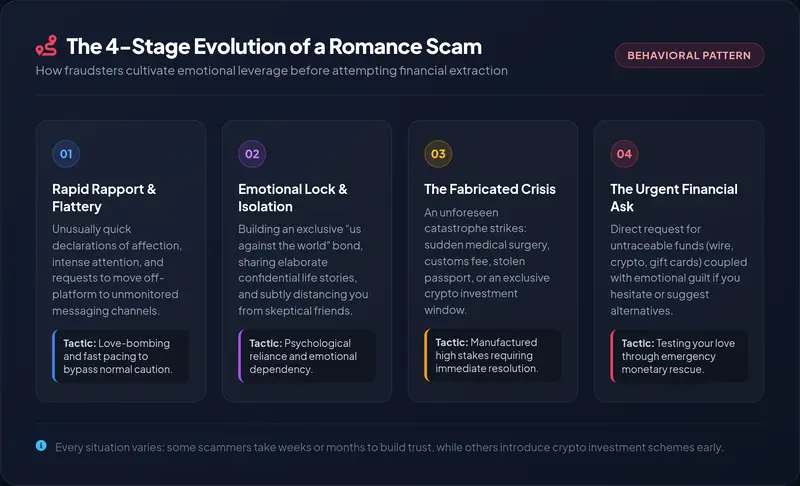
Figure 1: The 4-stage progression of romance fraud, illustrating how initial flattery evolves into financial leverage.
The typical progression consists of four core phases:
- The Accelerated Opening: Communication begins with intense warmth, frequent messages, and constant compliments. Scammers often press to move the chat off the dating platform immediately—typically to private, unmonitored messaging apps like WhatsApp or Telegram—to bypass in-app safety filters.
- Building Psychological Leverage: The scammer shares dramatic or confidential stories about their past—such as being widowed, running a charitable project overseas, or managing high-stakes international contracts. This builds a feeling of reciprocal vulnerability.
- The Manufactured Barrier or Crisis: Just as plans to meet in person or conduct a live video call begin to solidify, an unexpected obstacle appears: a frozen bank account, a detained passport at customs, an urgent medical procedure for a dependent, or a time-sensitive investment window.
- The Direct or Indirect Financial Demand: Having established deep emotional goodwill, the person asks for emergency financial assistance. If you hesitate, they may express disappointment or question whether your affection was genuine.
Warning Signs to Watch For
A single unusual behavior does not definitively prove someone is a scammer. However, when multiple warning signs appear together, you should pause, step back, and evaluate the relationship objectively.
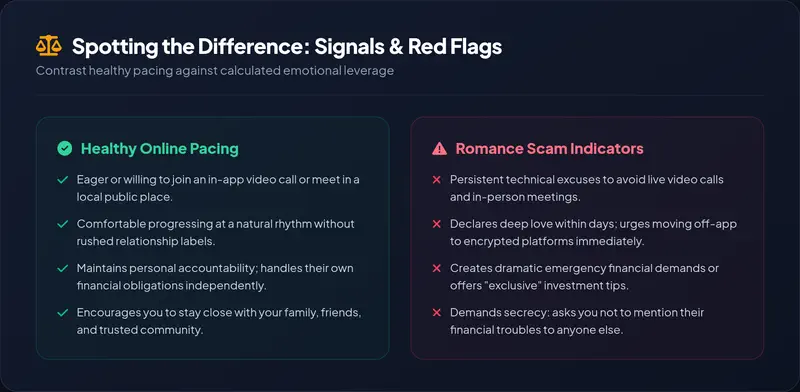
Figure 2: Key distinctions between natural online relationship pacing and manipulative fraud indicators.
1. Unusually Rapid Emotional Intensity
They declare deep love, soulmate status, or future marriage plans within days of matching, long before you have established a foundation of real-world shared experiences.
2. Persistent Reluctance to Join Live Video Calls
Whenever you suggest an in-app video call or an in-person meeting in a public café, they produce convenient excuses: their camera is broken, military base regulations forbid video, bandwidth is poor, or sudden travel demands intervened.
3. Demands for Secrecy and Isolation
They urge you not to discuss your relationship or their financial difficulties with your family, friends, or colleagues. They may frame this as preserving the "special intimacy" between you two, when in reality it is designed to prevent grounded third parties from spotting the scam.
4. Sudden Introductions to Investment or Crypto Schemes
Known widely as "pig butchering" scams, the individual casual mentions their personal wealth, shows screenshots of lucrative trading balances, and offers to "mentor" you on a specialized third-party cryptocurrency platform.
5. Requests to Receive or Forward Money
A scammer may ask to deposit funds into your personal bank account and request that you transfer them elsewhere, or purchase gift cards on their behalf. This is a common method for laundering stolen funds, turning unsuspecting victims into unwitting "money mules."
The Psychology of Romance Scams: Why Trust Comes First
If a complete stranger approached you on the street asking for £1,000 to cover emergency hospital bills, you would almost certainly decline. Fraudsters know this. That is why the financial request never comes first.
Scammers rely on predictable psychological mechanisms to disarm natural defenses:
- Reciprocal Vulnerability: When someone shares a painful personal tragedy or confides in you, human instinct compels you to respond with empathy and protection.
- Sunk-Cost Investment: Having spent hours messaging, texting, and fantasizing about a future together, admitting that the person might be fictitious causes intense cognitive discomfort. People often rationalize red flags to avoid facing betrayal.
- Manufactured Urgency: By presenting an emergency with a tight deadline—such as surgery required within 24 hours—the fraudster prevents you from taking time to reflect or consult trusted confidants.
For a deeper dive into the specific conversational tactics fraudsters use to manufacture intimacy, read our dedicated guide: How Romance Scammers Build Trust.
Requests for Money, Crypto, and Gift Cards
The moment an online contact introduces money into the conversation, the nature of the interaction fundamentally changes. Regardless of how authentic or heartwarming the backstory seems, financial requests in early-stage online dating are almost invariably deceptive.
Common Payment Vectors Scammers Request
- Wire and Bank Transfers: Direct international transfers (e.g. Western Union, MoneyGram, or international SWIFT wires) are virtually impossible to reverse once collected.
- Cryptocurrency: Bitcoin, USDT, or Ethereum transfers are irreversible by design. Once sent to an external wallet address, no bank or customer service department can recall the funds.
- Digital Gift Cards: Scammers frequently request Apple, Google Play, Steam, or Amazon gift cards. The moment you share the 16-digit PIN, the code is redeemed or sold on secondary exchanges within minutes.
- Fake Investment Portals: Directing you to register on an unfamiliar foreign-exchange or crypto website where initial small deposits show fake "profits" to entice larger transfers.
Specialist Guidance Link
If an online match has already requested funds, loans, or investments, read our dedicated practical guidance on Amoura Dating Safety Centre and consult our focused guide: What to Do If Someone Asks You for Money.
Healthy Boundaries: Connection vs Financial Rescue
It is important to avoid simplistic, absolute rules like "real partners never discuss finances." In long-term, established partnerships, couples routinely discuss budgets, split expenses, and support each other through hardship.
However, there is a clear boundary between reciprocal real-world partnership and online financial extraction:
- Prior In-Person Foundation: Healthy financial collaboration happens after two people have spent substantial, verifiable time together in the physical world and verified each other's genuine identity.
- Absence of Coercion: A sincere partner does not threaten to terminate a relationship or accuse you of lack of affection simply because you decline a financial loan.
- Transparency Over Secrecy: Genuine partners do not demand that their financial requests remain hidden from mutual friends or family members.
A healthy relationship enhances your emotional life; it never requires you to compromise your financial security to prove your commitment.
What To Do If You Suspect a Romance Scam
If an interaction begins displaying the warning signs outlined above, take immediate, calm steps to safeguard yourself:
Pause and Do Not Send Money
Never let artificial deadlines or dramatic emotional appeals push you into sending funds. Stop all financial transactions immediately.
Break the Secrecy: Talk to Someone Outside
Confide in a trusted friend, family member, or colleague. Explain the situation exactly as it unfolded. An objective third party can often spot red flags that emotional involvement obscures.
Preserve Relevant Evidence
Take screenshots of message conversations, profile photos, phone numbers, and any payment details or account numbers provided. Do not delete chat histories until evidence is preserved.
Report and Block the Account on Amoura
Use Amoura's built-in reporting modal. Select Spam or Fake Profile or Other reason, provide details about the financial request, and check Also Block this user immediately.
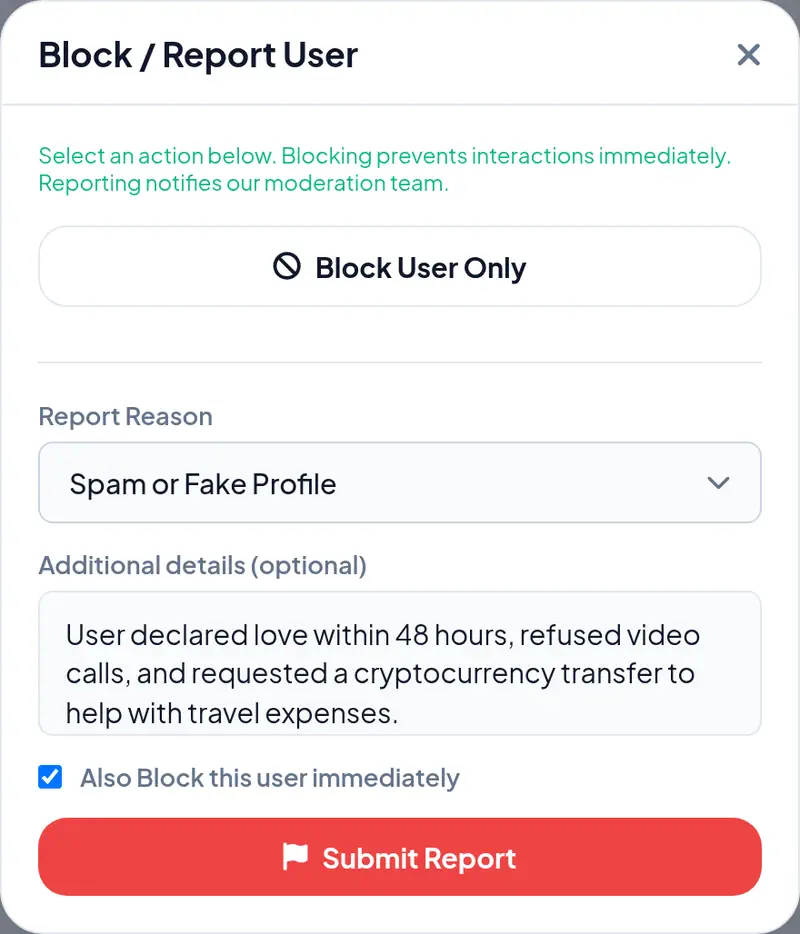
Figure 3: Submitting an incident report through the Amoura Block / Report interface notifies safety moderators and blocks communication instantly.
For step-by-step instructions on reporting mechanisms, see our detailed guide on How to Report a User on Amoura and our guide on How to Block and Report Someone on a Dating App.
If You Have Already Sent Money
If you realize you have sent funds to someone who may be a romance scammer, acting promptly is critical. Do not let embarrassment delay your response—fraudsters are professional manipulators.
- Contact Your Bank or Card Issuer Immediately: Notify the fraud department of your financial institution right away. If funds were transferred recently, banks may be able to freeze transactions or flag beneficiary accounts.
- Contact the Payment Platform: If you used services like PayPal, Revolut, Cash App, or a cryptocurrency exchange, submit an unauthorized transaction / fraud ticket immediately.
- Beware of Secondary "Recovery Scammers": Anyone who contacts you claiming they can "hack" the scammer or recover stolen funds for an upfront fee is running a secondary recovery scam. Legitimate recovery only occurs through official financial and legal authorities.
-
File an Official Law Enforcement Report: In the UK, file a report with Action Fraud (actionfraud.police.uk or call
0300 123 2040). In the US, file with the FBI Internet Crime Complaint Center (IC3) (ic3.gov) or the Federal Trade Commission (FTC) (reportfraud.ftc.gov).
Frequently Asked Questions
Why do romance scammers avoid live video calls or in-person dates?
Most romance scammers use stolen photos of models, military personnel, or influencers. Appearing on a live video call or in person immediately exposes that their physical identity does not match their profile photographs.
Is it ever safe to send money to someone I met online who hasn't met me in person?
No. You should never transfer funds, wire money, buy gift cards, or share financial information with anyone you have only interacted with online. Genuine romantic partners do not solicit financial bailouts from online matches.
What is a "pig butchering" crypto romance scam?
Pig butchering is a form of investment fraud where the scammer builds an affectionate romantic connection over weeks ("fattening the target") before introducing a fake cryptocurrency trading platform. They guide the victim to deposit funds, display fraudulent high returns, and then lock the account or demand hefty "taxes" when withdrawal is attempted.
Can scammers use video calls with deepfakes or stolen video clips?
Yes, sophisticated scammers occasionally play short, low-quality video loops or use real-time facial filters during video calls. If the video has noticeable stutter, audio sync issues, or if the caller refuses to perform simple spontaneous actions (like waving or touching their ear), end the call immediately.
Why do romance scammers urge victims to move to WhatsApp or Telegram?
Moving to off-platform encrypted messaging channels removes the conversation from Amoura's safety systems. It protects the fraudster if their dating profile gets suspended, and enables them to continue manipulation without platform interference.
Can third-party recovery services get my stolen funds back?
No. Private individuals or online agencies claiming they can "trace" cryptocurrency or retrieve stolen wire transfers for an upfront fee are almost always secondary recovery scammers targeting people who have already lost money. Only official banking channels and law enforcement agencies have legal authority to pursue fraud cases.