
Long-Distance Relationships: Practical Advice
Grounded, compassionate guidance for adults navigating communication rhythms, trust, visit logistics, and emotional closeness across physical distance—balancing shared connection with independent local lives.
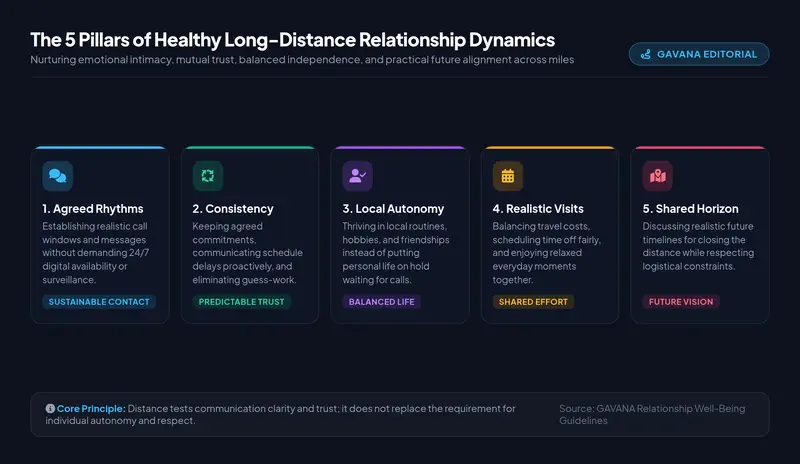
1. Agreed Rhythms
Establish clear, predictable communication windows without demanding 24/7 digital surveillance or instant replies.
2. Local Independence
Nurture friendships, work, routines, and hobbies instead of putting personal life on hold waiting for phone calls.
3. Balanced Visits
Distribute travel costs and effort fairly, leaving room for relaxed, low-pressure everyday routines together.
4. Shared Horizon
Discuss realistic long-term plans for closing the distance while openly addressing practical career and life ties.
What Makes a Relationship Long-Distance
Distance in dating is not a one-size-fits-all experience. A couple living a two-hour train ride apart who can see each other every weekend navigates completely different challenges than two people separated by six time zones, international borders, demanding work shifts, or visa restrictions.
How distance impacts a relationship depends on a combination of practical factors:
Travel Time & Cost
The financial and logistical investment required to see each other. Budget constraints, plane tickets, and transit hours directly shape how often in-person visits can occur.
Time Zone Gaps
Differing work schedules, shift patterns, and sleeping hours that narrow the window for spontaneous phone calls or synchronized video dates.
Local Responsibilities
Obligations toward family caregiving, university degrees, professional careers, or local children that limit mobility and travel freedom.
Relationship Stage
Whether the couple established an in-person foundation before one moved away, or whether the emotional bond was initiated entirely online across distance.
Acknowledging these realities early allows couples to approach long-distance arrangements with empathy and clear-eyed practicality rather than comparing their situation to idealized narratives.
Discuss Expectations Early and Explicitly
When two people cannot see each other in person regularly, unstated assumptions become dangerous friction points. In geographically close relationships, couples often infer exclusivity or relationship status through frequent shared social activities. Across distance, every milestone must be communicated explicitly.
Have open, honest conversations covering:
- Exclusivity and boundaries: Are you both dating exclusively, or are you still casually meeting other people locally? Having a candid discussion prevents deep misunderstandings and protects emotional health.
- Definitions of commitment: What does being in a committed relationship mean to each of you across distance? What expectations exist around communication frequency and introducing each other to friends?
- Comfort with the arrangement: Is distance something both individuals can handle comfortably right now, or is it causing persistent, unmanageable anxiety for one person?
To understand how healthy couples establish emotional safety and consistency, explore our guide on green flags and signs of a healthy connection.
Finding Communication Rhythms That Work for Both
One of the most widespread myths about long-distance relationships is that love is measured by the sheer volume of text messages exchanged each day. In reality, demanding constant contact often leads to emotional exhaustion, surface-level exchanges, and heightened relationship anxiety.
Healthy couples focus on quality of presence rather than constant availability:
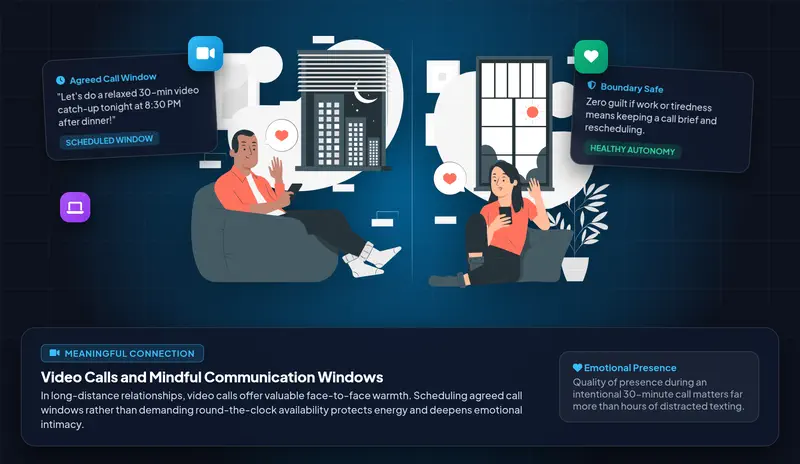
Dedicated Video Windows
Scheduling focused, 20- to 40-minute video catch-ups where both people are fully engaged, undistracted by work tasks, and emotionally present.
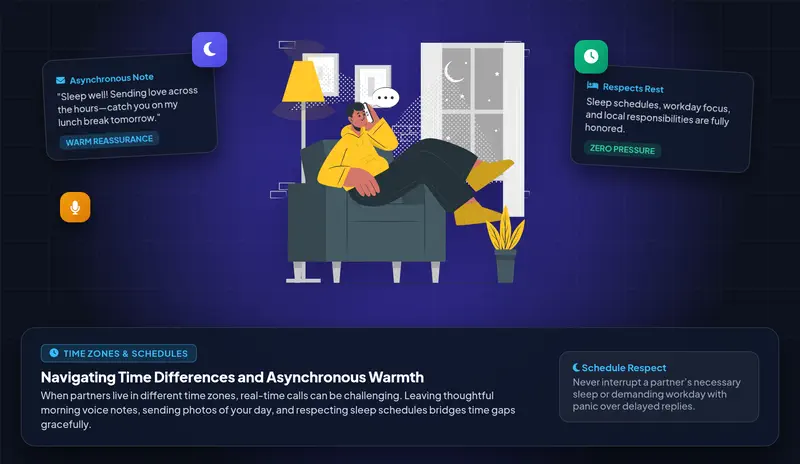
Asynchronous Warmth
Using voice notes and quick photos of your day to share little moments without demanding an instant, synchronized reply.
Phone-Free Focus
Recognizing that work meetings, study sessions, and social events require focused attention. Being away from your phone is healthy, not a sign of neglect.
Respecting Fatigue
Giving each other permission to say: "I had an exhausting day at work and need an early night—can we do our video call tomorrow?" without triggering panic.
Balancing Closeness with Local Independence
A major pitfall in long-distance dating occurs when an individual puts their everyday local life "on pause"—declining invitations from friends, skipping hobbies, and sitting beside their phone waiting for a partner's message. Over time, this creates resentment, social isolation, and an unhealthy burden on the distant partner to be the sole source of emotional fulfillment.
A thriving relationship requires two whole, independent individuals:
- Nurture local friendships: Spend time with colleagues, local friends, and family. A rich local community anchors your emotional well-being and provides healthy perspective.
- Pursue personal interests: Continue fitness routines, creative projects, book clubs, and career ambitions with full enthusiasm.
- Celebrate each other's independence: Be genuinely happy when your partner has an exciting night out with friends or achieves a local milestone, rather than feeling excluded.
For practical advice on building healthy conversational balance and active listening, review our guide on how to have better conversations while dating.
Handling Different Communication Needs Without Blame
It is very common for partners to have different natural communication paces. One person may feel energized by frequent brief check-ins throughout the day, while the other prefers zero distractions during work hours followed by a single evening phone call.
When these styles clash, it is easy to assign negative labels: the frequent communicator is branded "needy," while the reserved communicator is branded "cold." In reality, these are simply different pacing preferences.
Resolve differences through collaborative agreements:
Collaborative Compromise
Meet in the middle: the independent partner sends a quick lunchtime check-in, while the other partner respects that uninterrupted work blocks are non-negotiable.
Clear Reassurance
Replace ambiguity with clear context: "Heading into back-to-back project meetings until 5:00 PM; can't wait to hear about your day tonight!"
Avoid Testing
Never play games such as intentionally withholding messages to see how long it takes your partner to notice. State your needs directly and calmly.
Periodic Adjustment
Recognize that communication needs fluctuate during stressful seasons, exam periods, or travel. Adjust your expectations flexibly.
Building Trust Through Consistency, Not Surveillance
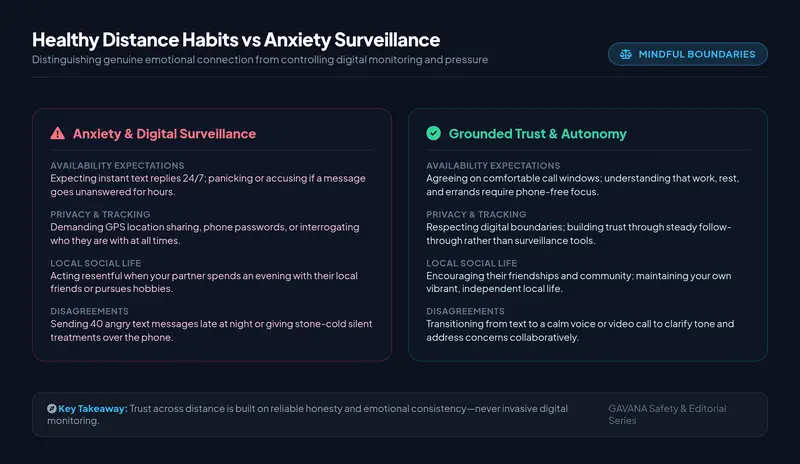
Trust across distance cannot be manufactured through digital monitoring, GPS location sharing, demands for social media passwords, or interrogating a partner about who was sitting next to them at dinner. Surveillance does not build trust; it feeds paranoia and suffocates respect.
Authentic trust is built through quiet, steady consistency over time:
- Keeping commitments: If you agreed to call at 8:00 PM, reach out at 8:00 PM. If an unexpected delay occurs, communicate proactively in advance.
- Honest transparency: Speak openly about your everyday life, friends, and colleagues naturally, without secrecy or defensiveness.
- Raising worries directly: If you feel anxious or disconnected, say: "I've been feeling a bit distant the last couple of days; can we talk through how we're doing?" rather than making passive-aggressive accusations.
Dealing with Time Zones and Demanding Schedules
When significant time differences separate you, finding overlapping waking hours requires thoughtful planning. An 8-hour time gap means when one person is finishing dinner, the other is starting their workday morning rush.
Manage time differences with practical consideration:
Advance Call Windows
Plan weekend catch-ups or evening/morning overlaps a few days ahead rather than expecting spontaneous availability.
Protecting Sleep Hours
Never expect a partner to stay awake until 2:00 AM on a work night to take a call. Sleep deprivation creates irritability and resentment.
Morning & Night Routines
Establish a comforting routine—such as leaving a warm voice message before going to sleep that your partner wakes up to in their morning.
Sharing Scheduling Sacrifices
Alternate who accommodates early mornings or late evenings so one person isn't perpetually making the scheduling sacrifice.
Making Visits Realistic and Mutually Comfortable
Visits are the emotional highlights of a long-distance relationship, but they also bring logistical complexity, financial expense, and scheduling coordination. Ensuring that visits feel joyful requires mutual fairness and practical planning:
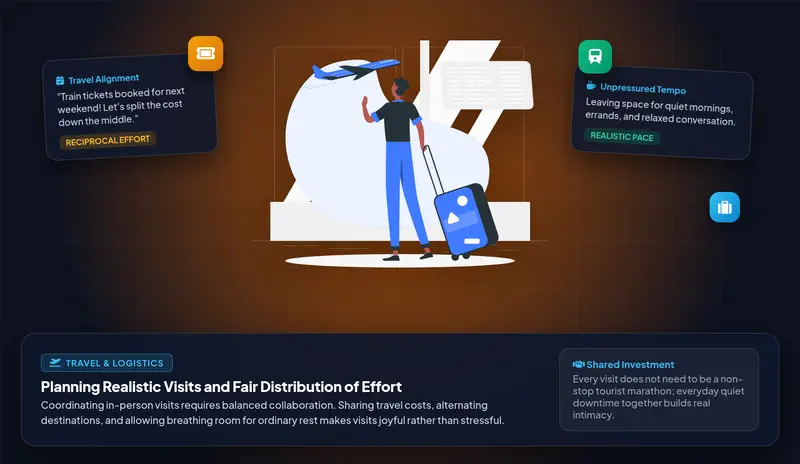
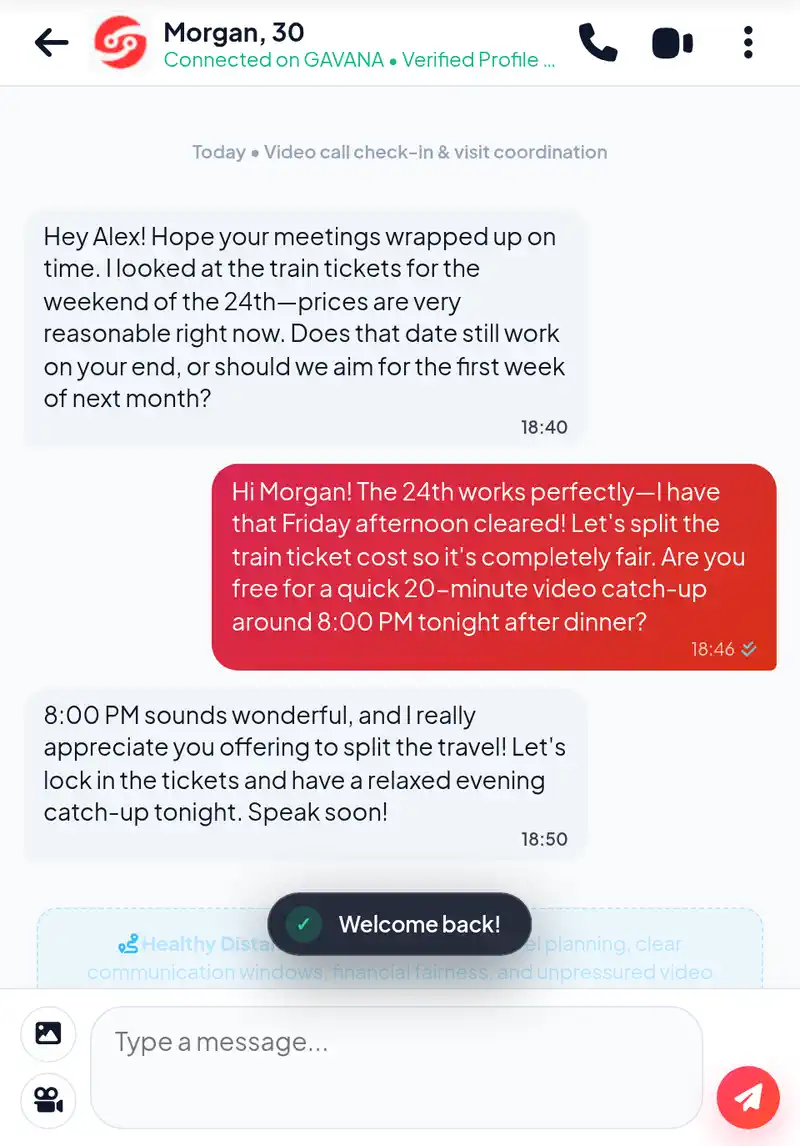
- Distributing travel effort fairly: If one partner has more disposable income while the other has more flexible work hours, collaborate openly on how to balance travel. Alternating who travels or splitting ticket costs ensures both partners feel equally invested.
- Accounting for time off and rest: Traveling after a full work week can be physically exhausting. Allow the visiting partner time to unpack, rest, and adjust before rushing into high-energy activities.
- Respecting living spaces: If visiting each other's apartments, agree on personal boundaries, sleep routines, and hosting expectations in advance.
Keeping Visits Enjoyable Without Unrealistic Pressure
Because visits are limited, couples often place immense emotional pressure on them: every hour must be magical, every meal spectacular, and zero conflict allowed. This "holiday romance" mindset can backfire, causing anxiety and disappointment when normal human tiredness or minor disagreements surface.
Make visits sustainable by embracing ordinary reality:
Embrace Everyday Downtime
Cooking dinner together, running grocery errands, or reading side-by-side on the sofa builds genuine domestic intimacy far more than non-stop tourist excursions.
Allow Solo Space
Spending 72 hours continuously in close quarters can feel intense. Giving each other an hour of quiet reading or work time is completely healthy.
Don't Over-Schedule
Resist the urge to pack five dinner parties, family introductions, and city tours into a single weekend. Leave ample room to breathe.
Accept Imperfect Moments
If someone feels tired, gets a headache, or feels moody, respond with compassion rather than panicking that the visit is "ruined."
For tips on planning comfortable, relaxed daytime meet-ups and maintaining personal safety, see our guide on how to have a safe first date.
Managing Misunderstandings Remotely: The Text Rule
Written text messages strip away vocal tone, facial expression, body language, and immediate context. A casual dry remark can easily be read as passive-aggressive hostility, triggering unnecessary defensiveness.
Adopt a strict remote communication protocol for disagreements:
The 3-Text Rule
If an exchange starts feeling tense or confusing after three messages, stop typing immediately. Say: "I want to make sure I understand you properly—let's do a quick voice call when you have 10 minutes."
Assume Positive Intent
Remind yourself that your partner cares about you. Before assuming malice or indifference, consider that they might simply be distracted, stressed, or rushing between tasks.
Never Fight When Exhausted
Do not attempt to resolve complex relationship dilemmas at 1:00 AM over text. Sleep first; address the conversation calmly the next day with fresh energy.
Listen Without Multitasking
During resolution calls, put away your laptop, close other apps, and listen attentively to understand rather than to defend.
To understand modern messaging standards, response expectations, and courteous digital boundaries, see our companion article on online dating etiquette.
Boundaries, Privacy, and Personal Space
Being in a long-distance relationship does not eliminate your right to privacy, personal space, and autonomy. Trust thrives when partners voluntarily choose each other every day—not when they are digitally chained together.
Maintain clear, healthy boundaries:
- No entitlement to constant access: You are not obligated to reply to texts instantly while in meetings, driving, or spending time with family.
- Respect digital privacy: Passwords, private conversations with friends, and email accounts remain private. Trust is built on character, not surveillance.
- Financial boundaries: Travel costs should be discussed transparently, but your broader finances and savings remain your independent responsibility.
Talking About the Future and Closing the Distance
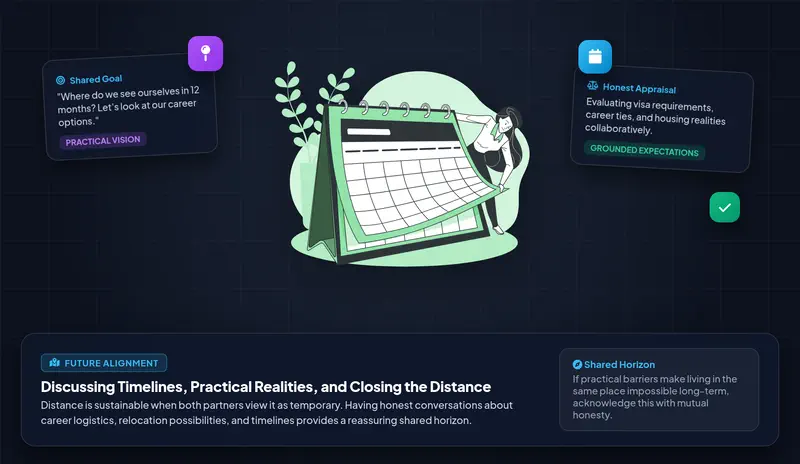
Distance can be sustained comfortably for months or even years if both people know it has an eventual conclusion. A long-distance relationship without a shared vision for closing the distance often turns into an indefinite holding pattern that generates chronic frustration.
Have grounded, realistic conversations about the long-term horizon:
Shared Horizon
Do you both ultimately want to live in the same city or country? Discuss whether relocating is something either partner is genuinely willing to consider.
Practical Constraints
Explore real-world factors: career certifications, family obligations, language barriers, and visa regulations. Romantic desire must harmonize with practical reality.
Shared Sacrifice
If relocation happens, ensure it is a collaborative decision where the moving partner feels supported and valued, rather than feeling they made a one-sided sacrifice.
Estimated Timelines
Agree on a broad, realistic timeframe (e.g., "Let's revisit where our careers are in 12 months") to evaluate next steps together.
Recognising When the Arrangement Is No Longer Working
Not every long-distance relationship is sustainable long-term, and acknowledging that does not mean anyone failed. Sometimes, despite genuine care and affection, practical barriers or emotional strains prove insurmountable.
Signs that an arrangement may require honest re-evaluation include:
- Persistent emotional drain: If communication feels like an exhausting obligation rather than a source of warmth and support.
- One-sided effort: One person is consistently booking tickets, paying expenses, and initiating calls while the other remains passive.
- Incompatible future visions: Neither partner is willing or able to relocate, leaving no viable path toward ever sharing the same physical space.
- Ongoing mistrust and anxiety: If distance fuels chronic insecurity, jealousy, and arguments that overshadow moments of closeness.
If you or your partner conclude that the distance cannot be bridged, parting with mutual kindness and respect preserves your dignity. For compassionate strategies on handling romantic parting with grace, explore our guide on how to deal with rejection while dating.
When a Long-Distance Connection Begins Online
With modern dating apps and digital communities, many meaningful connections begin between people living hundreds or thousands of miles apart before they ever meet face-to-face. While digital intimacy can develop rapidly, maintaining essential safety awareness is critical:
Verify Identity Early
Conduct live two-way video calls early in the connection. Scammers and catfishes will invent endless excuses—broken cameras, military deployments, or poor connections—to avoid video.
Never Send Money
Never transfer funds, cryptocurrency, or gift cards to someone you have not met in person, regardless of how urgent their supposed "emergency," travel delay, or medical crisis sounds.
Protect Sensitive Data
Do not share home addresses, workplace locations, banking details, or intimate photographs with someone you have only interacted with remotely.
First Meeting in Public
When meeting in person for the first time, arrange public daytime venues, maintain independent transportation, and tell a close friend your plans.
For verified defense strategies against financial scams and fraudulent profiles, review our core safety guides on how to recognise a romance scam and what to do if someone asks you for money.
Practical Relationship Check-In Framework
To keep your connection healthy and aligned, revisit these six grounding reflection questions together every few months:
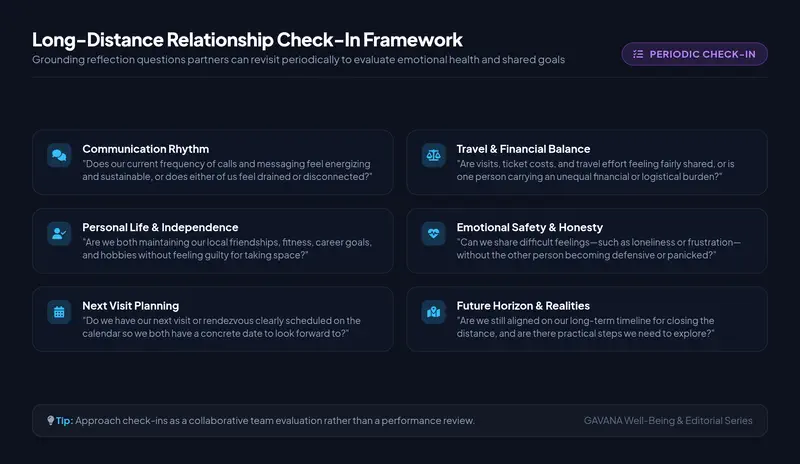
Communication Rhythm
"Does our current frequency of calls and messaging feel energizing and sustainable, or does either of us feel drained or disconnected?"
Travel & Financial Balance
"Are visits, ticket costs, and travel effort feeling fairly shared, or is one person carrying an unequal financial or logistical burden?"
Personal Life & Independence
"Are we both maintaining our local friendships, fitness, career goals, and hobbies without feeling guilty for taking space?"
Emotional Safety & Honesty
"Can we share difficult feelings—such as loneliness or frustration—without the other person becoming defensive or panicked?"
Next Visit Planning
"Do we have our next visit or rendezvous clearly scheduled on the calendar so we both have a concrete date to look forward to?"
Future Horizon & Realities
"Are we still aligned on our long-term timeline for closing the distance, and are there practical steps we need to explore?"
Key Takeaways for Long-Distance Relationships
Navigating love across distance is a journey of intentionality, trust, and practical coordination. As you manage the miles between you, anchor your partnership in these enduring truths:
Prioritize Quality Presence
A focused, engaged 20-minute video catch-up nurtures intimacy far more than hours of distracted, reactive texting throughout the day.
Live Fully Where You Are
Nurture your local community, career, and hobbies. A fulfilling personal life makes you a happier, more grounded partner.
Build Trust, Not Fences
Rely on steady follow-through, honesty, and emotional presence. Reject digital surveillance, GPS tracking, and interrogation habits.
Keep the Next Date on the Map
Having a scheduled visit on the calendar provides a shared anchor that keeps loneliness manageable and provides mutual momentum.
Align on the Shared Horizon
Distance is a bridge, not a permanent destination. Honest conversations about practical timelines ensure you are traveling toward the same future.
Frequently Asked Questions
How often should long-distance couples talk each day?
There is no single correct schedule. Some couples thrive with a short morning text and a dedicated 30-minute evening phone call, while others prefer check-ins every few days due to intense work shifts or time differences. What matters is that the rhythm feels energizing and mutually agreeable to both partners, rather than an exhausting obligation.
Is it normal to feel lonely even when we communicate frequently?
Yes, completely normal. Digital communication—even HD video calls—cannot replace physical presence, touch, and shared physical space. Experiencing waves of loneliness does not mean the relationship is failing; it simply acknowledges the natural reality of physical separation. Engaging in local friendships and hobbies helps balance those feelings.
How do we handle it if one person earns significantly more and can travel more easily?
Have an open, non-judgmental financial discussion. Many couples balance financial disparities by having the higher-earning partner contribute more toward travel tickets, while the other partner contributes through hosting, cooking meals, or planning activities. What matters is that both people feel the arrangement is fair, collaborative, and free of resentment.
Should we share our phone passwords or location to build trust?
No. Demanding digital monitoring or location sharing feeds relationship anxiety rather than curing it. Authentic trust is built through consistent honesty, following through on commitments, and emotional reliability. Healthy partners maintain their privacy and choose to trust each other without surveillance tools.
How long can a long-distance relationship reasonably last without closing the distance?
It depends entirely on the couple's stage of life, resources, and shared goals. Some couples manage distance for several years during university degrees or military deployments because they have a clear end date in sight. However, if distance has no foreseeable resolution and neither partner is willing or able to relocate, the relationship can stall into ongoing frustration.
What is the biggest red flag in an online-only long-distance connection?
The most critical warning sign is someone who refuses to get on live video calls or repeatedly cancels scheduled video dates with elaborate excuses. If this is paired with intense early flattery, declarations of love within days, or any request for money, gift cards, or financial help, it strongly indicates a romance scam rather than a genuine romantic connection.