
How to Deal With Rejection While Dating
Practical, compassionate guidance for handling romantic setbacks during online and offline dating—protecting your self-worth, respecting boundaries, breaking mental rumination loops, and moving forward with genuine dignity.
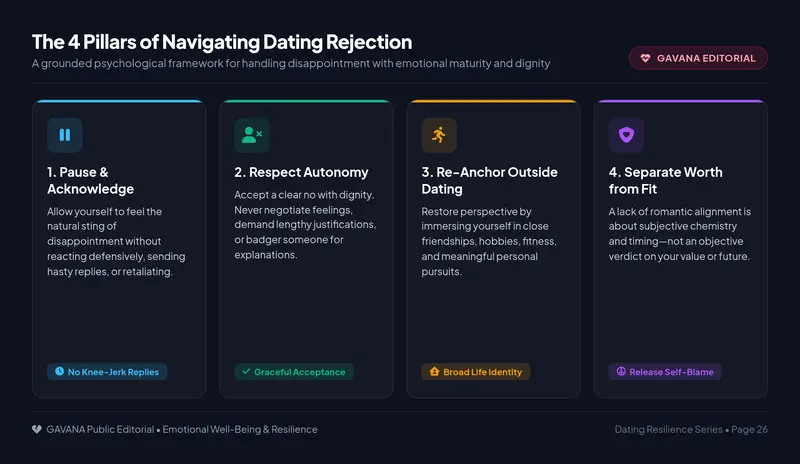
1. Pause & Acknowledge
Allow yourself to feel the natural sting of disappointment without reacting impulsively or defensively.
2. Respect Autonomy
Accept a clear no with dignity. Never negotiate feelings, demand explanations, or badger anyone.
3. Re-Anchor Outside Dating
Immerse yourself in close friendships, personal hobbies, routines, and goals beyond dating apps.
4. Separate Worth From Fit
A lack of romantic alignment is about compatibility and timing—not a verdict on your value or future.
What Dating Rejection Can Look Like
Rejection is an inescapable part of looking for connection. Whenever people put themselves out there, explore compatibility, and search for authentic alignment, choices must be made. Yet in modern dating, rejection rarely happens as a single, dramatic cinematic confrontation. Instead, it takes diverse forms across different stages of the matching process:
The Discovery Filter
Profiles that do not match back or mutual connections that never send an opening reply. This is the quietest form of filtering, happening before any emotional investment exists.
The Fading Dialogue
A conversation that starts with promise but gradually slows over several days until messages cease entirely, reflecting shifting interest or conversational fatigue.
The Declined Invitation
When you ask someone to transition to an in-person coffee or casual public meet-up, and they politely let you know they don't feel ready or interested in meeting.
Post-Date Disconnect
Meeting in person, having a pleasant conversation, but subsequently receiving a message stating they didn't feel romantic chemistry or see long-term alignment.
Recognising that rejection appears at every altitude of dating helps normalize its occurrence. Whether someone chooses not to match, stops chatting, or concludes things after three dates, it represents a natural sorting process rather than an indictment of your character.
Why Rejection Can Hurt (Even From a Near-Stranger)
It is completely common to feel a sudden pang of hurt, frustration, or deflation when someone turns you down—even if you only exchanged a dozen messages or met for forty-five minutes over tea. Many people subsequently criticize themselves for feeling upset: "Why do I care? I barely knew them!"
Understanding the psychological and emotional drivers behind that sting helps remove the secondary layer of self-criticism:
- Attachment to a hoped-for outcome: When you connect with someone who shares your taste in music, humor, or values, your mind naturally paints a brief future projection. You aren't just letting go of a person; you are mourning the pleasant possibility that their connection represented.
- The discomfort of ambiguity: When an exchange fades without explanation, our brains dislike unresolved puzzles. We tend to fill the vacuum of information with our deepest personal insecurities: "Did I say something foolish? Was I not attractive enough? Was I too eager?"
- Vulnerability and exposure: Opening up to another human being requires courage. When that vulnerability is met with disinterest, the immediate feeling can feel like exposure or embarrassment.
- Accumulated fatigue: If you have experienced several non-starts in a short window, a single polite "no" can feel heavier because it compounds existing dating fatigue.
How to Respond in the Moment: The Crucial Pause
The moment you receive a message declining a date or expressing that there is no romantic spark, your nervous system experiences a brief fight-or-flight response. The initial impulse might be to fire off an immediate reply—either defensively minimizing your own interest, demanding to know what went wrong, or making a passive-aggressive remark.
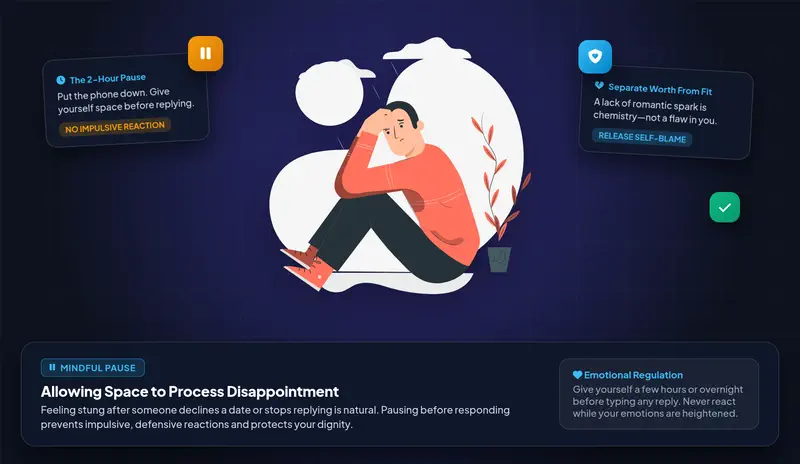
The First Rule of Rejection: Put the Phone Down
Never respond while your heart rate is elevated or your pride feels bruised. Give yourself at least two hours—or wait until the following morning—before touching the keyboard. A momentary lapse in emotional regulation can lead to messages you immediately regret.
There is a vital distinction between feeling hurt and behaving harmfully:
- Feeling hurt is authentic, understandable, and entirely acceptable. It is human to feel deflated when someone you were excited about does not reciprocate your enthusiasm.
- Violating boundaries—such as sending insulting remarks, questioning their appearance, guilt-tripping them, or spamming them with demands—is destructive and breaches community standards.
Realistic, Dignified Response Scripts
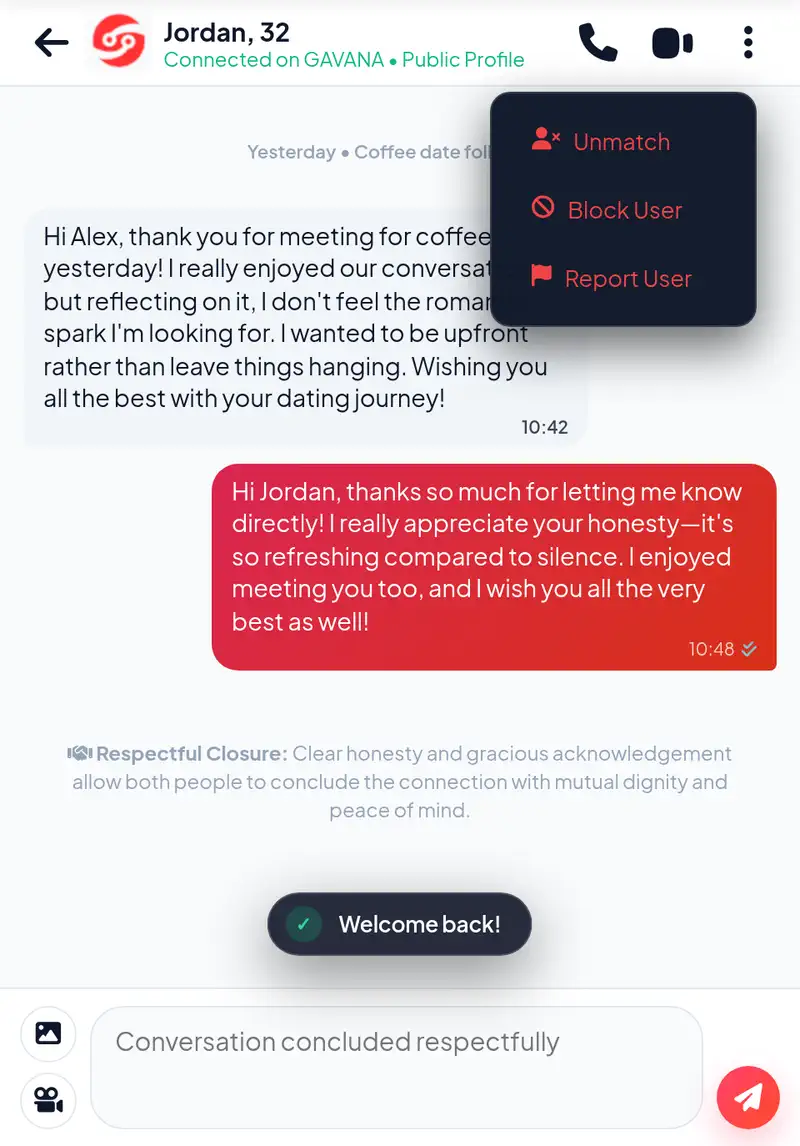
Responding with poise and kindness preserves your self-respect and leaves an indelible impression of emotional maturity. When someone is courteous enough to give you a clear, polite closing note, acknowledge it briefly:
"Thanks so much for letting me know directly, [Name]! I really enjoyed our conversation and appreciate your honesty. Wishing you all the very best on here!"
"No worries at all! Thank you for being upfront about it. Best of luck with everything!"
"I agree completely—it sounds like we're looking for different things right now. It was lovely chatting with you, and I hope you find a great match!"
Accepting a Clear "No" with Dignity
A fundamental tenet of healthy adult relationships is that consent and romantic attraction must be completely mutual and voluntary. Nobody owes another person their time, romantic attention, or emotional intimacy.
When someone communicates that they do not wish to continue, accepting that decision immediately and cleanly is the only respectful path forward:
What to Avoid at All Costs
- Negotiating feelings: Trying to convince them that their impression was mistaken or begging for another chance. Romantic attraction cannot be debated into existence.
- Demanding justifications: Pressuring them to provide a line-by-line critique of why they didn't feel chemistry. People are entitled to discontinue without defending their feelings.
- Cross-platform tracking: Searching for their personal Instagram, LinkedIn, or phone number after they declined or unmatched on a dating app.
- Sarcasm or bitter sign-offs: Dropping cynical barbs such as "Good luck finding anyone better" or "Your loss."
Mature, Dignified Practice
- Take the "No" at face value: Accept their decision without treating it as an opening bid in a negotiation.
- Send one brief acknowledgement: A simple, courteous sentence wishing them well closes the chapter cleanly.
- Unmatch and release: Once acknowledged, archive or unmatch so neither person feels lingering awkwardness.
- Honour platform rules: Understand that persistent unwanted contact breaches Amoura community standards and will result in moderation action.
Remember that Amoura maintains clear policies protecting members from harassment, insults, or retaliation following a declined date. For details on how we safeguard member well-being, explore our Community Guidelines and our practical guide on how to block and report inappropriate behaviour.
Rejection Is Not a Verdict on Your Worth
One of the most destructive habits in dating is interpreting someone else's disinterest as an objective measurement of your personal value, physical attractiveness, or worthiness of love.
In reality, whether two adults spark romantically depends on a vast constellation of subjective variables, almost none of which reflect a flaw in either person:
Personal Timing & Bandwidth
The other person may be overwhelmed with work, processing an unresolved past relationship, or realizing they do not currently have the emotional capacity for new intimacy.
Highly Specific Lifestyle Fit
They might be seeking someone who shares an intense passion for marathon running, frequent international travel, or specific family timelines that simply do not match your life priorities.
Subjective Romantic Chemistry
Chemistry is famously idiosyncratic. You have undoubtedly met kind, intelligent, attractive people whom you simply did not feel romantic passion for; the exact same dynamic applies in reverse.
Differing Communication Tempos
One person may thrive on rapid daily texting while another prefers sporadic weekend updates. Incompatibility of communication style is not a moral failing.
The Principle of Selective Alignment
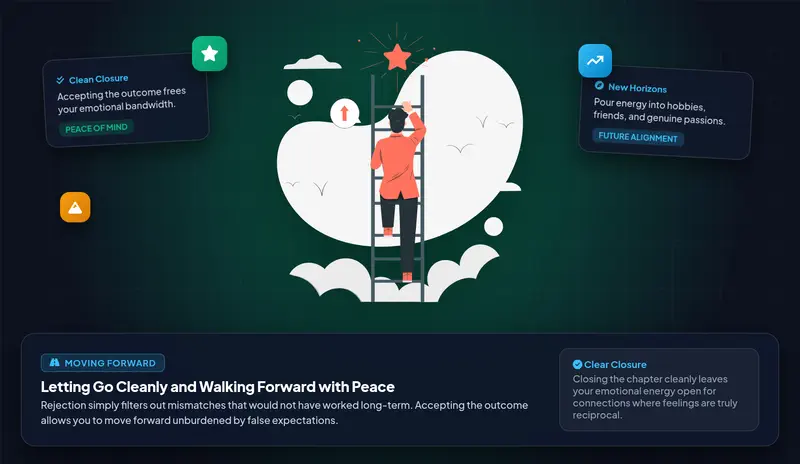
You cannot be everyone's cup of tea—and you shouldn't want to be. The goal of dating is not to make as many strangers as possible approve of you; the goal is to identify the rare person whose values, humor, lifestyle, and affection naturally harmonize with yours. Every mismatch you encounter simply clears the table for genuine alignment.
What to Do When Someone Stops Replying (Fading & Silence)
While an explicit, courteous message declining to continue is the ideal standard of online dating etiquette, the reality is that many connections end with silence. A match simply stops responding mid-conversation, or promises to follow up about a weekend plan and never writes back.
Silence can feel frustrating because it lacks clear finality. Here is how to navigate an unanswered thread with poise:
- Recognise that life happens: In the first 48 hours of an unanswered message, avoid assuming malice or rejection. People misplace phones, handle family emergencies, or get swamped during work deadlines.
- The "One Gentle Follow-Up" guideline: If several days have passed and you were enjoying a vibrant conversation, you are welcome to send one low-stakes, friendly message. For instance: "Hope your presentation went well this week! Let me know if you still fancy checking out that coffee spot."
- Treat continued silence as an answer: If your gentle follow-up goes unanswered for a few days, do not send additional messages. Silence is unambiguous information. It tells you that the person does not have the interest, availability, or communication habits necessary for a mutual partnership.
- Resist sending bitter parting shots: Never send messages like "Guess you're too busy to type two words" or "Thanks for ghosting." These messages accomplish nothing, demonstrate entitlement, and will not inspire remorse.
- Close the thread yourself: Unmatch or delete the conversation to remove the temptation to check back repeatedly. Regaining control of your digital space brings immediate closure.
Stopping the Interaction Replay Loop
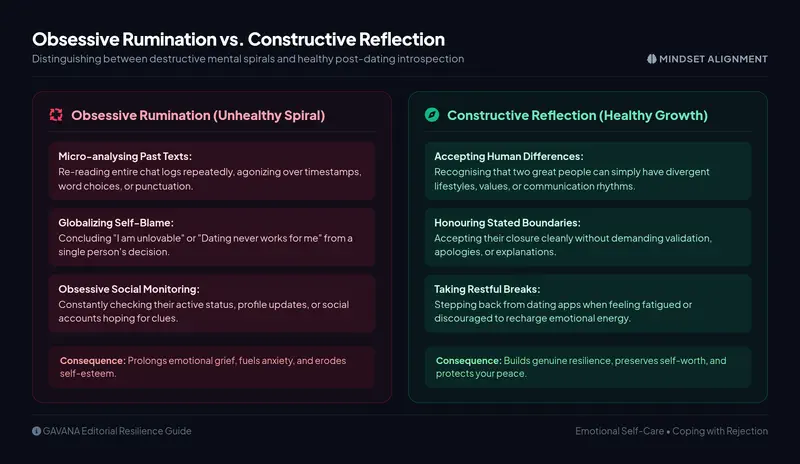
Following a disappointing date or an unexpected rejection, many people fall into obsessive rumination: mentally replaying every second of the interaction, re-reading old text exchanges, scrutinizing timestamps, and searching for the hypothetical "mistake" that ruined everything.
Rumination creates an illusion of control—the false belief that if you can just figure out what went wrong, you can prevent ever feeling rejected again. In truth, rumination simply prolongs emotional distress.
Three Practical Steps to Break the Mental Loop
- Remove the evidentiary trigger: If you find yourself repeatedly re-reading your old message thread or checking their profile photos, delete or unmatch the thread immediately. Remove the external stimuli that fuel the cycle.
- Set a "worry boundary": When your mind starts looping on "What if I had said X instead of Y?", gently interrupt yourself: "I showed up as myself. If being myself wasn't a fit for them, modifying my words would only have postponed the inevitable."
- Shift into physical action: Rumination is a sedentary, intellectual spiral. Break it with sensory engagement—go for a brisk walk, cook a nutritious meal, do a high-intensity workout, or call a friend to discuss an entirely unrelated topic.
Rebuilding Confidence Beyond the Dating World
When dating becomes your primary source of social validation, every rejection feels like a catastrophic collapse of self-esteem. The most resilient daters are those whose self-worth is firmly anchored in a multifaceted, meaningful life outside dating apps.
Fragile, App-Dependent Identity
When dating success dictates mood, confidence swings violently with every match, unmatch, and reply speed. An unanswered message feels like total isolation.
Grounded, Multi-Pillar Identity
Dating is simply one small hobby among many. Self-worth is sustained by friendships, creative passions, physical wellness, and professional achievements.
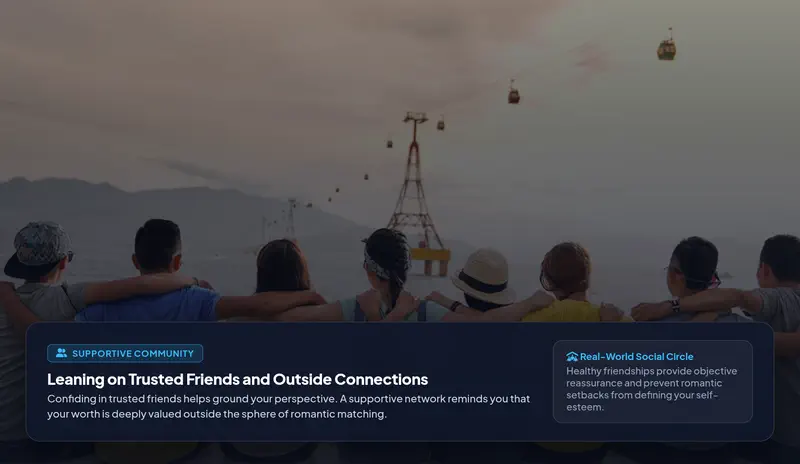
To restore perspective and replenish your emotional reserves, invest deliberately in these areas:
- Deepen non-romantic friendships: Spend an evening with close friends who appreciate you for who you are. Genuine social connection satisfies our biological need for belonging without romantic pressure.
- Re-engage with personal hobbies: Whether it's playing music, hiking trails, rock climbing, photography, or cooking, immerse yourself in activities where you experience flow and tangible mastery.
- Prioritize physical health: Regular exercise, consistent sleep, and wholesome meals stabilize dopamine and serotonin levels, making you far more emotionally resilient to everyday disappointments.
- Focus on personal or career goals: Pour your problem-solving energy into learning a new language, advancing a work milestone, or volunteering for a local community project.
Constructive Learning Without Self-Blame
There is a healthy middle ground between blaming yourself for everything and stubbornly refusing to reflect at all. Constructive learning is about asking whether there are specific, tangible communication habits you can refine, while refusing to invent imaginary character defects.
Ask yourself these grounded, objective questions:
Conversational Balance
Did I actively listen and ask open-ended questions about their world, or did I accidentally monopolize the conversation out of nervousness? (See our guide on how to have better conversations while dating.)
Profile Accuracy
Did my dating profile and photos honestly reflect my current appearance, passions, and relationship intent, or was there an unintended discrepancy? (Review our advice on honest profile creation and dating photos.)
Pacing and Boundaries
Did I rush the pacing, ask for private personal details too quickly, or express overwhelming expectations before getting to know them? (Check our guide to online dating etiquette.)
Target Compatibility
Was I pursuing someone whose stated lifestyle or life goals were clearly in conflict with my own, hoping that mutual attraction would somehow override the differences?
If you review an interaction and realize you were polite, attentive, respectful, and genuine, then there is nothing to fix. Compatibility is not a math equation where perfect behavior guarantees romantic attachment. Sometimes two lovely individuals simply do not fit together.
To recognize the positive, reciprocal behaviors that indicate authentic alignment and emotional safety when you do connect with someone, explore our comprehensive guide on green flags and signs of a healthy connection.
When You Are the Person Declining
Just as others have the right to choose whether they wish to pursue a connection with you, you possess full autonomy to decline connections that do not feel right. Turning someone down can trigger guilt or anxiety, but communicating clear, respectful closure is a gift to both parties.
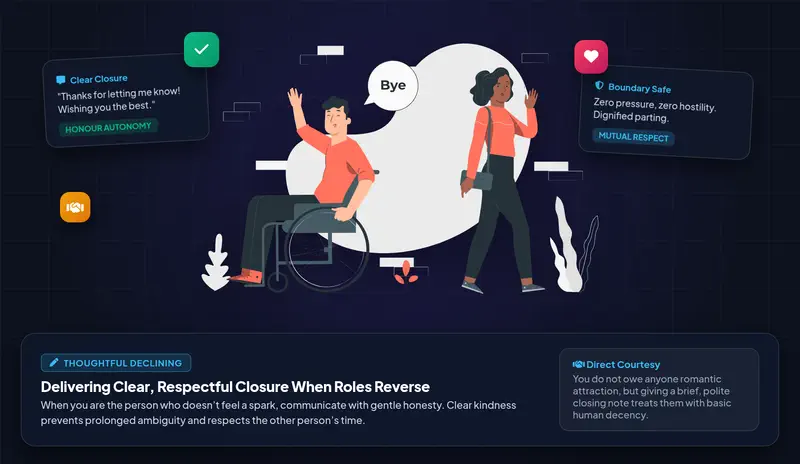
Core Principles of Delivering a Kind, Clear Decline
- Be direct and unambiguous: Avoid misleading phrases like "I'm just really busy right now" or "Let's see how the next few weeks go" if you have no intention of seeing them again. Ambiguity strings people along.
- Send the message promptly: Don't wait three days hoping they will take the hint. Sending a short note within 24 hours of a date shows consideration.
- Keep it brief and kind: You do not need to deliver a dissertation on why you aren't attracted to them. A couple of gracious sentences is ideal.
"Hi [Name], thank you so much for meeting yesterday! I really enjoyed our chat about [shared topic], but reflecting on it, I didn't feel the romantic spark I'm looking for. I wanted to be upfront rather than leave things unclear. Wishing you the absolute best on here!"
"Hi [Name], it's been great getting to know you a bit, but I don't feel we're looking for the same kind of connection. Thank you for the pleasant chat and best of luck with your search!"
When to Seek Outside Support
While feeling disappointed or bruised after dating setbacks is a normal human experience, rejection should not plunge you into prolonged depression, acute panic, or feelings of complete worthlessness.
If you notice that romantic rejection consistently triggers intense abandonment fears, destabilizes your everyday work and sleep routines, or feels rooted in unresolved emotional trauma, consider reaching out to a qualified mental health professional or counselor.
Working with a licensed therapist provides a supportive, confidential space to unpack attachment styles, build self-compassion, and develop robust emotional boundaries. Dating is an adventure in human connection, and you deserve to navigate it with confidence, peace of mind, and compassionate support.
Frequently Asked Questions
Common questions on managing dating rejection, responding with composure, and protecting emotional well-being.
Should I always reply to a rejection message, or is it okay to say nothing?
If someone took the time to send a courteous, polite message letting you know they didn't feel chemistry, sending a brief one-sentence reply—such as "Thanks for letting me know, wishing you all the best!"—is considered the gold standard of etiquette. However, if you feel emotional or prefer not to reply, simply unmatching cleanly is also acceptable. Never feel pressured into a prolonged conversation.
Is it ever acceptable to ask someone why they rejected me?
In general, asking for an explanation is strongly discouraged. Attraction is subjective and instinctive; putting someone on the spot forces them into an uncomfortable position, and their answer rarely provides genuine closure. The healthiest course of action is to accept their decision without demanding a critique.
How long does it usually take to move past a disappointing rejection?
For an early-stage connection or first date, the initial sting typically subsides within 24 to 48 hours once you refocus on friends, work, and personal hobbies. If you find yourself agonizing over an interaction for weeks, it often indicates you were attached to an idealized fantasy of who they were rather than the reality of the short interaction.
Why does getting ghosted feel worse than a direct rejection?
Ghosting creates ambiguous loss. Without explicit closure, the human brain naturally tries to solve the mystery by inventing negative self-critiques. A direct rejection, while temporarily stinging, provides immediate finality that allows you to close the chapter and move forward unburdened.
How do I know when it is time to take a break from dating apps?
Clear warning signs include feeling dread before opening the app, experiencing cynical or bitter thoughts toward matches, feeling crushed by minor unanswered messages, or viewing dating as an exhausting obligation. Stepping away for a few weeks restores perspective and emotional stamina.
What should I do if someone reacts angrily when I politely decline them?
Do not engage, apologize, or argue. Their hostile reaction validates that your instinct to discontinue was completely correct. Use Amoura's blocking and reporting tools immediately to protect your space. Hostile or harassing behavior violates platform guidelines and is handled swiftly by moderation.