
What Is a Dating Red Flag?
In online dating, a "red flag" is a recurring behavior, communication style, or attitude that signals potential incompatibility, lack of respect for boundaries, or manipulative intent.
It is equally important to define what a red flag is not. An isolated awkward question, a slow reply on a busy workday, or mild nervousness on an initial video call is not a red flag—it is ordinary human variation. People have demanding jobs, diverse communication habits, and varying levels of social confidence.
Genuine red flags are characterized by patterns and attitudes: how someone treats your limits, how they handle disagreement, whether they respect your autonomy, and whether their actions match their words over time. Approaching dating with healthy discernment means looking at context, rather than viewing every unfamiliar behavior through a lens of suspicion.
Editorial Scope Note
This guide focuses on broad interpersonal and behavioral warning signs. For dedicated guides on synthetic profiles and financial fraud, review our specialized resources: How to Spot a Fake Dating Profile, Catfishing: What It Is and How to Avoid It, and How to Recognise a Romance Scam.
Pressure to Move Faster Than You Want
Healthy connections unfold at a mutual, comfortable pace. When someone attempts to dictate the speed of your relationship or treats your hesitations as personal insults, it signals an unwillingness to respect your emotional cadence.
Pacing pressure can manifest in several ways:
- Immediate Exclusivity Demands: Expecting you to delete your dating profile, stop speaking to other matches, or commit to a serious relationship after only a few days of chatting.
- Relentless Contact Expectations: Demanding continuous replies throughout your workday, questioning why you took an hour to answer a message, or calling repeatedly without prior agreement.
- Rushed In-Person or Off-Platform Migration: Insisting on meeting immediately at an isolated location, or demanding private phone numbers and social handles before you have established baseline rapport.
A considerate match will respect when you say, "I prefer to chat here a bit longer before exchanging numbers," and will never make you feel guilty for setting a measured pace.
Ignoring or Testing Your Boundaries
How someone reacts the first time you say "no" or "I'm not comfortable with that" is one of the most reliable indicators of their character.
Concerning boundary behavior rarely begins with overt aggression. Instead, it often starts with subtle testing:
Treating Limits as Negotiations
If you express that you don't drink alcohol, don't want to meet late at night, or aren't comfortable sharing where you work, they push back: "Just one drink won't hurt," or "Why are you being so secretive?" They treat your stated preference as an obstacle to negotiate rather than a boundary to honor.
Passive-Aggressive Guilt-Tripping
When you decline an invitation or set a limit, they respond with wounded silence, sulking, or statements like: "I guess you don't really care about getting to know me." This tactic is designed to make you feel responsible for their disappointment so you yield on future boundaries.
Inconsistent Stories and Shifting Details
Honest people occasionally misspeak or forget minor conversational anecdotes. However, repeated, substantive contradictions in someone's core life story are a meaningful warning sign.
Watch for inconsistencies involving fundamental details:
- Career and Qualifications: Claiming to be an architect in their profile, but later referencing medical residency, or displaying complete unfamiliarity with the industry they claim to lead.
- Living Arrangements: Claiming to live alone in your city, but repeatedly dodging questions about their neighborhood, or giving conflicting answers about roommates or family ties.
- Marital Status: Inconsistencies regarding past relationships, ongoing divorces, or availability that strictly coincides with standard working hours while vanishing on evenings and weekends.
When pressed on contradictory statements, individuals engaging in deception typically offer defensive explanations, claim you "misheard" them, or quickly change the subject.
Excessive Emotional Intensity Very Early
Enthusiasm in dating is normal and welcome. However, there is a clear distinction between genuine mutual excitement and manufactured, overwhelming intensity (often referred to colloquially as "love-bombing").
Signs of disproportionate early intensity include:
- Proclaiming that you are their "soulmate," "destiny," or the "only person who truly understands them" within days of matching.
- Talking about elaborate future plans—vacations, moving in together, marriage—before you have spent meaningful time together in the physical world.
- Lavishing you with extravagant compliments and declarations of complete emotional dependency early in the interaction.
Artificial intensity often serves as an emotional shortcut designed to build deep attachment before you have had the opportunity to evaluate their character and consistency.
Attempts to Isolate You From Your Support System
A healthy partner wants you to have a rich, supported life with friends, family, and hobbies. A controlling or manipulative individual, by contrast, perceives your trusted circle as a threat to their influence.
Early isolation tactics are often framed as affection:
- "Your friends are just jealous of how well we connect."
- "You spend too much time with your family; we should keep our relationship just between us."
- Suggesting that speaking to friends about your dating life betrays the "intimacy" of your connection.
Anyone who actively discourages you from seeking outside perspectives or tries to drive wedges between you and your trusted support network is exhibiting a serious behavioral red flag.
Requests for Money or Financial Assistance
Unexpected requests for money, emergency loans, cryptocurrency investments, or gift cards in early-stage dating are almost invariably fraudulent.
No matter how poignant the crisis sounds—a sudden medical emergency, a frozen bank account, a detained passport, or an exclusive investment tip—you should never send money to someone you have only met online.
Specialized Guidance
Because financial deception follows specific manipulative vectors, we cover this comprehensively elsewhere. Read our complete guide on How to Recognise a Romance Scam, and explore our focused guide on What to Do If Someone Asks You for Money.
Pressure for Confidential or Intimate Information
Healthy dating involves gradual, reciprocal sharing. When an online match pressures you to reveal sensitive personal or financial information early, caution is warranted.
Be mindful of requests involving:
- Your exact home address, apartment number, or live location coordinates.
- Official identification documents, financial accounts, or employer details.
- Pressure to send intimate, explicit, or revealing photographs before meeting.
Once intimate media or sensitive personal data is shared online, it can potentially be used for blackmail, sextortion, or harassment. Learn more about protecting your data in our guide on How Amoura Protects Your Privacy and read our companion guides: Protecting Your Personal Information While Dating Online and Why You Should Never Send Intimate Photographs.
Aggressive, Controlling, or Disrespectful Behavior
Disagreements and differing viewpoints are natural in any human connection. What matters is how those differences are handled.
Watch for concerning reactions to everyday friction:
- Explosive Irritation: Becoming angry, sarcastic, or cold if you have a different opinion or cannot meet when they want.
- Possessiveness and Jealousy: Interrogating who you are with, questioning other matches, or monitoring your active status on social platforms.
- Derogatory Language: Using insults, mocking your lifestyle or appearance, or masking cruel remarks as "just a joke."
A person who cannot manage basic emotional regulation during early conversations is unlikely to provide a safe, respectful foundation for a long-term partnership.
Trusting Your Discomfort
One common trap in online dating is believing that you must identify a clear rule violation or prove someone is dishonest before you are allowed to stop talking to them.
You do not need forensic evidence of wrongdoing to step away. If an interaction leaves you feeling drained, uneasy, pressured, or uncomfortable, that feeling alone is a completely valid reason to decline further contact. You are never obligated to continue talking to someone simply because they matched with you.
Trusting your discomfort allows you to conserve your energy for candidates who make you feel respected, heard, and at ease.
When Several Red Flags Appear Together
An isolated awkward moment is normal human fallibility. However, when multiple warning signs appear together, they form a clear pattern that should not be rationalized away.
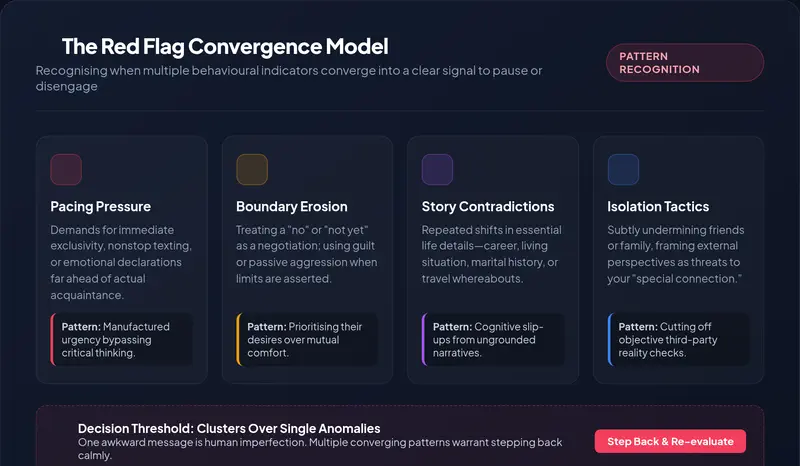
Figure 1: The Red Flag Convergence Model highlights how multiple overlapping behaviors indicate a clear need to pause and step away.
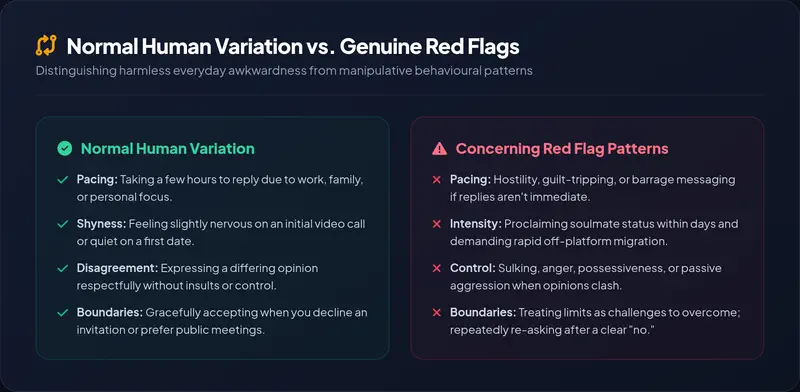
Figure 2: Contrasting normal human variation against genuinely manipulative behavioral patterns.
Practical Actions When You Spot Red Flags
When you notice concerning behavioral patterns, take calm, decisive steps to protect your boundaries:
Slow Down the Interaction
Do not let urgency push you into impulsive decisions. Step away from your phone, take time to reflect, and allow communication to slow to a pace that feels comfortable for you.
Assert a Clear, Simple Boundary
State your limits plainly without over-explaining: "I'm not comfortable meeting at a private residence for a first date," or "I prefer to keep chatting on this app for now." How they respond will give you immediate clarity.
Stop Sharing Information
Do not share further personal details, schedule plans, or contact channels. Keep your communication contained.
Block and Report on Amoura
If someone persists after a boundary, uses abusive language, or violates community standards, use the Block / Report User option from their profile card or chat header. Blocking instantly severs communication, while reporting notifies our moderation team.
For a full walkthrough of our safety reporting mechanisms, consult How to Report a User on Amoura and How Amoura Moderation Works. For broader safety guidance, visit the Amoura Dating Safety Centre.
Frequently Asked Questions
Is taking several hours to reply to a message a red flag?
No. Most adults have work commitments, personal responsibilities, and times when they step away from screens. A slow reply is normal human pacing. It only becomes a concern if the delay is paired with evasiveness, sudden disappearance when direct questions are asked, or hostility when you don't reply immediately.
What is the difference between shyness and being deceptive?
Shyness usually looks like quietness, slight awkwardness, or feeling nervous before meeting. Shyness does not involve lying about basic facts, demanding money, pushing boundaries, or becoming angry when questioned. A shy person will still be respectful of your comfort.
Should I explain why I am ending a connection if they exhibited red flags?
You are never obligated to offer an extensive explanation, especially if the person has been manipulative, aggressive, or boundary-violating. A polite, brief message ("I don't think we are the right match, but I wish you the best") is sufficient. If they react aggressively, block them immediately without engaging in an argument.
What should I do if a match becomes angry when I decline an invitation?
Do not apologize for having personal boundaries or try to soothe their anger. Hostility in response to a simple "no" is an immediate indicator of controlling behavior. Disengage from the conversation and use the in-app block feature to protect your peace.
Can someone change if I point out their concerning behavior?
In early-stage dating, it is rarely productive to try to "coach" or fix someone's behavior. Dating is an evaluation period to see if someone naturally treats you with respect and care. If someone is already pushing boundaries or showing aggression early on, their behavior tends to escalate rather than improve.
How does Amoura support members experiencing uncomfortable interactions?
Amoura gives members complete control over their matching experience: one-tap blocking instantly revokes profile visibility and chat access (see How to Block and Report Someone on a Dating App), mutual-match rules prevent unsolicited cold contact, and reports are routed directly to our moderation queue for review under our Community Guidelines.