
From Online Conversation to a Real Relationship
A grounded, compassionate guide for adults navigating the transition from digital messaging toward an in-person connection and building an authentic, healthy relationship—at a pace that respects both individuals.
1. Digital Rapport
Enjoyable text exchange, mutual curiosity, and active interest without mistaking screen banter for deep commitment.
2. In-Person Discovery
Moving from chat to a relaxed, daytime public meetup to discover real presence, vocal nuances, and mutual ease.
3. Values Alignment
Exploring life goals, relationship expectations, emotional availability, and boundaries across repeated dates.
4. Conscious Commitment
Defining exclusivity explicitly and building lasting intimacy through consistent, dependable daily actions.
Letting a Connection Develop Naturally
When you strike up an engaging conversation on a dating platform, the initial momentum can feel exhilarating. Quick-witted replies, shared cultural references, and late-night message threads can create an immediate sense of intimacy. However, turning a promising online exchange into a genuine, resilient relationship is a gradual process of learning who someone is across multiple real-world contexts.
To navigate this transition with clarity and emotional stability, it is essential to distinguish between four distinct stages of connection that are related, yet fundamentally non-interchangeable:
1. Initial Attraction
Curiosity sparked by photographs, profile prompts, and visual style. Attraction creates the impulse to swipe and say hello, but it reveals very little about temperament, reliability, or personal values.
2. Enjoyable Conversation
Pleasant rapport, reciprocal jokes, and shared conversational rhythms on a screen. Written banter demonstrates communicative skill, but text can easily be edited, paced, and polished.
3. Genuine Compatibility
How two lives, nervous systems, and emotional patterns fit together in the physical world. Compatibility encompasses how you handle minor delays, treat service staff, communicate boundaries, and navigate differences.
4. Mutual Commitment
The deliberate, shared decision by two autonomous adults to invest in each other over time, uphold exclusivity, and support each other through life's ordinary responsibilities and hardships.
Conflating these stages—such as assuming that high conversational banter automatically implies deep compatibility or commitment—is one of the most common sources of dating disappointment. Recognizing that each stage must be discovered in its own time protects your emotional well-being and gives genuine connections the breathing room they need to unfold naturally.
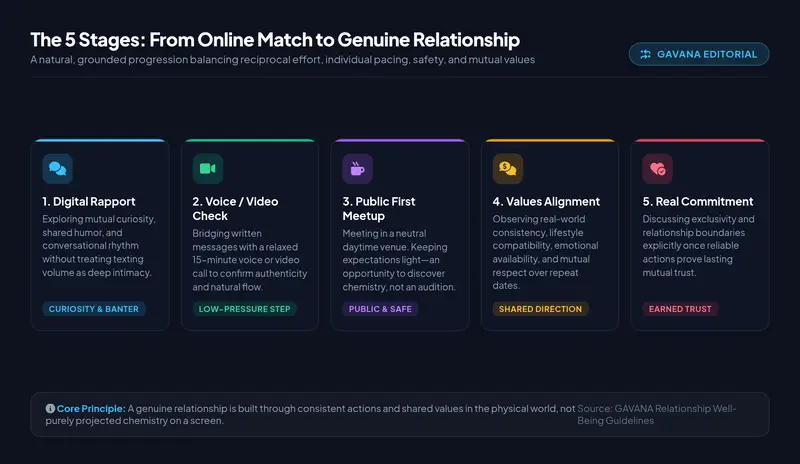
Looking for Mutual Interest and Reciprocal Effort
Before taking steps toward an in-person meeting, observe the dynamic of your digital conversation. Healthy romantic possibilities are characterized by reciprocal curiosity and balanced effort. Both people contribute to keeping the dialogue alive, asking thoughtful follow-up questions, and demonstrating an authentic desire to learn about each other's lives. For a deeper look at recognizing mutual consistency and emotional safety, explore our guide on Green Flags: Signs of a Healthy Connection.
However, it is crucial not to treat superficial digital metrics as definitive proof of romantic interest:
- Response speed is not emotional availability: Someone who responds within thirty seconds may simply have their phone in hand or work in front of a computer; it does not prove they are emotionally ready for a relationship. Conversely, someone who replies after several hours because of medical shifts, meetings, or family care can still be deeply intentional and engaged.
- Message volume does not equal depth: Exchanging fifty short texts a day about weather, memes, and routine updates often creates the illusion of closeness without developing genuine substance. Look for curiosity about your perspectives, thoughts, and lived experiences rather than sheer word count.
- Following through on minor commitments: Notice whether the other person honors small conversational agreements. If they say, "I'll send you that book title when I get home" or "Let's chat more after my presentation on Thursday," do they follow through? Dependability begins in micro-interactions.
If you stop initiating for two days, does the conversation pause indefinitely? While everyone has busy weeks, a connection should feel like a game of catch where the ball is thrown back and forth. You should never feel like you are single-handedly dragging an interview forward.
Discussing Relationship Intentions Honestly
One of the kindest and most empowering things you can do in modern dating is clarify relationship intentions early. Too many adults spend weeks wondering whether an online connection wants marriage, a committed long-term partnership, casual dating, or simply casual companionship.
Discussing intentions is not about demanding an instant promise or asking someone to commit to you before meeting. It is simply about confirming that you are looking for the same category of connection so neither person invests hope in an incompatibility:
Share Your Own Direction First
Frame your intention as personal self-knowledge rather than a test: "I'm at a place in life where I'm hoping to build toward a committed long-term partnership. How about you?"
Listen to Clear Statements
If someone tells you, "I'm not looking for anything serious right now," believe them immediately. Never interpret casual intentions as a challenge to change their mind through extra devotion.
Separate Intention from Urgency
Wanting a long-term relationship does not mean rushing into one. Grounded adults know what they are looking for while remaining committed to moving slowly and deliberately.
Moving Beyond Endless Messaging When Both Are Ready
Messaging on dating apps is designed to facilitate initial introduction, not to sustain an indefinite pen-pal dynamic. While some people prefer chatting for a few days to establish basic comfort and safety, prolonging text-only conversations for weeks or months can create an exaggerated mental fantasy that collapses upon meeting. For detailed criteria on knowing when the timing is right to take communication off the app, see our guide on When Is It Safe to Move a Conversation Off a Dating App?.
A gentle, unpressured middle step before meeting in person is suggesting a brief 10 to 15-minute voice note exchange, phone call, or video chat. Hearing vocal cadence, spontaneous laughter, and conversational tempo helps humanize each person and dramatically reduces first-date awkwardness.

"I've really enjoyed our chats over the last couple of days! Would you be up for a quick 10-minute phone or video say-hello sometime this week before we plan coffee? Absolutely no pressure if you prefer sticking to text for now."
Suggesting a First Meeting Without Pressure
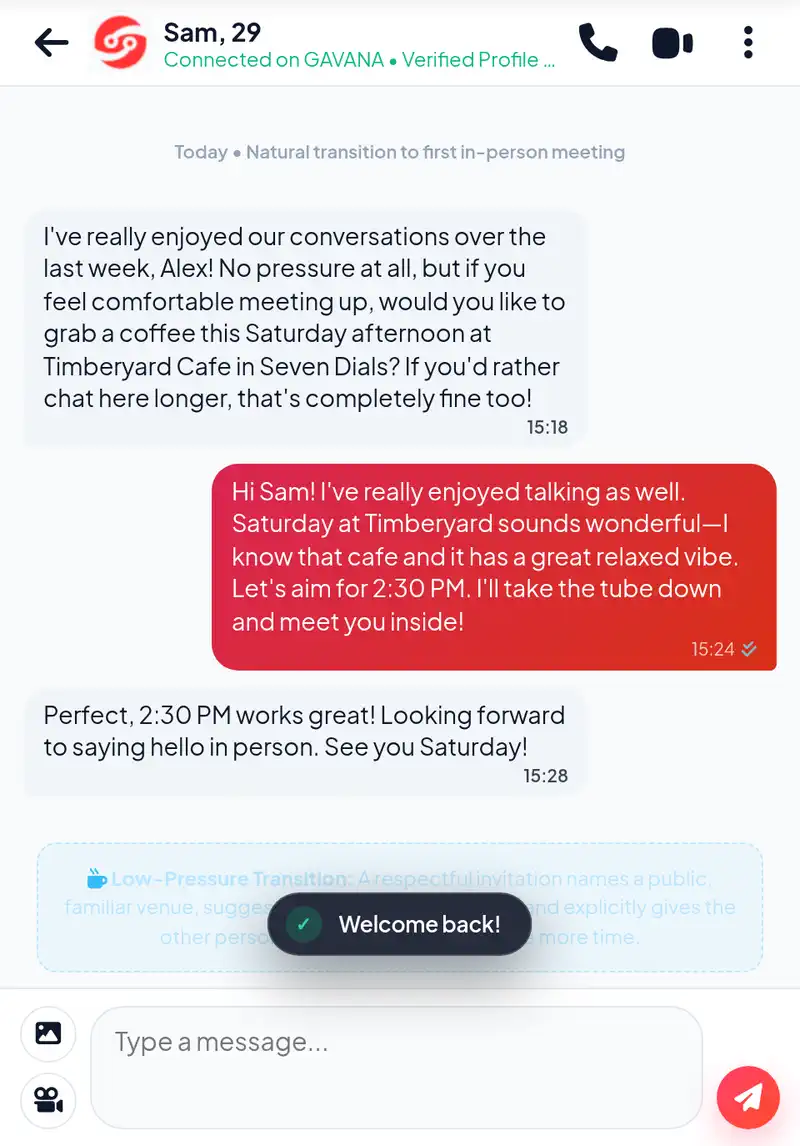
When mutual interest has been established and both individuals express enthusiasm for taking the next step, inviting someone to meet should feel easy, respectful, and free of emotional leverage.
The hallmark of a healthy invitation is that it **explicitly gives the other person room to accept, suggest an alternative date or activity, or decline without awkwardness**. Demanding immediate availability, asking vague questions like "When are we hanging out?", or reacting defensively to scheduling delays undermines safety and respect.
Specific Yet Flexible
Suggest a clear venue and timeframe rather than open-ended vagueness: "Would you be open to grabbing a tea this Saturday afternoon around 2 PM?"
Low-Stakes Duration
Choose an activity with a natural end point—like coffee, an exhibition, or a park walk—so neither person feels trapped if the connection feels platonic.
Full Autonomy
Always include a warm exit option: "No worries at all if your weekend is packed or if you'd rather chat a bit longer first."
Preparing for the First In-Person Date
Approaching a first date with balanced expectations prevents performance anxiety. A first date is not an interrogation, an employment interview, or an audition to see if someone meets a rigid checklist. It is simply **an opportunity for two adults to spend an hour together and discover whether they enjoy each other's physical presence**. For complete meeting protocols, checklists, and safety precautions, read our dedicated guide on How to Have a Safe First Date.
To keep the experience enjoyable and grounded:
- Agree on a convenient public venue: Choose a well-lit coffee house, museum cafe, or bustling public square that is reasonably convenient for both of you. Avoid secluded parks, private residences, or lavish four-course dinners that require a three-hour time commitment.
- Clarify practical logistics: Agree on who will arrive first, where to meet (e.g., inside by the ordering counter or outside the station entrance), and what you're wearing so you can spot each other without stress.
- Keep expectations realistic: You do not need to fall in love by dessert. Your only goal on a first date is to answer a single question: "Did I feel comfortable enough to want to talk with this person again?"
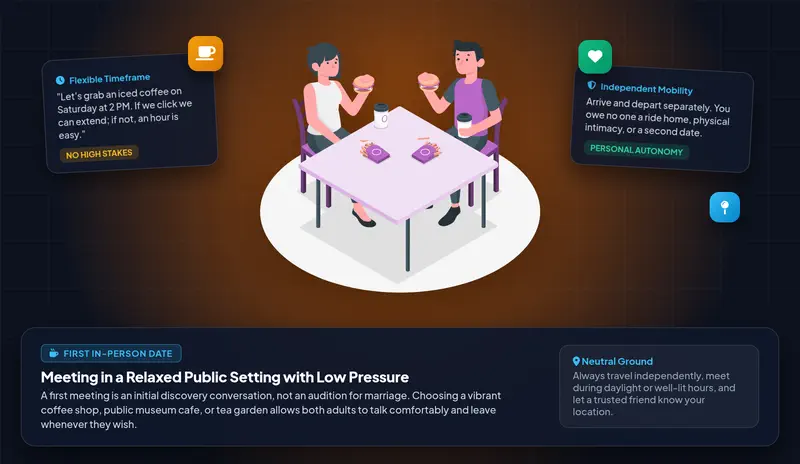
Prioritising Personal Safety
No matter how warm, charming, or attentive someone has appeared in digital messages, personal safety must remain your first priority. Digital rapport cannot verify someone's real-world character or background.
Apply sensible, proactive safety boundaries without feeling embarrassed or apologetic:
Independent Transport
Always travel to and from the date independently via your own vehicle, public transit, or taxi. Never accept a ride from someone's car or let them pick you up from your home on a first meeting.
Share Your Plan with a Friend
Send a trusted friend the name of the venue, your date's name, the scheduled meeting time, and arrange a scheduled safety check-in text during or after the meetup.
Guard Private Information
Do not reveal your home address, daily commute route, workplace specifics, or sensitive personal data until substantial mutual trust has developed in person (see Protecting Your Personal Information While Dating Online).
The Right to Leave
If someone displays aggressive behavior, crosses physical boundaries, or makes you feel unsafe, you have the absolute right to end the date immediately. Pay your share and leave without guilt.
Online Chemistry vs. In-Person Compatibility
One of the most confusing dating experiences occurs when someone with whom you shared brilliant online banter feels flat, awkward, or mismatched when sitting across a table.
It is critical to recognize that **a difference between text chemistry and in-person dynamic does not necessarily mean either person was deceitful**. Text-based communication operates through a fundamentally different medium than physical presence. In written chat, you have time to craft responses, consider witty comebacks, and project your own romantic hopes into the spaces between messages.
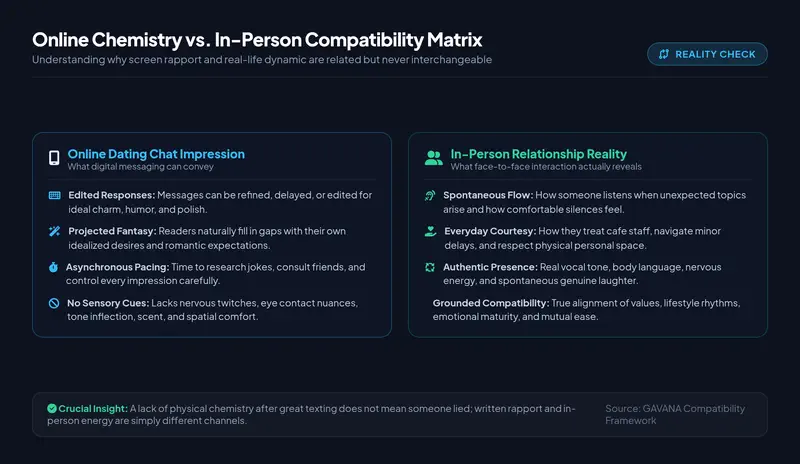
When you meet face to face, subtle biological and social cues come into play: tone of voice, spatial awareness, how someone handles silence, nervous energy, and physical presence. For proven advice on sustaining comfortable, flowing dialogue in person, explore our companion guide on How to Have Better Conversations While Dating. If the chemistry isn't there in person, accept that without self-blame or resentment toward the other person. You simply tested the connection in the real world and gathered honest information.
Staying Authentic During the Transition
The desire to make a great impression can easily tempt adults into people-pleasing: laughing at jokes they find unfunny, pretending to share obscure musical tastes, downplaying career ambitions, or agreeing with political views they disagree with.
Performing a false persona during early dates is exhausting and ultimately counterproductive. If you secure a second date by pretending to be someone you are not, you are merely postponing the inevitable moment when your real self emerges:
- Express honest preferences: If they suggest sushi and you dislike raw fish, say: "I'm not a big fan of sushi, but there's a great noodle or taco spot nearby if that works for you!" Expressing preferences is attractive because it demonstrates healthy self-assurance.
- Don't hide your schedule or commitments: If you have family duties, demanding work hours, or health routines, be truthful about them. You want a partner who respects your actual life, not an imaginary version of you with unlimited leisure time.
- Allow for natural pauses: Real conversations have quiet moments. You do not need to fill every three-second silence with frantic chatter. Comfortable silence is often the first sign of genuine mutual comfort.
Discussing Values, Lifestyle, and Expectations
As you progress through second, third, and fourth dates, conversation should naturally expand beyond favorite restaurants and travel anecdotes toward core life values. This includes discussing relationship styles, lifestyle rhythms, social circles, and expectations around work-life balance.
The goal is not to turn dates into clinical job interviews. Instead, weave these topics into organic storytelling and reciprocal reflection:
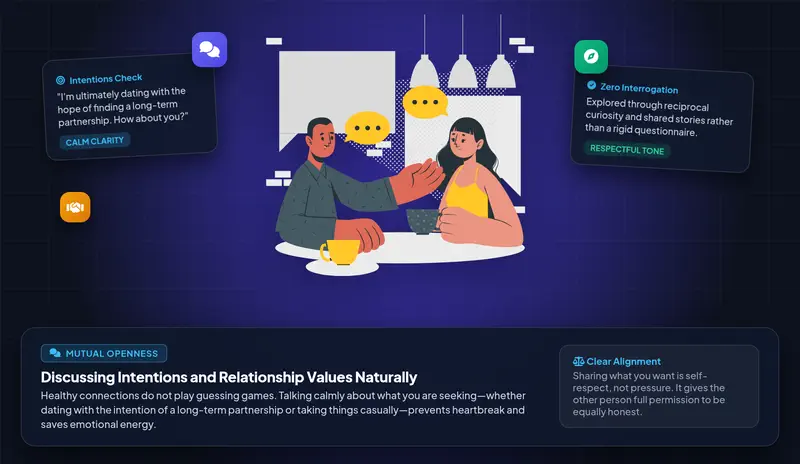
"I've really enjoyed the time we've spent together so far. When you think about dating right now, what kind of rhythm and relationship are you hoping to find over the coming months? I want to make sure we're generally moving in the same direction."
Respecting Consent and Individual Pace
One of the most essential principles in ethical dating is that **no amount of time invested online entitles either person to anything in the physical world**.
Neither person owes the other:
- Physical intimacy: Hugs, kisses, hand-holding, or sexual touch are voluntary at every moment. Previous messaging or flirting does not imply consent to physical affection.
- Deep personal disclosures: Sharing vulnerable family history, past traumas, or financial details should happen only when someone feels entirely safe doing so.
- Another date or phone call: Even after three great dinners, either person maintains complete autonomy to decide that the connection is not the right fit for them.
- Speed of progression: People have different comfort thresholds. Respecting someone's request to meet for tea rather than drinks, or to take things slowly before becoming physically intimate, is a vital sign of emotional maturity.
Following Up After Meeting
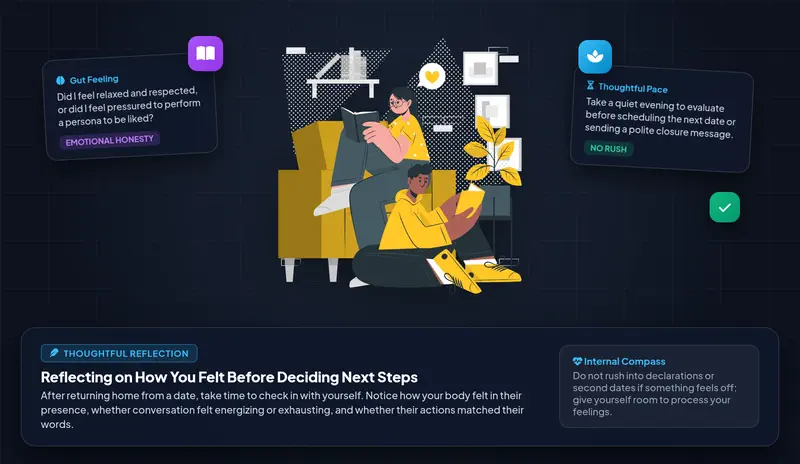
After returning home from a date, clear and courteous communication eliminates guesswork and shows basic human respect. The outdated rule of waiting three full days before texting serves only to manufacture artificial anxiety. If you had a good time, say so; if you realized you did not feel a romantic connection, say so kindly and directly.
Expressing Interest in Seeing Them Again
"Thanks for a lovely evening, Sam! I really enjoyed our conversation about photography and the cafe was great. I'd love to see you again next week if you're interested!"
Politely Declining Another Date
"Thank you for meeting up today, Alex! I really enjoyed getting to know you, but I felt our connection was more friendly than romantic. I wanted to be honest rather than leaving you guessing. Wishing you all the best!"
Recognising When It Is Time to Move On
Not every connection that starts promisingly online is meant to become a relationship. Part of healthy dating is knowing when to let go with dignity and self-respect, rather than over-investing in one-sided dynamics or mixed signals.
Key indicators that it is time to gracefully step back include:
- One-sided initiative: You are always the person initiating messages, suggesting dates, planning venues, and asking follow-up questions, with zero reciprocal enthusiasm.
- Chronic cancellations without alternative proposals: If someone cancels dates repeatedly without proposing alternative dates, their behavior demonstrates a lack of availability or priority.
- Fundamental intention mismatches: If you are seeking a committed life partnership and they clearly state they only want casual fun, staying in hope that they will change causes preventable heartbreak.
- A clear decline: If someone politely explains they don't feel a romantic fit, accept their decision immediately and gracefully. Never badger, debate, or demand explanations. Respecting a "no" is fundamental human courtesy. For compassionate, practical strategies on processing disappointment and moving forward with confidence, explore our guide on How to Deal with Rejection While Dating and review healthy communication in Online Dating Etiquette.
Building a Relationship Through Consistent Actions
If both of you find joy in each other's company, share compatible values, and wish to continue seeing each other, moving from dating into a recognized relationship requires **action-based trust, explicit communication, and emotional reliability**.
Consider these foundational pillars of relationship building:
Explicit Exclusivity Discussion
Never assume you are exclusive based on unspoken assumptions or good feelings. Have a direct conversation about exclusivity and dating app status so both partners share the exact same understanding.
Consistency Over Grand Gestures
A resilient partnership is built through small, reliable daily behaviors—calling when you said you would, remembering important events, and showing up with steady emotional presence.
Integrating Social Circles
Over time, introduce each other to close friends, community routines, and family where appropriate. Seeing how a partner navigates your social world provides valuable real-life clarity.
Navigating Minor Disagreements
Observe how you resolve early differences. Healthy partners listen without defensiveness, apologize when appropriate, and seek collaborative solutions rather than scoring points.
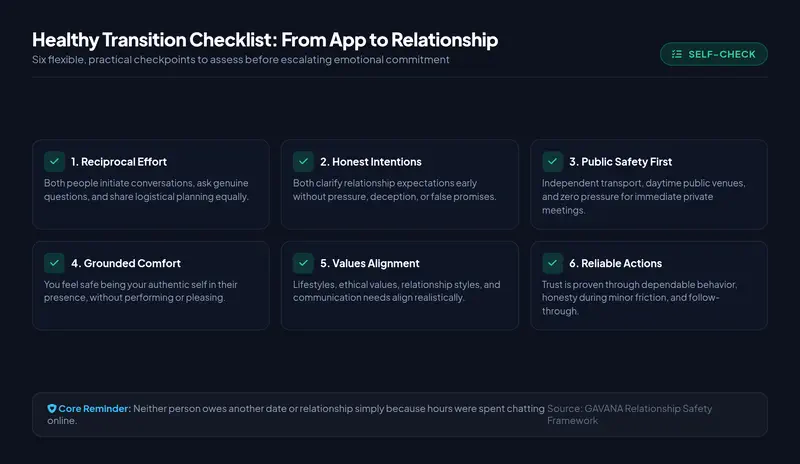
Practical Progression Checklist
As you navigate dating transitions, use this short, flexible checklist to assess whether your connection is advancing on a balanced, healthy foundation:
Key Takeaways for Moving from Online to Real Life
No Universal Timeline
Every connection moves at its own natural pace. Rushing to meet after one day or waiting three months to leave the app are both extremes; move forward when both people express mutual readiness.
Zero Entitlement
Digital conversation creates familiarity, not obligation. Neither person owes physical intimacy, a second date, or exclusivity simply because time was spent messaging.
Actions Over Promises
Real compatibility is proven through consistent follow-through, kindness to others, and mutual respect in daily life—not through poetic text messages.
Frequently Asked Questions
How long should you chat on a dating app before meeting in person?
There is no mandatory rule or set number of days. Many adults find that chatting for three to seven days provides enough information to assess mutual interest, safety, and basic conversational chemistry without building an idealized fantasy. If both people feel enthusiastic and comfortable sooner, meeting for a 45-minute daytime coffee is completely reasonable; if someone prefers more time, respect their pacing without applying pressure.
What should I do if the conversation is great online but there is no chemistry in person?
Acknowledge that this is a completely natural part of dating. Written messages cannot convey physical presence, vocal nuances, body language, or spatial comfort. A lack of in-person spark does not mean either person lied or did anything wrong. Thank them warmly for the date, follow up with a kind, polite message explaining you felt a friendly rather than romantic connection, and move forward with self-compassion.
Is it a red flag if someone asks to meet immediately after matching?
Not necessarily a red flag, but it depends heavily on how they react to boundaries. Some people dislike app texting and prefer meeting immediately for a quick coffee. However, if you say, "I prefer chatting here for a couple of days first," and they become defensive, pushy, or insist on meeting right away, that lack of boundary respect is a clear red flag.
When is the right time to have the "exclusivity talk"?
The right time is when you realize you no longer want to date other people and wish to know if they feel the same way. Usually, this occurs after several weeks of consistent, multi-context dates where both people have observed reliability, emotional openness, and values alignment. Always state your feelings clearly rather than assuming exclusivity is implied.
How can I tell if someone is genuinely interested or just being polite?
Look for proactive initiative and specific follow-through. Someone who is genuinely interested asks questions about your life, initiates conversations, and suggests specific alternative dates when conflicts arise. Polite acquaintances will answer questions when asked, but rarely initiate or take the lead in planning future time together.
What if I feel nervous before the first date?
Feeling nervous is completely normal and simply indicates that you care about making a positive connection. Reframe your mindset: instead of treating the date as a test where you must impress the other person, treat it as an exploratory conversation to see if *they* are someone you enjoy spending time with. Keep the venue casual, arrive on time, and remember that they are likely feeling just as nervous as you are.